

A commercial handyman handles the small and medium repairs and installs that keep a business property working: door closers and locks, drywall and ceiling patches, light fixtures and outlets, leaky faucets, shelving, furniture assembly, signage, storefront doors and floor transitions. It is the work that is too small for a general contractor and too varied for a single trade, done by technicians who know how commercial buildings operate.
The difference from a residential handyman is less about the tools and more about how the work is run: building access and security, scheduling around tenants and customers, commercial-grade hardware, written scopes, and a record of every job that a property manager can hand to an owner or an insurer.
This article explains what is usually included, where handyman work ends and a contractor or specialist takes over, and when it makes sense to move from one-off calls to a scheduled program.
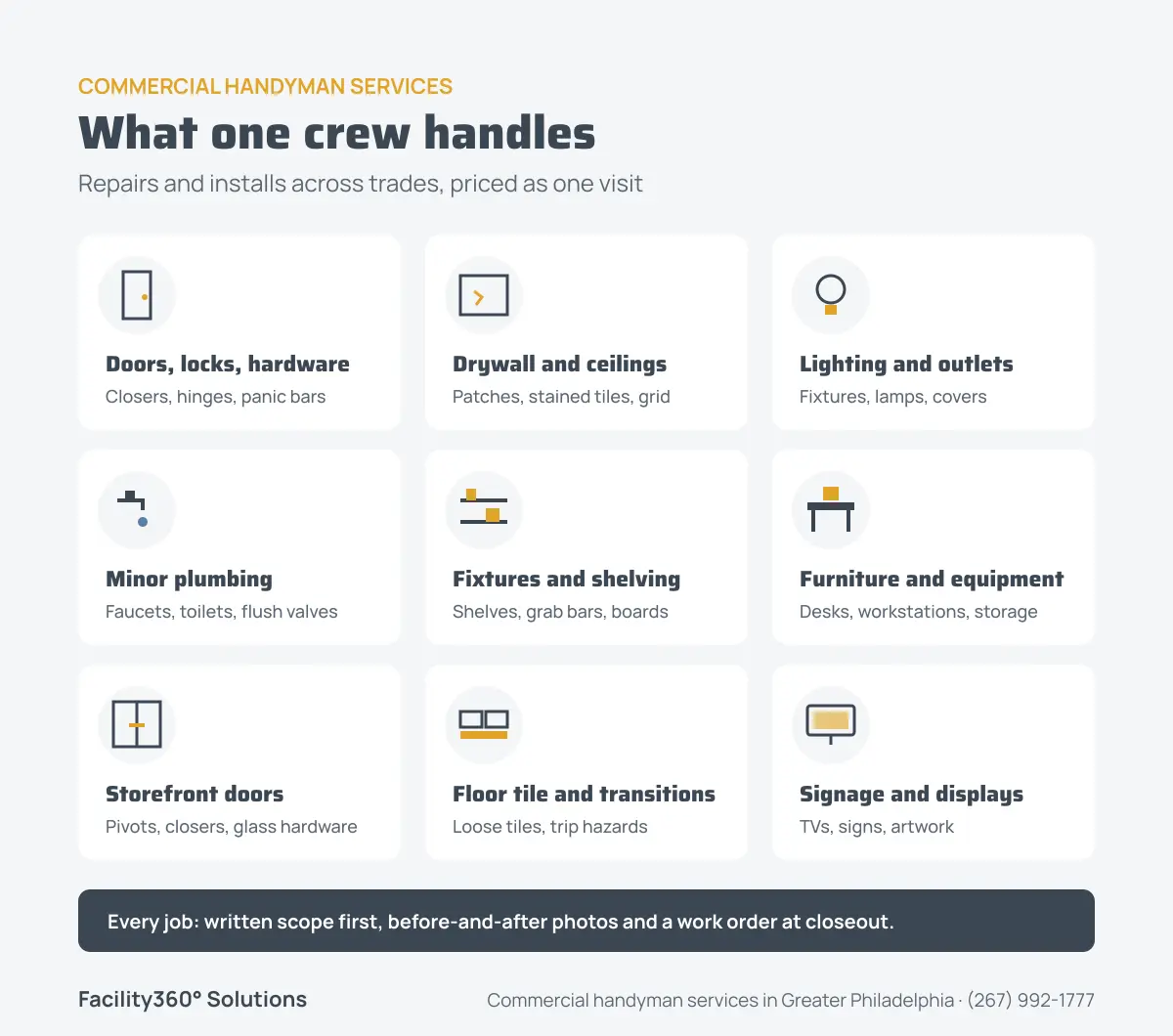
The U.S. Bureau of Labor Statistics describes general maintenance and repair workers as people who fix and maintain machines, mechanical equipment and buildings, often doing many different tasks in a single day. In commercial buildings, that breadth is the whole point. A typical service covers:
| Area | Typical jobs | Our service page |
|---|---|---|
| Doors, locks and hardware | Closers, hinges, strikes, locks, panic bars, door sweeps | door, lock and hardware repair |
| Drywall and ceilings | Holes, cracks, water-stained or broken ceiling tiles, grid repair | drywall and ceiling patching |
| Lighting and outlets | Failed fixtures, lamps and drivers, damaged outlets and switch plates | lighting and outlet replacement |
| Minor plumbing | Dripping faucets, running toilets, flush valves, supply lines, clogged sinks | minor plumbing and faucet repair |
| Fixtures and shelving | Shelving, cabinets, grab bars, whiteboards, mirrors, dispensers | fixture and shelving installation |
| Furniture and equipment | Desks, workstations, storage, break room equipment | furniture and equipment assembly |
| Windows and storefront doors | Storefront door closers and pivots, glass door hardware, window hardware | window and storefront door repair |
| Floors | Loose or cracked tiles, transition strips, trip hazards | floor tile patch and transition molding |
| Signage and displays | Wall-mounted TVs, signs, displays, artwork | signage and display mounting |
Most service calls mix several of these. A tenant moving out leaves holes in the drywall, a broken blind, a cabinet door off its hinge and a ceiling tile with a stain. A handyman crew fixes all of it in one visit instead of four trades on four different days.
The repairs can look similar. The setting isn’t.
Commercial jobs often mean signing in at a security desk, using a freight elevator, getting keys from a property manager or working in a suite while the tenant is at work. Technicians need to know how to do that without turning a 30-minute repair into a morning of phone calls.
A restaurant can’t have a drill running at lunch. A medical office can’t have a ladder in the waiting room during patient hours. Much commercial work happens early, late or on weekends.
Panic bars, heavy-duty door closers, storefront pivots, suspended ceiling grids, commercial faucets and flush valves are different from what is found in a house. A handyman who doesn’t work with them regularly will take longer and often fix the symptom instead of the cause.
Property managers need a certificate of insurance before anyone works in the building, a written scope before the job starts, and a record afterward. Our commercial handyman service closes every job with a work order and before-and-after photos.
The most common question from property managers is where handyman work ends. A simple way to think about it: handymen repair and replace what is already there; contractors build or change things; specialists service systems.
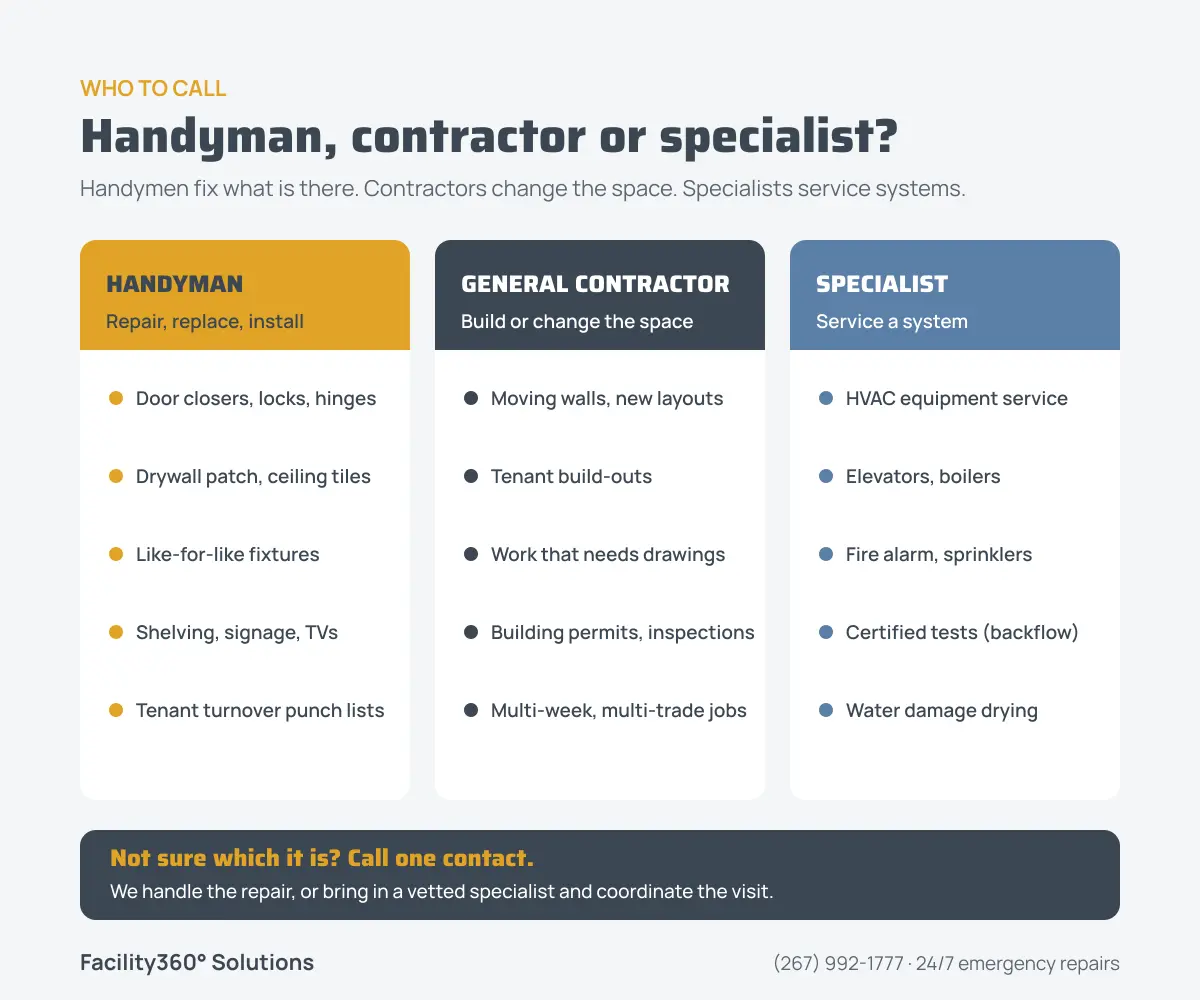
In practice, the lines blur. A ceiling repair turns up a leaking pipe; a door replacement needs a new frame. A good handyman service tells you when a job has moved past its scope and who should take it. At Facility360, when a job needs a specialist we bring in one we have worked with before and coordinate the visit, so you still have one contact.
Urgent problems skip the line. A broken entry lock, a leak coming through the ceiling or a broken storefront go to our 24/7 emergency repair team, with a technician on site in about an hour.
Handyman calls work well for buildings that need repairs now and then. One call, one job, no contract.
When the same building is calling every week or two, a scheduled program usually costs less and takes less coordination: regular visits, a checklist of preventive tasks, and repairs handled before tenants report them. That is our facility support services line, and our article on where preventive maintenance saves money explains how to tell when a building has reached that point.
Property managers with several buildings often use both: a program for the larger properties and handyman calls for the rest, all through one contractor.