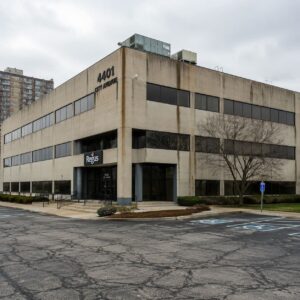

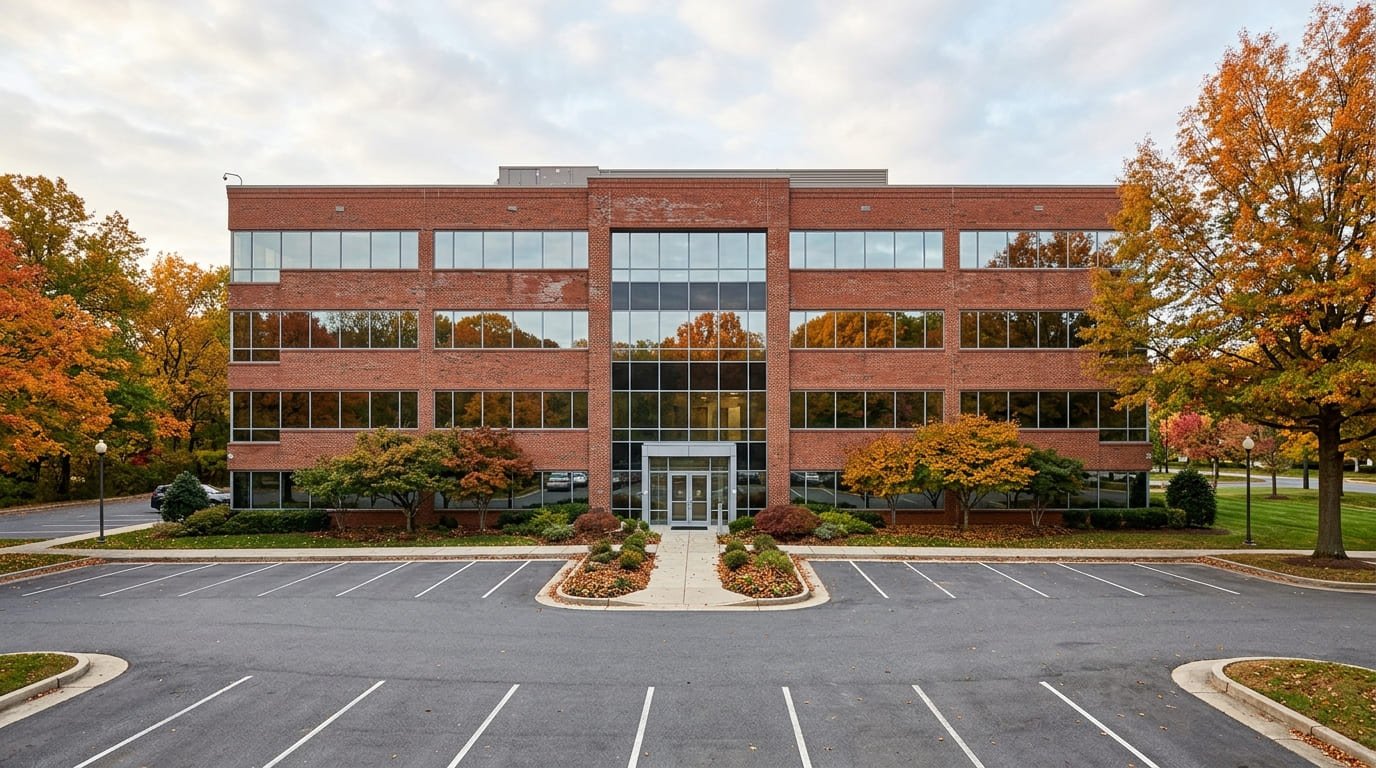
Most office buildings in Greater Philadelphia don’t fail suddenly — they fail on a schedule nobody wrote down. A door closer that drifts out of adjustment in March becomes an ADA complaint in June. A hairline grout crack in a fourth-floor restroom becomes a ceiling stain in the suite below by fall. The difference between buildings that stay ahead of these problems and buildings that chase them is rarely budget. It’s whether maintenance runs on a written calendar or on tenant complaints.
This checklist lays out what a well-run maintenance calendar looks like for a typical multi-tenant office building in the Philadelphia region — organized by frequency, with the seasonal tasks timed to our local climate. Use it to audit your current program, brief your in-house staff, or structure the scope of an outsourced facility support program.
The financial case for structured maintenance is well documented. Repairs and maintenance is consistently one of the largest controllable line items in an office building’s operating budget — behind utilities and taxes, and ahead of cleaning and security in BOMA’s benchmarking data. Where that money goes matters more than how much of it there is: the U.S. Government Accountability Office reports that federal building repair backlogs more than doubled between 2017 and 2024, and warns that deferred assets deteriorate to the point of needing premature replacement — significantly more expensive than performing the repairs on schedule.
Philadelphia’s building stock raises the stakes further. The U.S. Energy Information Administration reports that about half of America’s commercial buildings predate 1980 — and Center City, Conshohocken, and the Route 202 corridor are full of Class B office properties from exactly that era. Older buildings don’t tolerate skipped inspections the way new construction does.
A written checklist does three things a reactive approach can’t: it catches small defects while they’re still small, it converts unpredictable emergency spending into a plannable budget line, and it produces the documentation trail that matters for insurance, lease negotiations, and CAM reconciliation.
These are quick-pass items — a trained technician can cover them in a single walkthrough of a mid-size building.
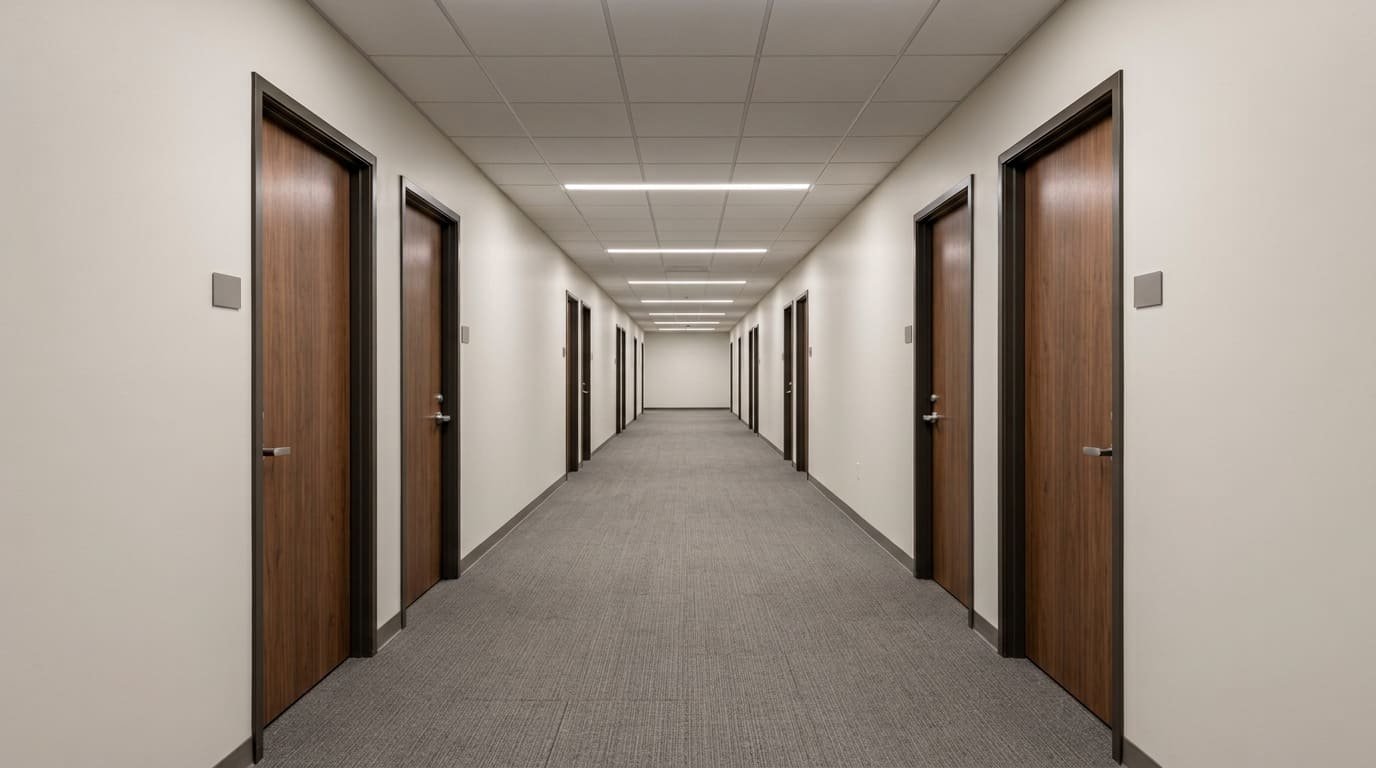
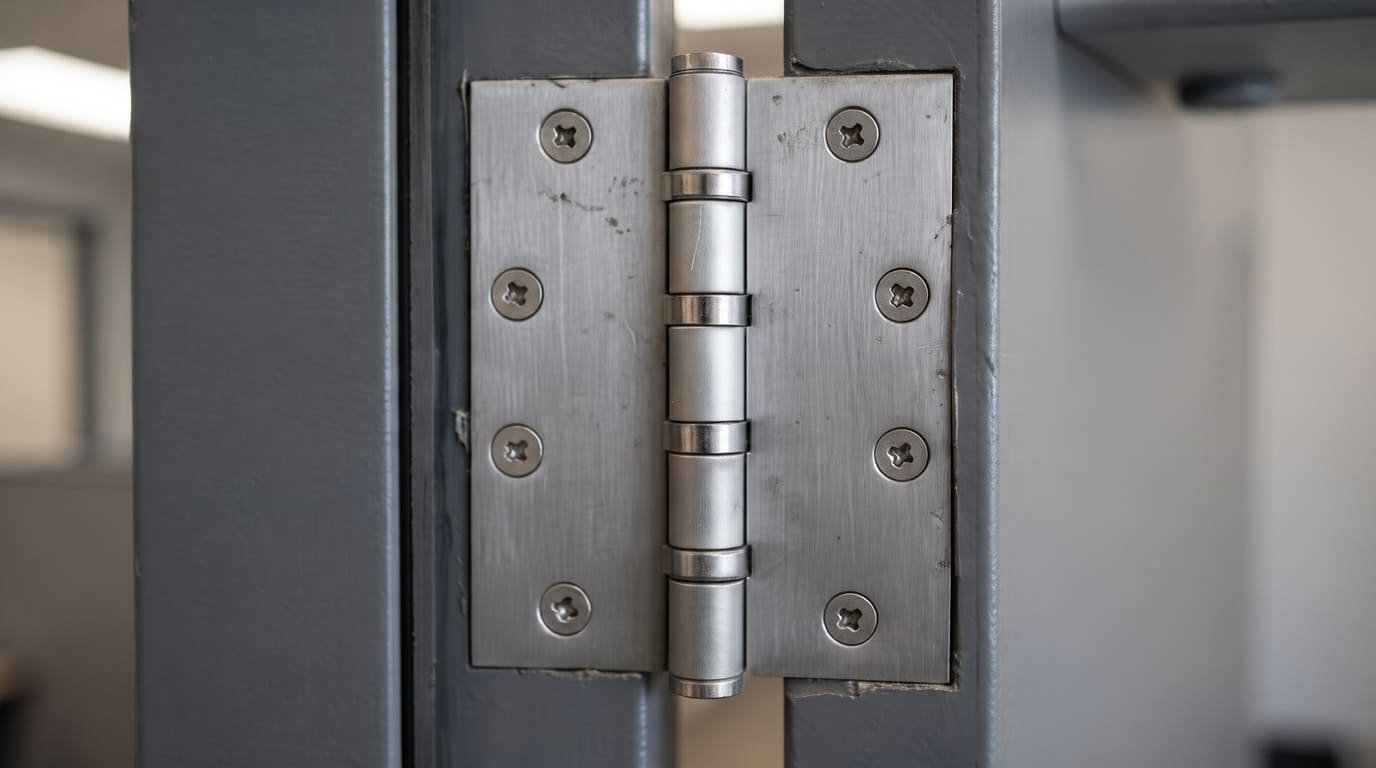
Doors, locks, and entry hardware. Test every exterior door, suite entry, and stairwell door for latching, closing speed, and lock function. High-traffic entry doors in an office building cycle hundreds of times a day; closers and hinges drift measurably month to month. Failed latching on a stairwell door is both a security gap and a code issue. (Related service: door, lock and hardware repair.)
Lighting sweep. Walk all common areas, stairwells, parking areas, and restrooms for failed lamps, flickering fixtures, and dead exit-sign illumination. Beyond appearance, dark stairwells are a liability exposure. Log recurring failures — a fixture that eats lamps monthly usually has a ballast or wiring issue worth addressing once, not twelve times. (Related service: lighting and outlet replacement.)
Restroom fixtures. Check every faucet, flush valve, and drain for leaks, slow drainage, and running water. A single silently running commercial toilet can waste thousands of gallons a month before anyone reports it. (Related service: minor plumbing and faucet repair.)
Life-safety visual check. Confirm fire extinguisher tags are current, egress paths are clear, and emergency lighting test buttons respond. Note: inspection and certification of fire alarm, sprinkler, and suppression systems must be performed by licensed fire-protection contractors — the monthly task here is verifying nothing obvious has lapsed between their visits.
Walkthrough log. Photograph and log every defect found, even ones fixed on the spot. The log is what turns twelve walkthroughs into a maintenance history.
Wall, ceiling, and drywall survey. Inspect common corridors, lobbies, and elevator lobbies for impact damage, nail pops, water staining, and corner damage from deliveries and furniture moves. New water stains are the single most valuable early-warning signal in this entire checklist — every stain has a source above it that is still active or was recently. (Related service: drywall and ceiling patching.)
Flooring condition pass. Check transitions, thresholds, and high-traffic carpet and hard-surface zones for lifting edges, cracked tiles, and worn walk-off matting. Trip hazards at flooring transitions are among the most common slip-and-fall claim sources in office buildings.
Caulk and sealant joints. Inspect restroom fixtures, countertops, and window perimeters in common areas. Failed caulk is how water gets into wall cavities unnoticed.
Signage, fixtures, and mounted items. Verify wayfinding signage, TV and display mounts, and shelving in common areas remain secure. Anchors loosen; drywall anchors in particular fail gradually, then suddenly.
Specialty-vendor verification. Confirm your HVAC, elevator, roofing, and fire-protection contractors completed their scheduled quarterly service and filed reports. These systems require licensed specialty trades — the facility team’s job is making sure the visits actually happened and the findings landed in one consolidated record.
Philadelphia’s climate does specific, predictable damage to office buildings: freeze-thaw cycles crack exterior hardscape and masonry joints, winter de-icing salt destroys lobby flooring and entry mats, and humid summers stress sealants and finishes. Time these two inspection rounds accordingly.
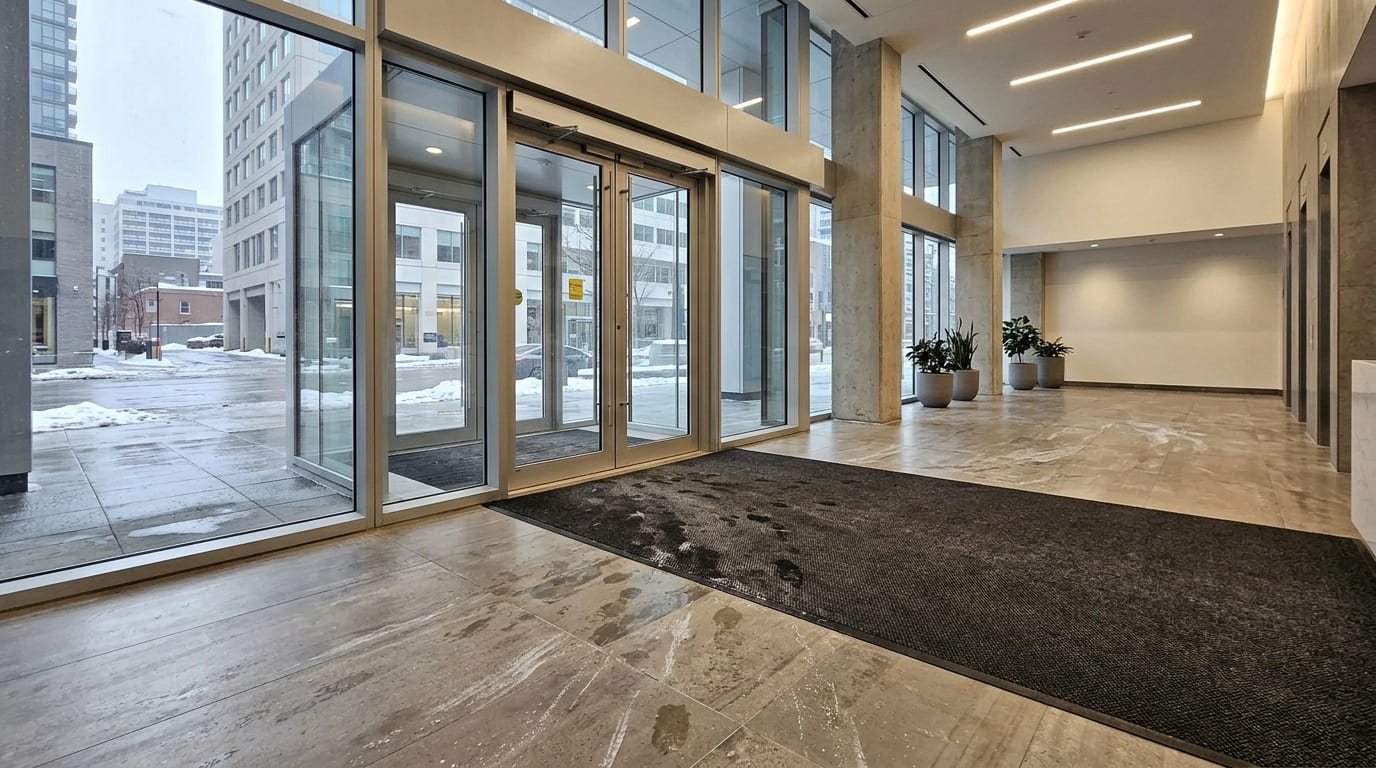
This fall round is also when most Philadelphia property managers build next year’s operating budget. An honest fall condition survey is the difference between a defensible maintenance budget and a guess — and it’s the natural moment to decide whether the coming year’s program stays in-house or moves to a single-source facility partner.
Full-building condition assessment. Once a year, walk the entire property — every suite the leases allow, every mechanical room, every stairwell — against a written standard, with photos. This is the document that supports capital planning, insurance renewals, and CAM defensibility.
Preventive service of doors and hardware building-wide. Lubrication, closer adjustment, and hinge service across all doors in one scheduled pass costs a fraction of handling the same doors one failure at a time.
Paint and finish plan. Score every common-area surface and build a rolling repaint plan rather than repainting reactively. Coordinated annual painting also produces consistent color and sheen across the building — piecemeal touch-ups over several years visibly don’t.
Flooring lifecycle review. Rate each flooring zone (lobby, corridors, restrooms) on remaining service life so replacements are budgeted a year ahead instead of forced by failure.
Vendor and documentation audit. Reconcile every service contract, certificate of insurance, and warranty on file. Lapsed vendor insurance is a risk transfer back onto the property owner that most buildings discover only after an incident.
Review the year’s work-order data. Recurring defects are the building telling you where the next capital project is. Three service calls to the same restroom in a year is not three repairs — it’s one unaddressed root cause.
Inspecting without logging. An inspection that produces no record produces no history, no budget defense, and no accountability. If it isn’t written down with a photo and a date, it didn’t happen.
Letting tenants be the inspection system. By the time a tenant reports a problem, it has usually existed for weeks and been visible to them the entire time. Tenant complaints are a lagging indicator; walkthroughs are a leading one.
Splitting the checklist across too many vendors. When the door contractor, the electrician, the drywall company, and the plumber each see only their slice of the building, nobody sees the pattern — and the property manager becomes the unpaid general contractor coordinating all of them. We covered the full cost of this in our analysis of vendor sprawl vs. single-source maintenance.
Skipping the “boring” months. Programs that start strong in January and dissolve by summer are worse than no program, because they create documentation of a standard the building then visibly fails to meet.
Confusing deferral with savings. Every skipped task on this list carries a multiplier, not a discount. Our breakdown of the true cost of deferred maintenance and the hidden maintenance issues that drain office budgets covers the math in detail.
For a small single-tenant building, an office manager with this checklist and two or three reliable trade contacts can run a credible program. Multi-tenant office buildings are a different problem: the checklist above represents hundreds of discrete tasks a year across a dozen trades, and the coordination burden — scheduling, verification, documentation, invoicing — routinely consumes 10+ hours of a property manager’s week when handled vendor by vendor.
That coordination load, not the repairs themselves, is what a structured Facility Support Services program removes. Under a single program, Facility360° executes the recurring inspection calendar, performs the handyman-scope repairs it surfaces — doors and hardware, lighting and outlets, drywall, minor plumbing, flooring and paint — verifies that licensed specialty vendors (HVAC, elevator, roofing, fire protection) complete their scheduled work, and delivers one consolidated monthly report covering all of it. To be clear about scope: Facility360° does not perform HVAC, roofing, elevator, or life-safety system work itself — those remain with licensed specialty contractors, coordinated and documented within the program.
You can see what this looks like in practice in our facility support program for a 35,000 sq ft office building in Conshohocken, where a structured inspection calendar replaced coordination of eight separate vendors. We build these programs for offices and business centers across Greater Philadelphia — from Center City to Conshohocken, King of Prussia, and Blue Bell.