
The most expensive maintenance problems in commercial buildings rarely start big. They start as a stained ceiling tile, a door that needs an extra push, a faucet that drips at night, an outlet cover that feels warm. Each one is easy to ignore, and each one points to something that will cost more if it is left: a hidden leak, a failing closer, wasted water, an electrical fault.
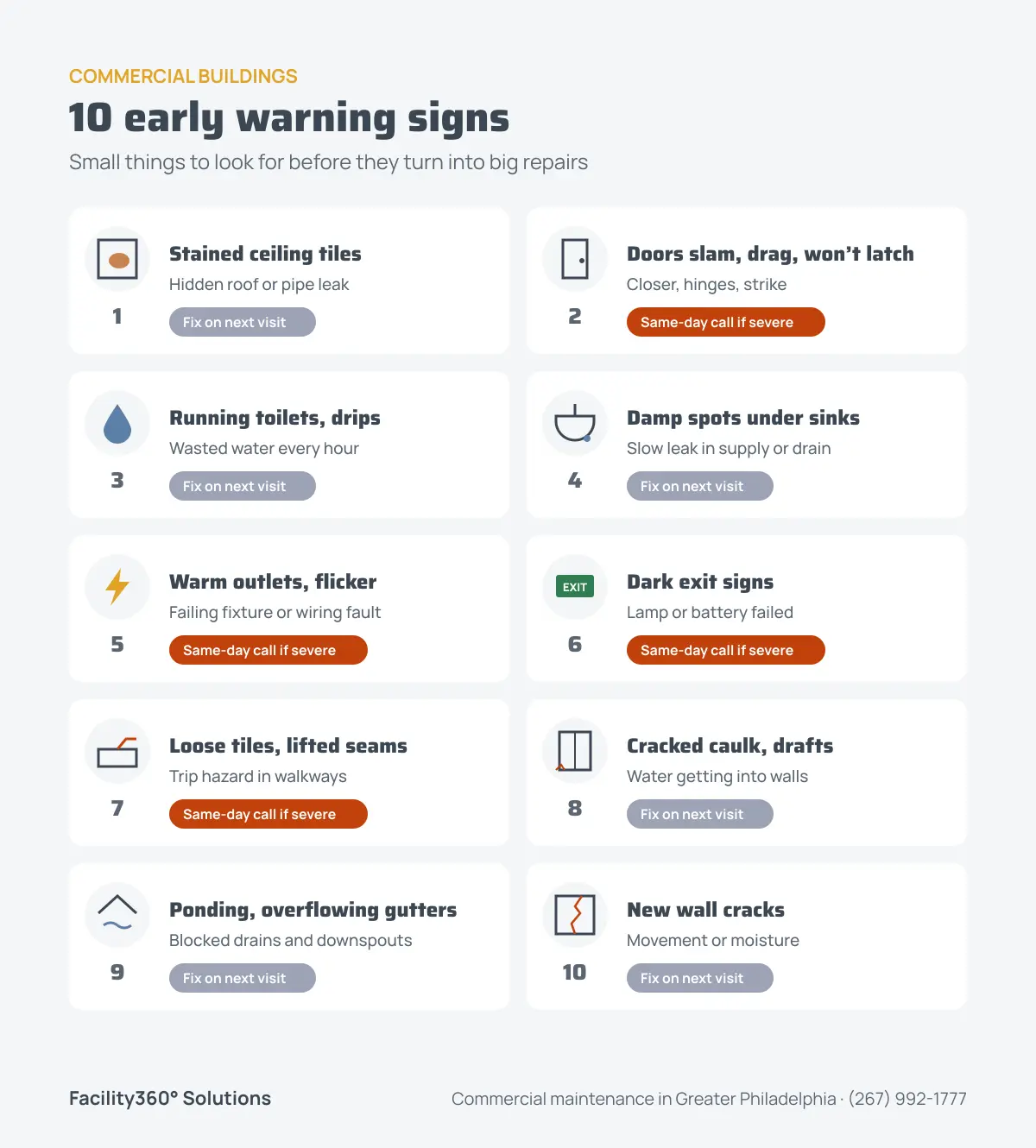
Below are ten early warning signs we see most often in offices, retail, medical buildings and schools around Philadelphia. For each one: what it usually means, what to do about it, and when it needs a call the same day.
A brown ring on a ceiling tile means water got there at some point. Replacing the tile hides the sign but not the source. The usual causes are a roof or flashing leak, a condensate line from the HVAC system, or a pipe above the ceiling.
What to do: lift the tile and look at the area above it, on a dry day and again after rain. Check whether the stain is growing. Fix the source first, then replace tiles and repair any wet drywall. Our ceiling and wall repair service covers both steps.
Call the same day if the tile is wet, sagging or dripping, or if it is near light fixtures or electrical equipment.
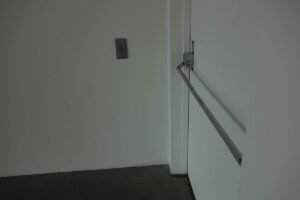
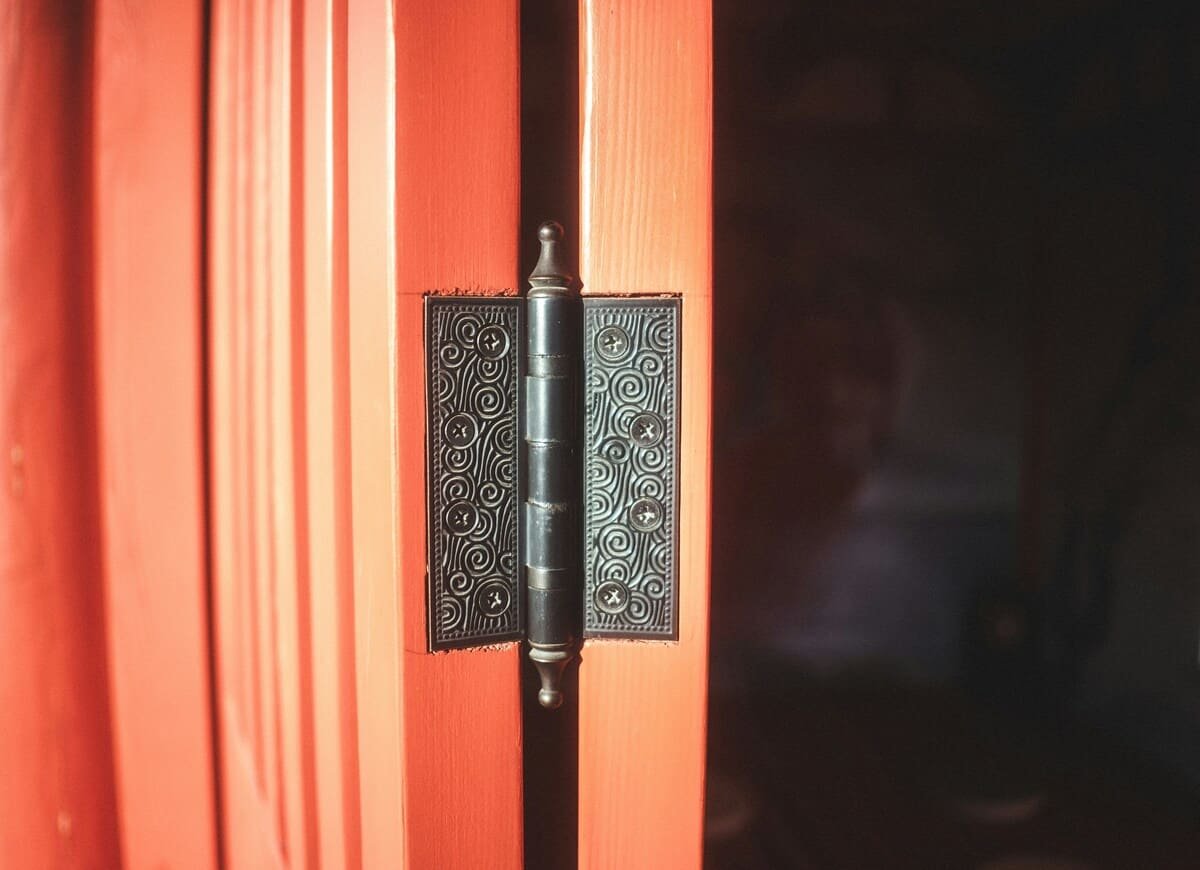
A door that slams has a closer that is out of adjustment or losing fluid. A door that drags on the floor or hits the frame usually has loose hinge screws. A door that doesn’t latch may be both. Doors are used hundreds of times a day, so small problems grow fast.
What to do: adjust the closer, tighten or replace hinge screws, and realign the strike. Replace closers that leak oil. Exit doors with panic hardware need special attention; see why panic bars stop latching.
Call the same day if an exterior or secure door won’t lock, or an exit door won’t open easily. Our door, lock and hardware repair team handles these 24/7.
These are the leaks people get used to hearing. They waste more than they seem to. According to the EPA’s WaterSense program, a faucet dripping once per second wastes more than 3,000 gallons a year, and a running toilet can waste 200 gallons or more every day. A commercial restroom with several fixtures multiplies that.
What to do: replace worn flappers, fill valves, washers and cartridges. A few drops of food coloring in a toilet tank show a silent leak: if the color reaches the bowl without flushing, the flapper is leaking. Our minor plumbing and faucet repair service handles these in one visit.
Call the same day if water is leaking onto the floor or a fixture won’t shut off.
A slow leak under a sink or behind a wall rarely shows up as a puddle. It shows up as a cabinet floor that swells, baseboards that darken, paint that bubbles at the bottom of a wall, or a musty smell in a restroom or break room.
What to do: check supply lines, drain connections and shutoff valves under every sink. Replace braided supply lines that are kinked or corroded. If the wall is damp, find and fix the leak before patching drywall.
Call the same day if the wall or floor is wet to the touch or the damp area is spreading.
Flickering on one fixture is usually a lamp, ballast or driver near the end of its life. Flickering across a room, outlet covers or switch plates that feel warm, a burning smell, or a breaker that trips repeatedly point to a wiring or connection problem.
What to do: replace failing lamps and drivers on one visit rather than one at a time. For warm outlets, scorch marks or tripping breakers, stop using the circuit and have it checked. See our lighting and outlet replacement service.
Call the same day for any warm or discolored outlet, burning smell or sparking. These are not wait-for-the-next-visit items.
Exit signs and battery emergency lights are easy to overlook because they only matter during an outage. A sign with a dead lamp or a unit with a failed battery often goes unnoticed for months. These units need a monthly 30-second test and an annual 90-minute test.
What to do: press the test button on every unit once a month and write down the result. Replace batteries and lamps that fail. Units that keep failing are often old enough to replace.
Call the same day if exits or stairwells would be dark in a power outage.
A tile that rocks, a carpet seam that has lifted or a metal transition strip that has come loose is a trip hazard. OSHA’s walking-working surfaces standard requires floors in workplaces to be kept free of hazards and repaired before people use them again.
What to do: reset or replace loose tiles and transition strips, re-glue or re-seam carpet, and check whether water is the reason the floor lifted. Larger areas may need new flooring; see our commercial flooring service.
Call the same day if the hazard is in a main walkway, entrance or stairwell and can’t be blocked off.
Caulk and sealant around windows, storefronts and expansion joints dry out and crack over a few years of sun and freeze-thaw cycles. The first sign inside is often a draft, a cold spot near a window or a stain under the sill. Water that gets past the sealant can run inside the wall before it shows.
What to do: walk the exterior once a year and look for cracked, pulled-away or missing sealant. Cut out and replace it in mild weather. Replace worn weatherstripping and door sweeps on entrances before winter.
This is usually planned work, unless water is already coming in.
Water that pours over the edge of a gutter, or stands on a flat roof two days after rain, means drains or downspouts are blocked. Standing water adds weight and finds its way through seams and flashing. Overflowing gutters soak the wall and the ground along the foundation.
What to do: clear roof drains, scuppers, gutters and downspouts in spring and fall, and after storms. Check that downspouts send water away from the building.
Call the same day if water is coming through the ceiling.
Hairline cracks at the corners of doors and windows are common and often cosmetic. Cracks that grow, doors that suddenly start to stick or swing open on their own, or gaps that open up between walls and ceilings can mean the building is moving, or that moisture is getting into the structure.
What to do: mark the ends of a crack with a pencil and the date, and check again in a month. Repair cosmetic cracks when you paint. If a crack keeps growing or is clearly wider than a hairline, have it looked at before you patch it.
Call soon if a crack is growing quickly or doors that worked last month no longer close.
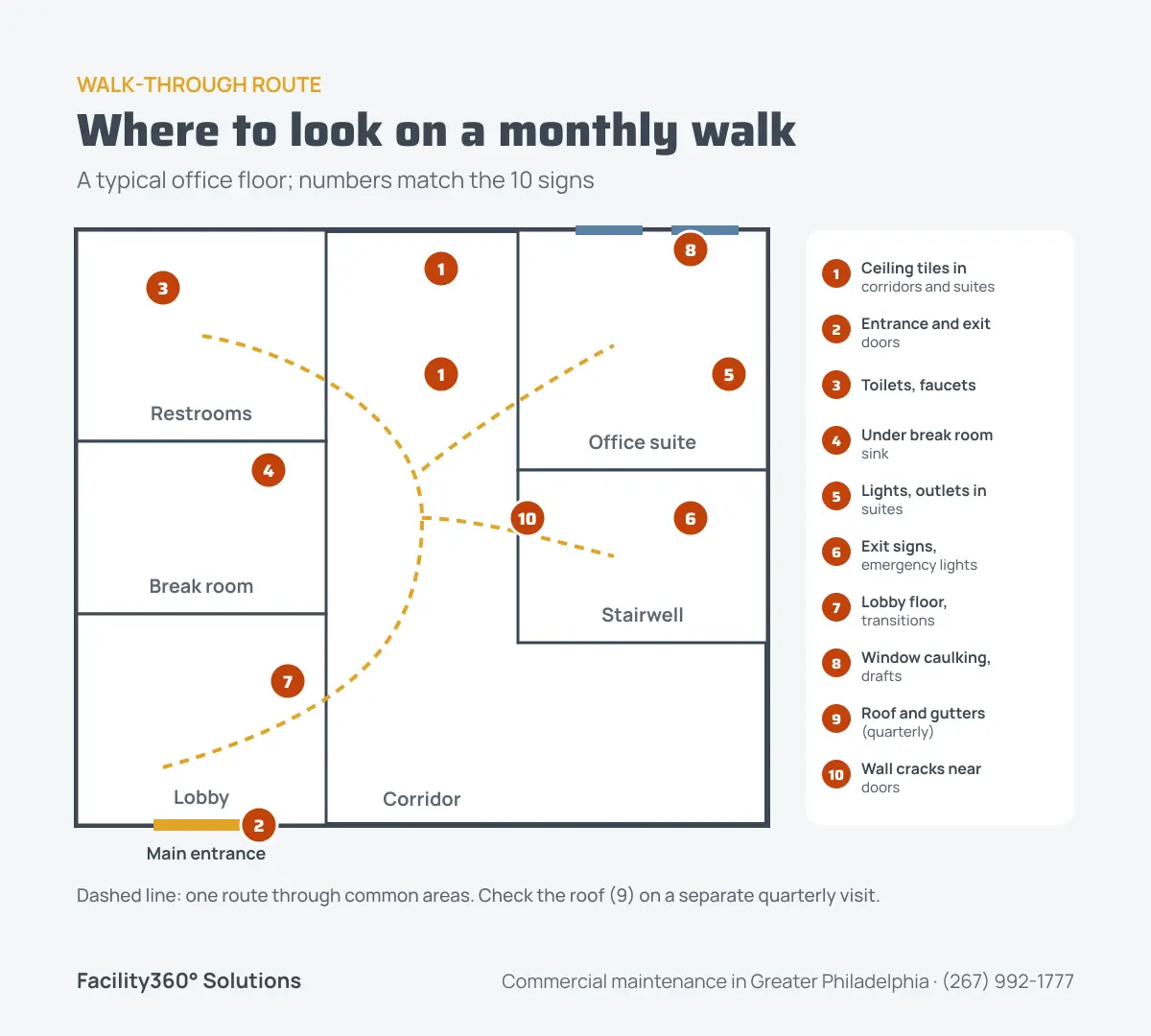
Every item on this list is easy to spot if someone looks. The problem is that in most buildings nobody is assigned to look. A monthly walk-through of common areas, restrooms and exits, plus a quarterly check of the roof and exterior, finds most of them early. Our office building maintenance checklist lists what to check and how often.
When a list of these small problems builds up, it turns into deferred maintenance, which is harder and more expensive to clear. A preventive maintenance program keeps the list short.
Facility360 handles all ten of these with one team: carpentry, doors and hardware, plumbing, electrical and lighting repairs, flooring, ceilings and painting. Small items are fixed on scheduled visits, and urgent ones get a 24/7 emergency response, on site in about an hour. Our commercial handyman services cover the one-off repairs in between.