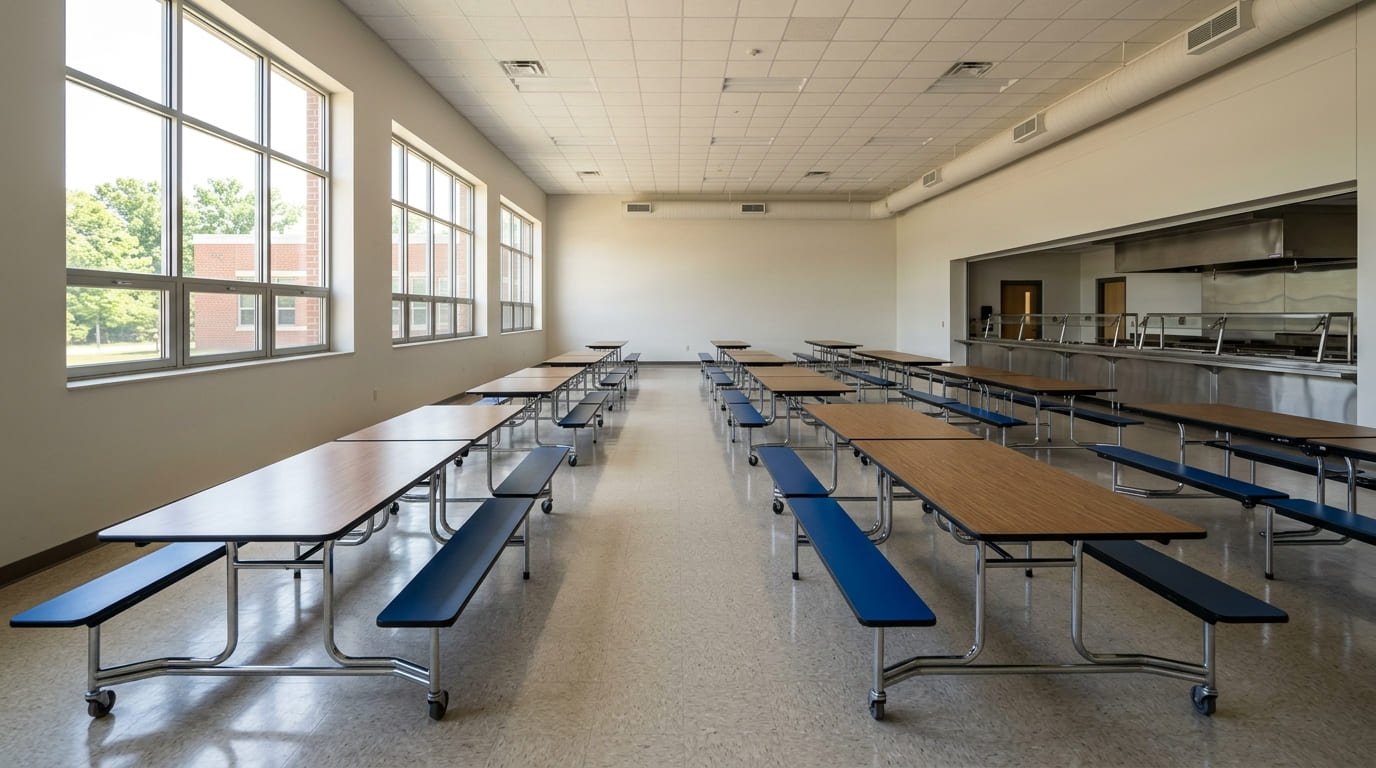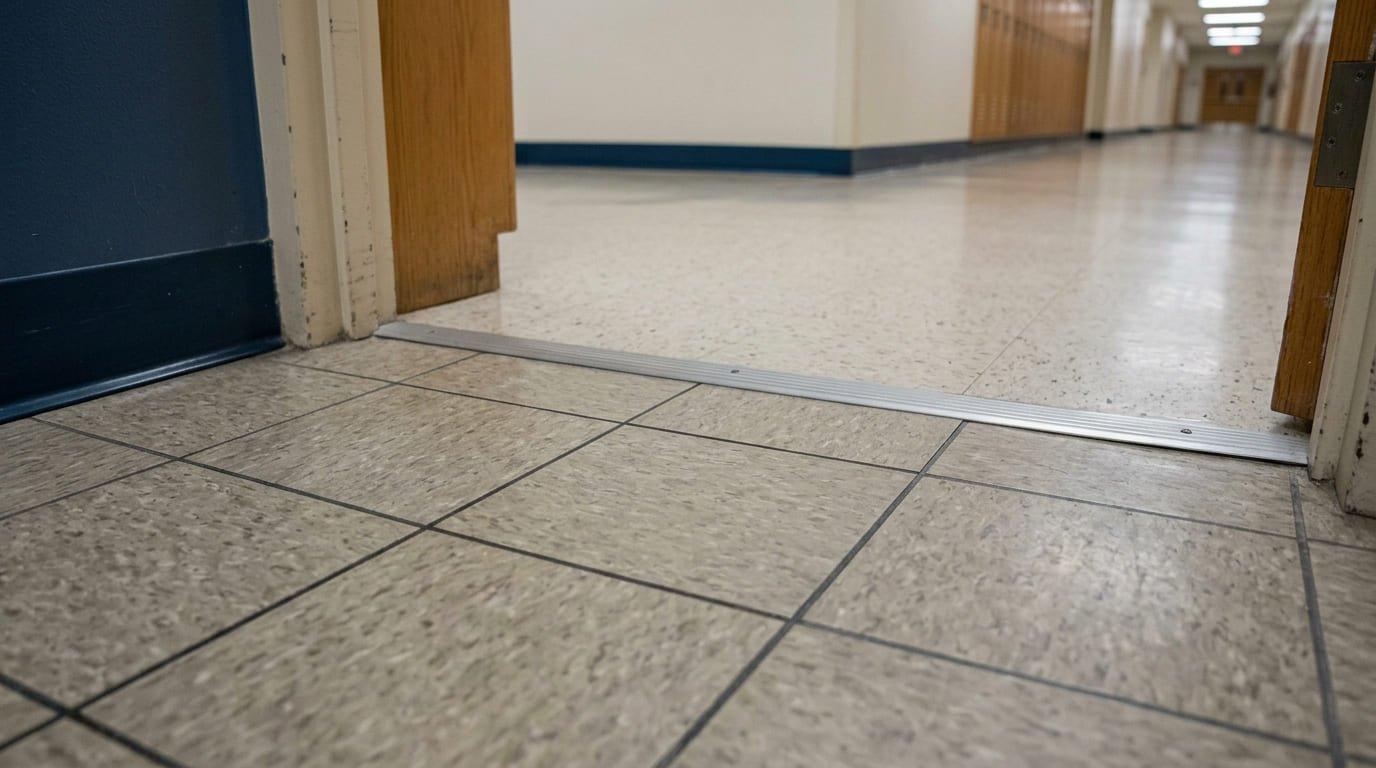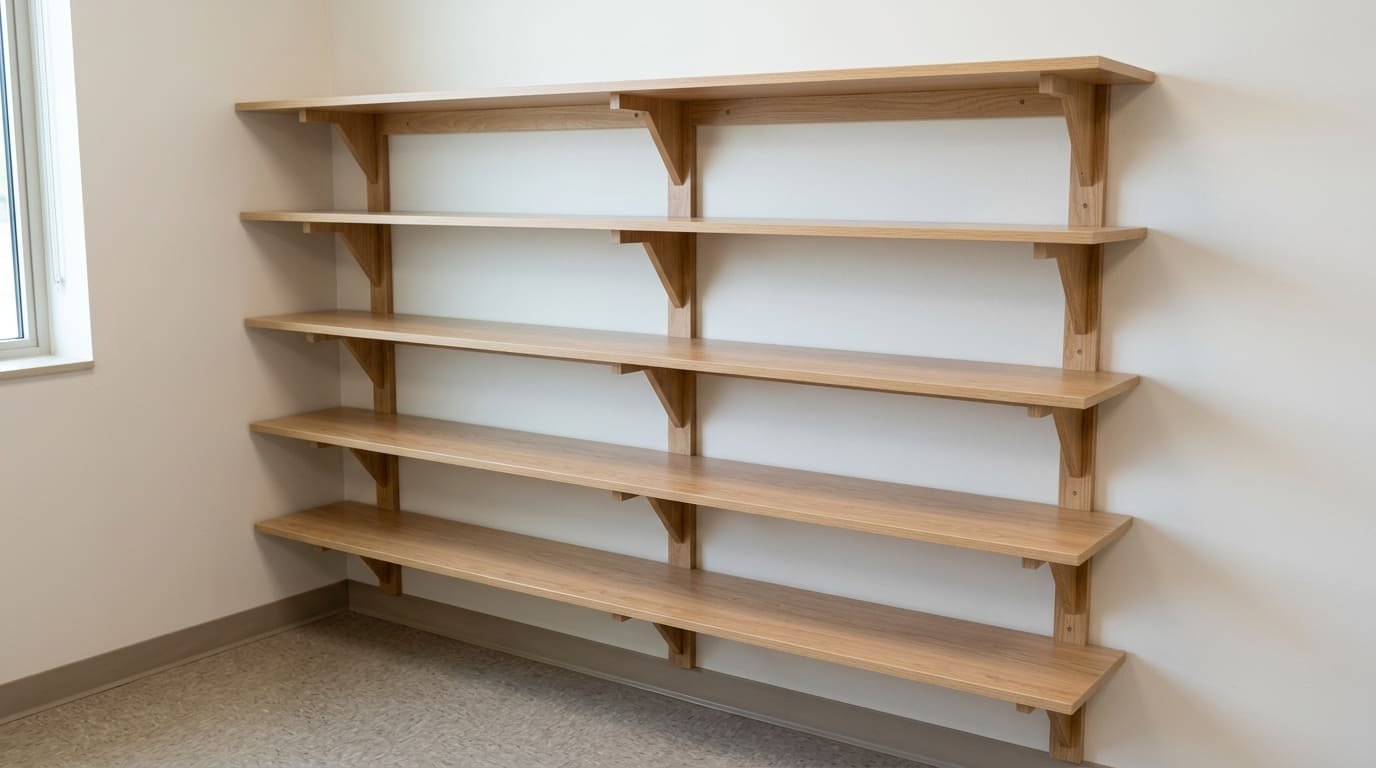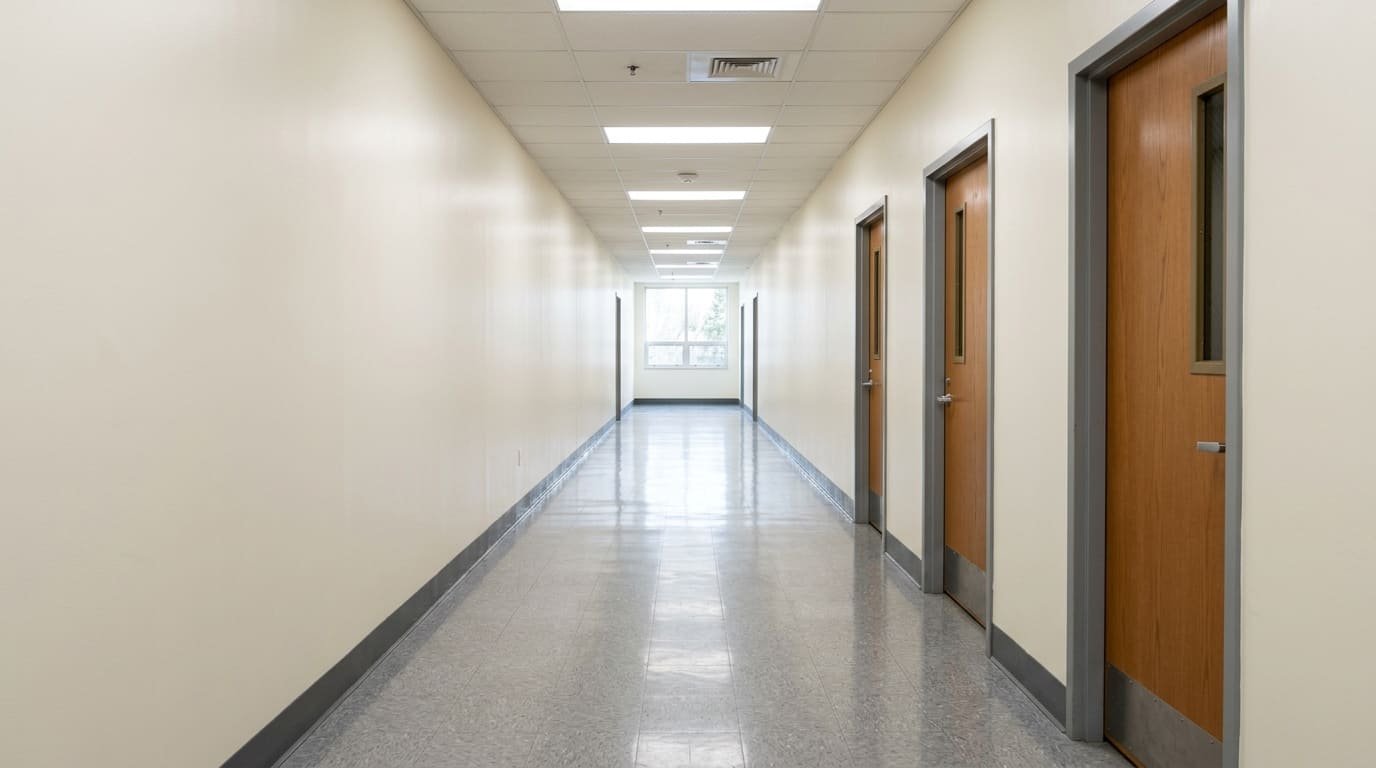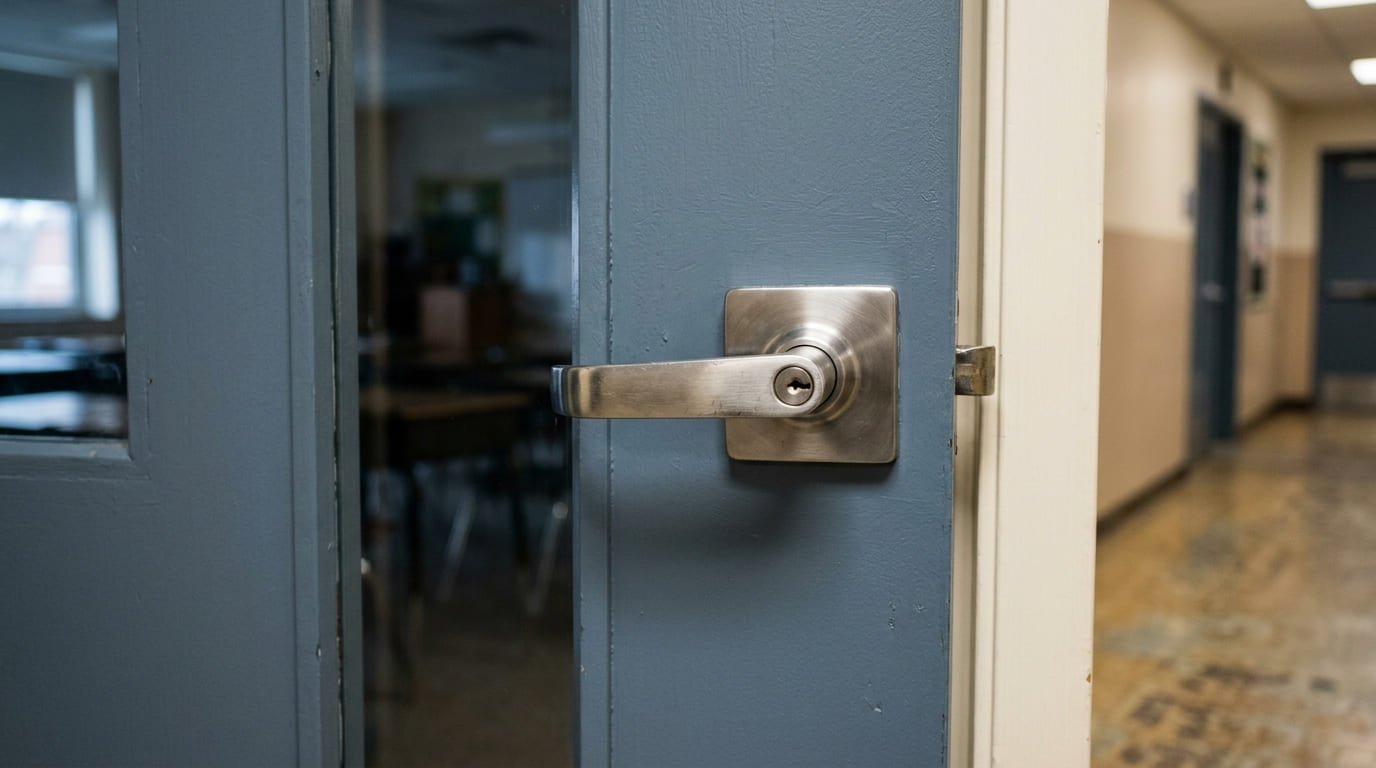

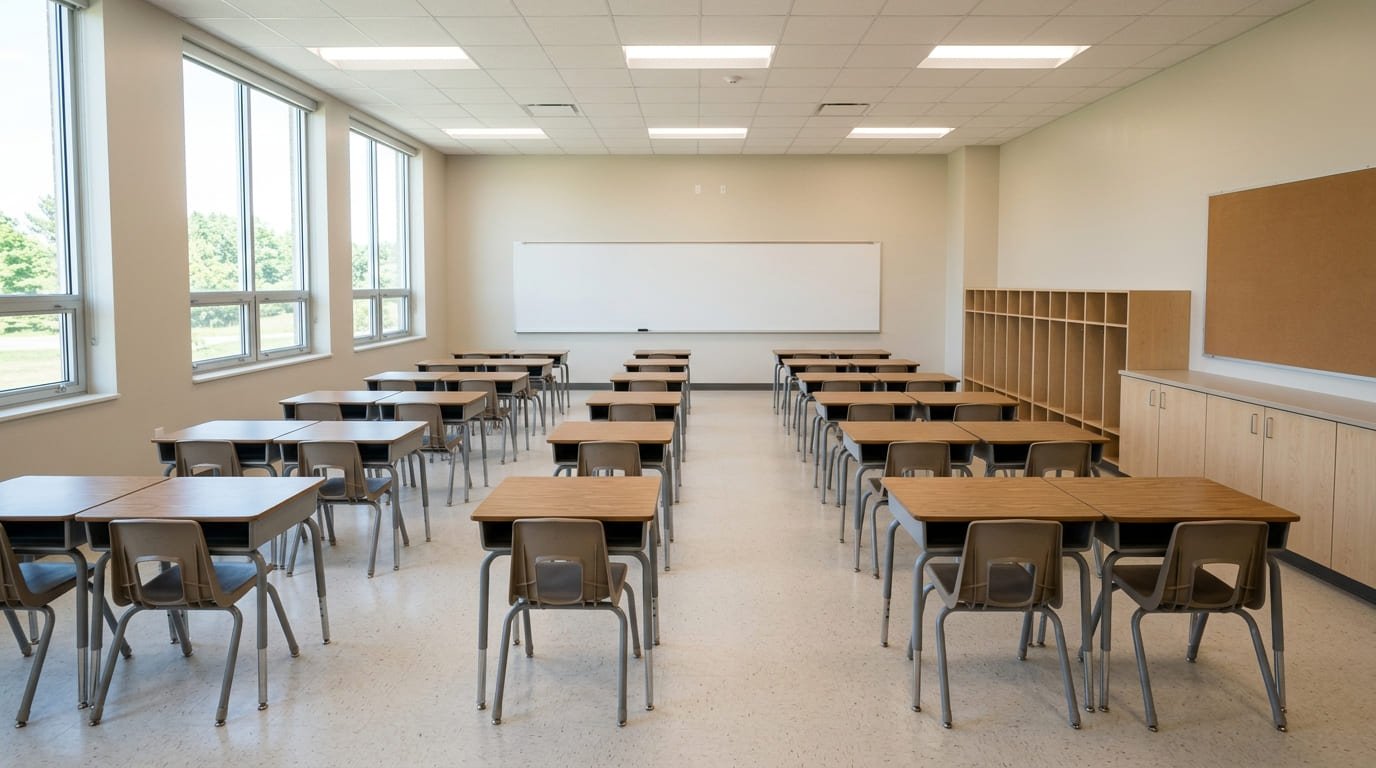
How Facility360° delivered a multi-building repair and refresh program inside a fixed nine-week summer window — 212 work items across three buildings, every classroom ready before the first bell.
| Client Type | Educational Facilities Director |
| Property Type | Three school buildings (elementary and middle school) |
| Industry | Schools & Educational Centers |
| Location | Horsham, PA 19044 (Montgomery County) |
| Combined Size | ~148,000 sq ft across three buildings |
| Building Age | Original construction 1960s–1970s, with later additions |
| Services Provided | Facility Support Services, Commercial Handyman, Interior Painting, Drywall & Ceiling Patching, Door/Lock & Hardware Repair, Floor Repair & Patching, Lighting Replacement, Minor Plumbing, Fixture & Shelving Installation, Furniture Assembly |
| Project Window | 9 weeks (mid-June to mid-August) |
| Work Items Completed | 212 |
| Completed | Summer 2025 |
| Items Outstanding at First Day of School | 0 |
Horsham Township sits in Montgomery County about 20 miles north of Philadelphia — a community of roughly 26,000 with a substantial commercial base, from the Horsham office park corridor to corporate headquarters including Toll Brothers, all connected by Route 611, Horsham Road, and quick access to the Turnpike. It is also a township where the schools are a genuine civic anchor: the Hatboro-Horsham School District serves around 4,800 students across four elementary schools, a middle school, and a high school spanning Horsham Township and neighboring Hatboro Borough.
Our client is responsible for facilities across a set of those buildings, and their problem is the one every school facilities director in America shares: the calendar.
The facilities director put it plainly at the first meeting: I don’t need someone who can do the work. I need someone who can do it in nine weeks across three buildings and finish early enough that I’m not smelling paint at open house.
Facility360° treated this as a scheduling and logistics problem first, and a trades problem second. The facility support program was built around one principle: the planning happens before the window opens, so no summer day is spent deciding what to do.
While school was still in session, we walked all three buildings with the facilities director and built the full scope before a single June day was spent:
Anything needing time to dry, cure, or off-gas went first — not because it was most urgent, but because it was least forgiving:
Rather than one crew rotating through three buildings, we staffed parallel crews so all three progressed simultaneously:
We built the schedule to finish substantive work by week seven, leaving a deliberate buffer:
Every completed item was logged with photos, dates, and location. For a facilities director who has to defend capital requests to a school board, that record is the difference between an anecdote and evidence — asset condition data and documented history are exactly what budget presentations require and what paper systems fail to produce.
Note on scope: this program covered interior facility repairs, finishes, and fixtures. HVAC systems, roofing, fire and life-safety systems, elevators, playground equipment, and asbestos or hazardous-material work remain with the district’s licensed specialty contractors. We sequenced our work around theirs.
"Every summer used to start the same way — three weeks of figuring out what we were doing, then a sprint that ran right up to the last weekend. Facility360° flipped it. We walked the buildings in April, locked the whole list before the kids left, and materials were already here in June. They ran crews in all three buildings at once, and the paint and floor work was done in the first month, so there was no smell at in-service. We finished with two weeks in hand, which has never happened. And I've now got photos and dates on 212 items to take to the board, which is worth almost as much as the work."
— Brian Gallagher, Director of Facilities, Hatboro-Horsham School District, Horsham, PA
School facilities work is defined by a constraint no other sector has: one short window a year, and a deadline that genuinely cannot move. Our approach to school and educational facility maintenance is built around that — scoping in spring so the summer isn’t spent planning, front-loading anything with cure time, running parallel crews when there’s more than one building, and finishing with buffer rather than finishing at midnight on the last Sunday.
We also work with private schools, early-learning centers, and educational nonprofits on the same model, scaled to a single building.
This project is part of our facility support services in Horsham and our broader work across Greater Philadelphia. We serve schools, office parks, and commercial facilities throughout Horsham Township, the Route 611 and Horsham Road corridors, and nearby Hatboro, Willow Grove, Warminster, Ambler, Dresher, and Montgomeryville — across Montgomery County and the surrounding region.
For incidents during the school year, we also provide emergency commercial repairs in Horsham.
The districts that finish comfortably are the ones that scoped in April. If you’re looking at a work list and a window that doesn’t seem long enough, the earlier that conversation happens, the more of the summer you actually get to use.
Request commercial service
Tell us what needs attention and we’ll get back to you with next steps.
Request commercial service
Tell us what needs attention and we’ll get back to you with next steps.