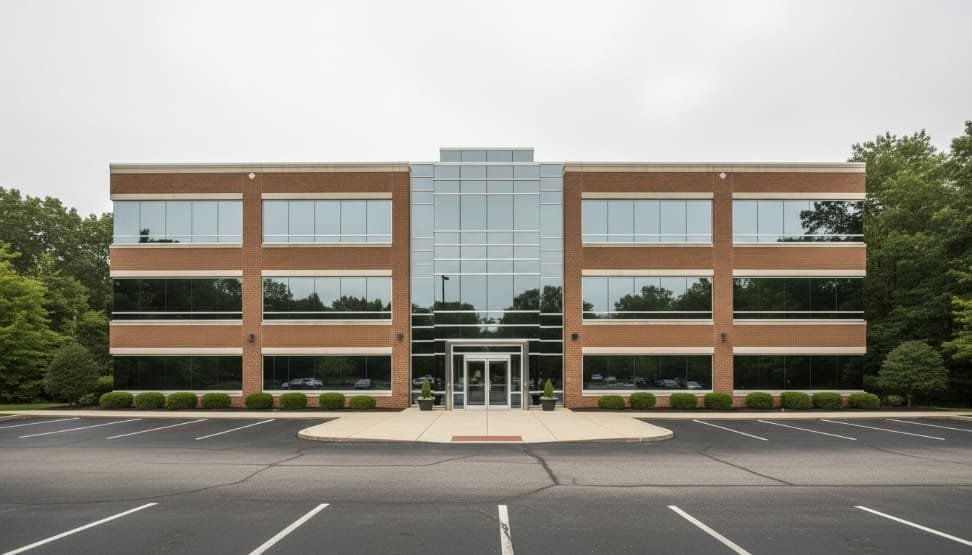

How Facility360° cut average suite turnaround from five weeks to twelve days across 31 tenant spaces — so suites are show-ready when the listing goes live, not three weeks after.
| Client Type | Commercial Property Management Company |
| Property Type | Multi-tenant flex business park, four single- and two-story buildings |
| Industry | Offices & Business Centers |
| Location | King of Prussia, PA 19406 (Montgomery County) |
| Property Size | ~94,000 sq ft across four buildings, 31 tenant suites |
| Suite Sizes | 900–6,500 sq ft |
| Tenant Mix | Professional services, small tech, light assembly, medical/dental, showroom |
| Services Provided | Facility Support Services, Commercial Handyman, Interior Painting, LVP/LVT Flooring, Drywall & Ceiling Patching, Door/Lock & Hardware Repair, Lighting Replacement, Signage Mounting, Fixture Installation |
| Program Started | Autumn 2024 |
| Status | Active Partnership (20+ months) |
| Suite Turnovers Completed | 14 |
King of Prussia is the largest employment center in suburban Philadelphia — an edge city built where the Pennsylvania Turnpike meets the Schuylkill Expressway, roughly 16 to 20 miles northwest of Center City, with US-202 and US-422 feeding into the same interchange. It has no wage tax and the lowest real estate taxes in Montgomery County, and more than $9 billion has gone into development and commercial real estate transactions there since 2010. Class A leasing gets the headlines and the corporate names, from Lockheed Martin to Vertex.
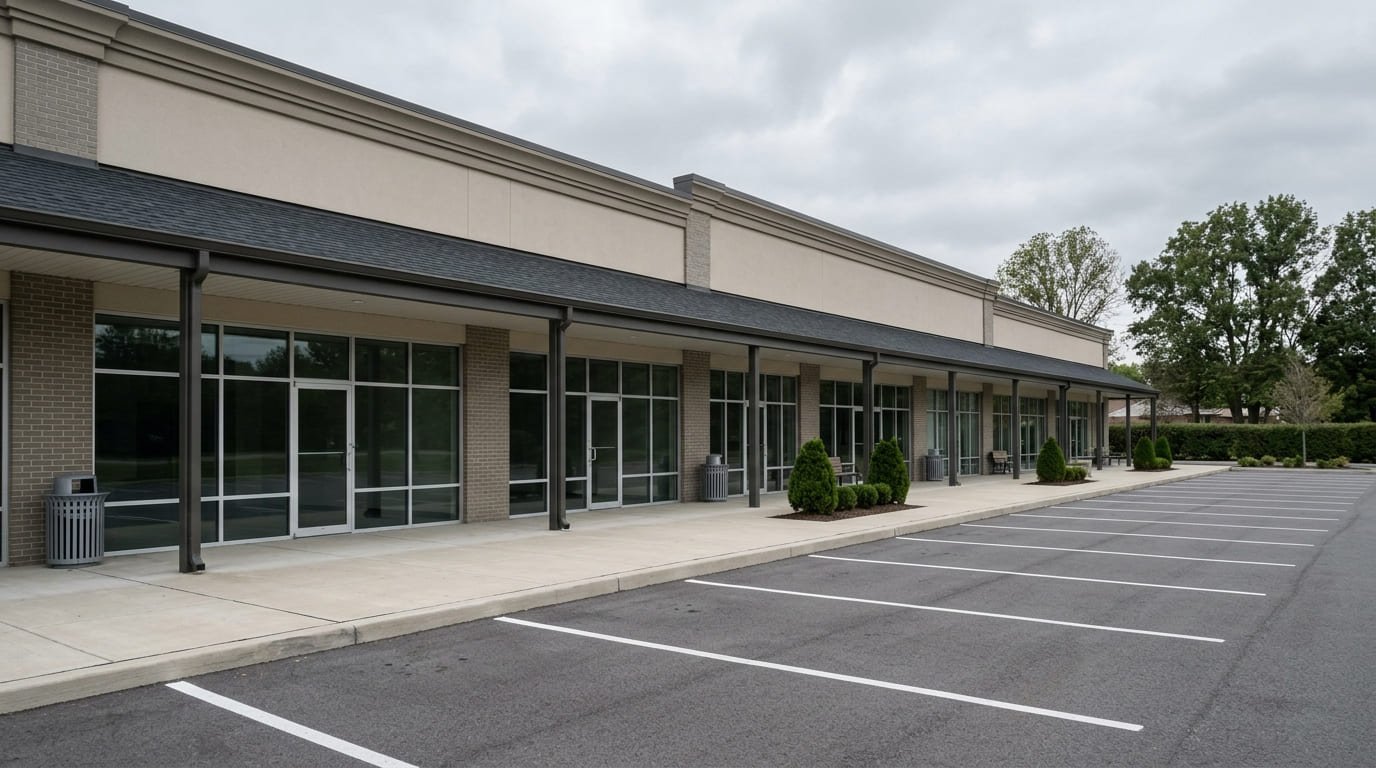
Our client operates in the layer beneath that: a four-building flex business park with 31 suites ranging from 900 to 6,500 square feet, leased to professional services firms, small tech companies, light assembly operations, and a couple of medical practices. It is the kind of asset that houses the small and mid-sized businesses King of Prussia’s economy actually runs on.
And it has a structural characteristic that defines everything about how it must be maintained: it turns over constantly.
Multi-tenant business parks run on two- and three-year leases, which means somewhere between a quarter and half of the tenant base rolls every year. For our client, that meant roughly seven to nine suites changing hands annually across the four buildings — and every one of those transitions was going badly:
The manager’s framing was direct: the leasing team can fill these spaces. I’m the reason they can’t fill them faster.
We built the facility support program around the property’s defining event — the suite turnover — and treated everything else as the baseline that keeps turnovers from being disruptive.
Before touching a turnover, we walked all four buildings and documented the whole asset:
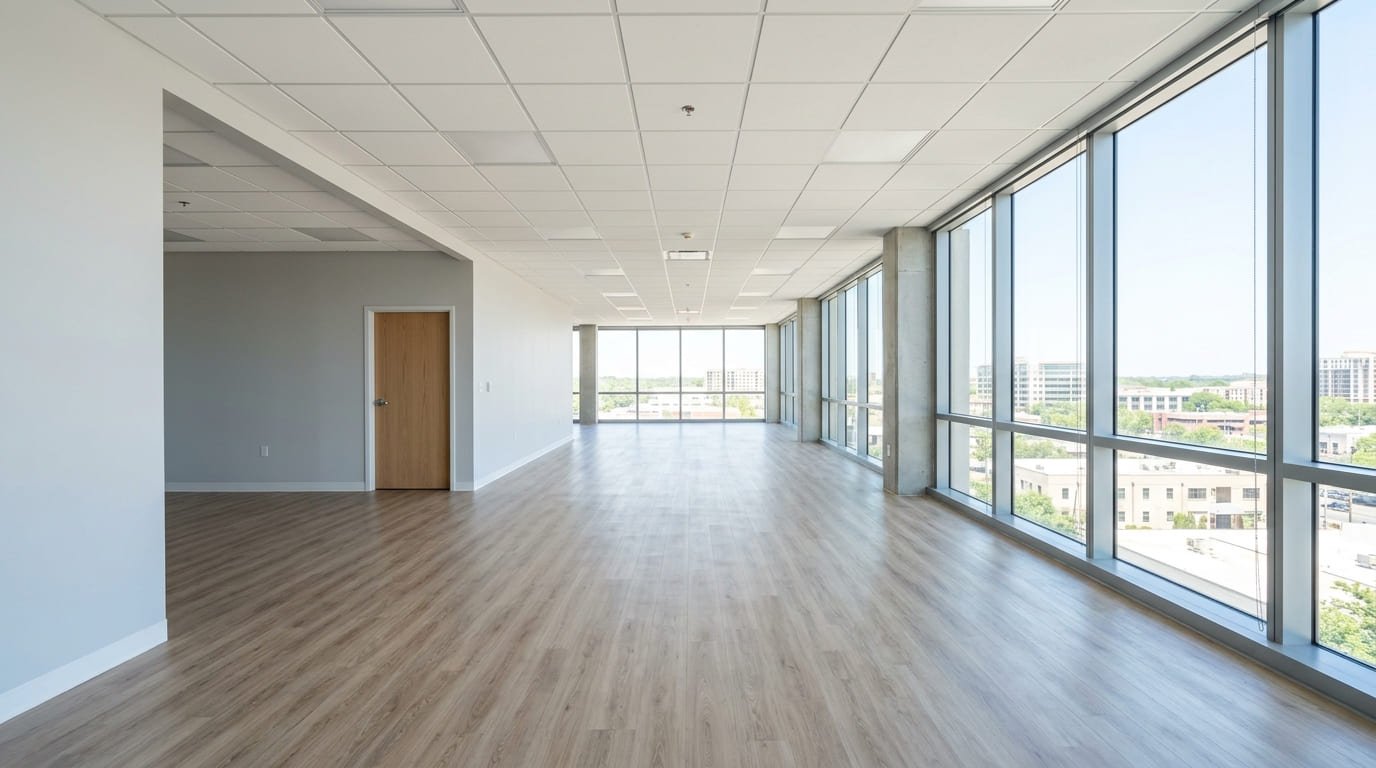
The core change. Instead of assembling each turnover from scratch, we defined a fixed scope that runs the same way every time:
Because the specification is fixed and the materials are standard, we hold stock. The three things that used to add weeks — selecting finishes, sourcing materials, and scheduling separate trades — were removed from the critical path entirely.
We work from the lease expiry calendar, not from the handover date:
So that turnovers no longer crowd out everything else:
Note on scope: this program covers interior facility work, finishes, and tenant-space turnovers. HVAC, roofing, elevators, fire and life-safety systems, parking lot paving, landscaping, and snow removal remain with the park’s specialty vendors. Tenant fit-outs requiring structural, electrical service, or permitted construction work are handled by licensed specialty contractors, which we coordinate around.
After 20 months and 14 completed suite turnovers, the asset behaves differently:
"Five weeks was just what I'd accepted. A tenant leaves, I start calling people, and somewhere over the next month the space becomes showable. Facility360° attacked it from the other end — they pre-inspect while the tenant's still in there, they already know what paint and what flooring because it's the same in every suite, and they're in the day after handover. Twelve days now. What that means practically is that when the listing goes up, the space is done. I'm not apologizing for it during the walkthrough anymore. And I've stopped being the person everything waits on."
— Jennifer Collins, Senior Property Manager, KOP Business Park Management, King of Prussia, PA
A multi-tenant business park is not one building with more tenants — it’s an asset whose economics are set by how fast a suite goes from vacant to leased. Our work with offices and business centers is built around that: standardized turnover packages so every suite finishes the same way, pre-inspection against the lease calendar so work starts before the keys come back, and a standing common-area program so turnovers don’t consume the rest of the property.
This project is part of our facility support services in King of Prussia and our broader work across Greater Philadelphia. We serve business parks, office buildings, and commercial properties throughout King of Prussia, the US-202 and US-422 corridors, the Turnpike and I-76 interchange area, and nearby Wayne, Valley Forge, Norristown, Conshohocken, Bridgeport, and Audubon — across Montgomery County and the surrounding region.
For after-hours incidents at a multi-building property, we also provide emergency commercial repairs in King of Prussia.
If your suites take a month to become showable and every turnover is assembled from scratch, the fix usually isn’t working faster — it’s standardizing the package and starting before the keys come back.
Request commercial service
Tell us what needs attention and we’ll get back to you with next steps.
Request commercial service
Tell us what needs attention and we’ll get back to you with next steps.