
How Facility360° built a maintenance program around a corporate hotel’s occupancy cycle — doing the work in the weekend window, cutting out-of-order room-nights, and keeping brand-audit records current.
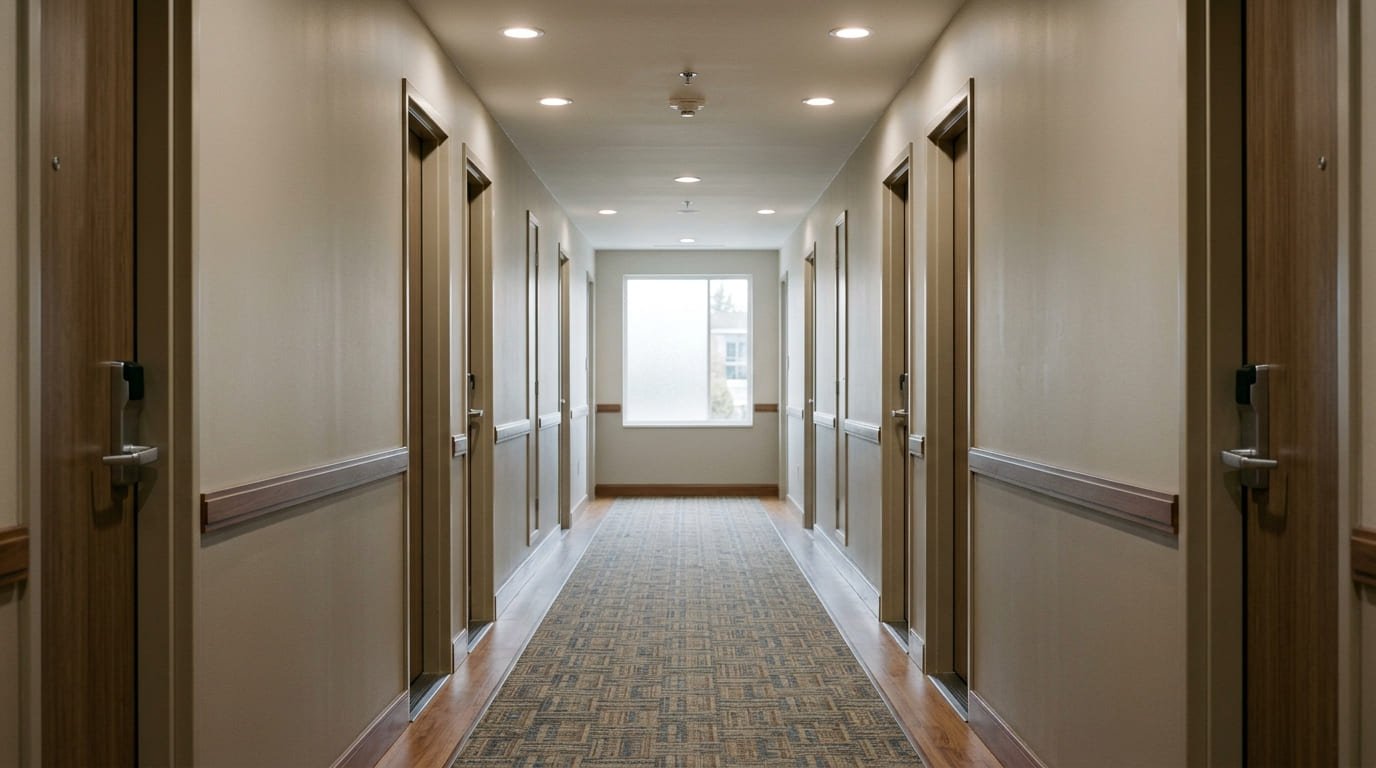
| Client Type | Hotel Ownership Group / General Manager |
| Property Type | Select-service business hotel |
| Industry | Hotels & Hospitality |
| Location | Fort Washington, PA 19034 (Montgomery County) |
| Property Size | 128 guest rooms, 4 floors, plus lobby, breakfast area, and meeting rooms |
| Occupancy Pattern | Corporate midweek-driven — high Tue–Thu, light Fri–Sun |
| Services Provided | Facility Support Services, Commercial Handyman, Drywall & Ceiling Patching, Door/Lock & Hardware Repair, Lighting Replacement, Minor Plumbing, Interior Painting, Furniture Assembly |
| Program Started | Summer 2025 |
| Status | Active Partnership (12+ months) |
| Service Cadence | Weekend PM blocks + weekly punch-list + priority response |
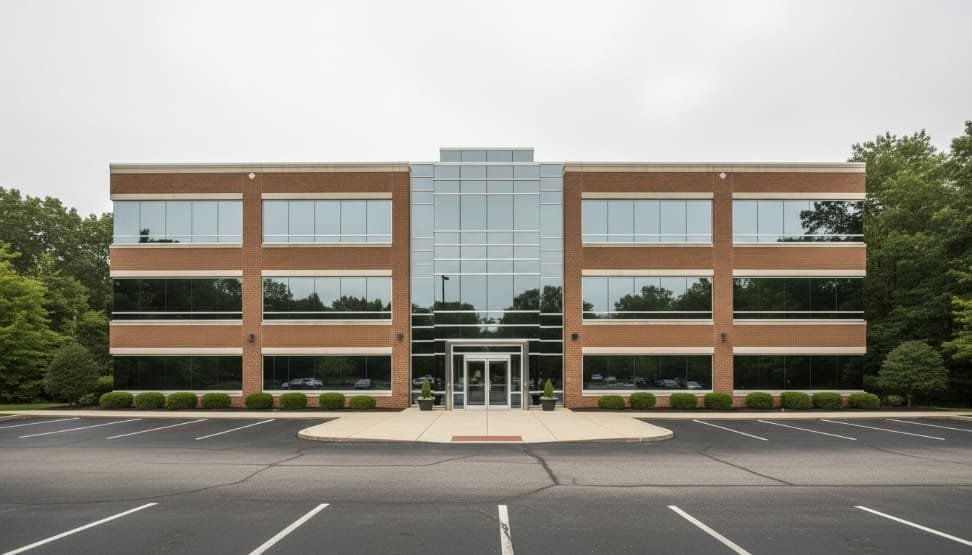
Fort Washington runs on corporate traffic. The Fort Washington Office Park is a 536-acre business park at the crossroads of the PA Turnpike and Route 309, roughly 14 miles from Center City Philadelphia, holding 123 properties and around 6 million square feet of commercial space. The business park alone is home to more than 100 companies, including the corporate headquarters of McNeil Consumer & Specialty Pharmaceuticals, a Johnson & Johnson division — pharma, financial services, and healthcare, all of it generating visiting-consultant, auditor, and training traffic week after week.
Our client’s hotel lives on exactly that traffic. It is a 128-room select-service property serving the office park, and its occupancy curve tells the whole story: near-full Tuesday through Thursday, quiet Friday through Sunday. That is a different animal from a leisure hotel, and it broke the maintenance model the property had been running.
The problems compounded on each other:
The GM’s summary was blunt: we know what needs doing, we know when the building is empty, and we have never once managed to line those two things up.
Facility360° designed a facility support program around one insight the property already had but couldn’t act on: this hotel has a predictable, recurring low-occupancy window every single week. The program exists to use it.
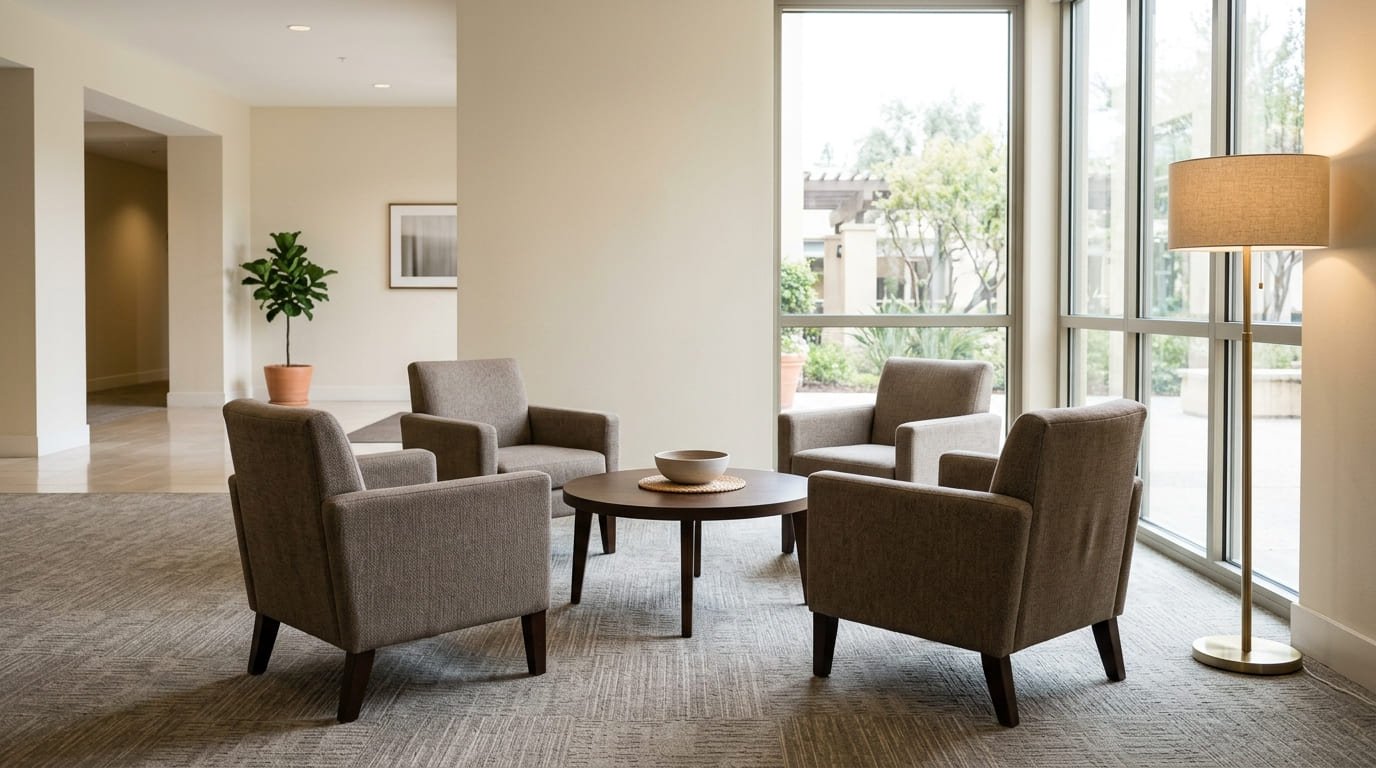
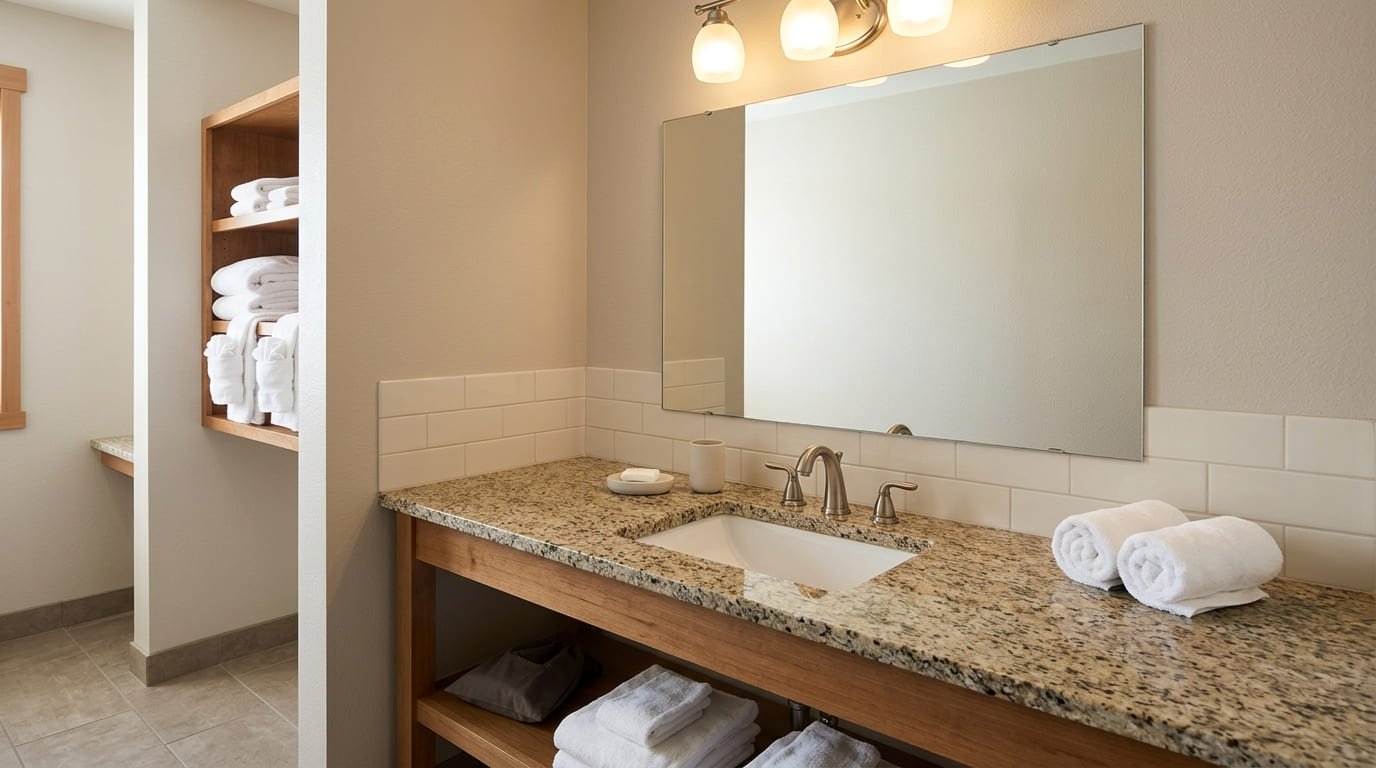
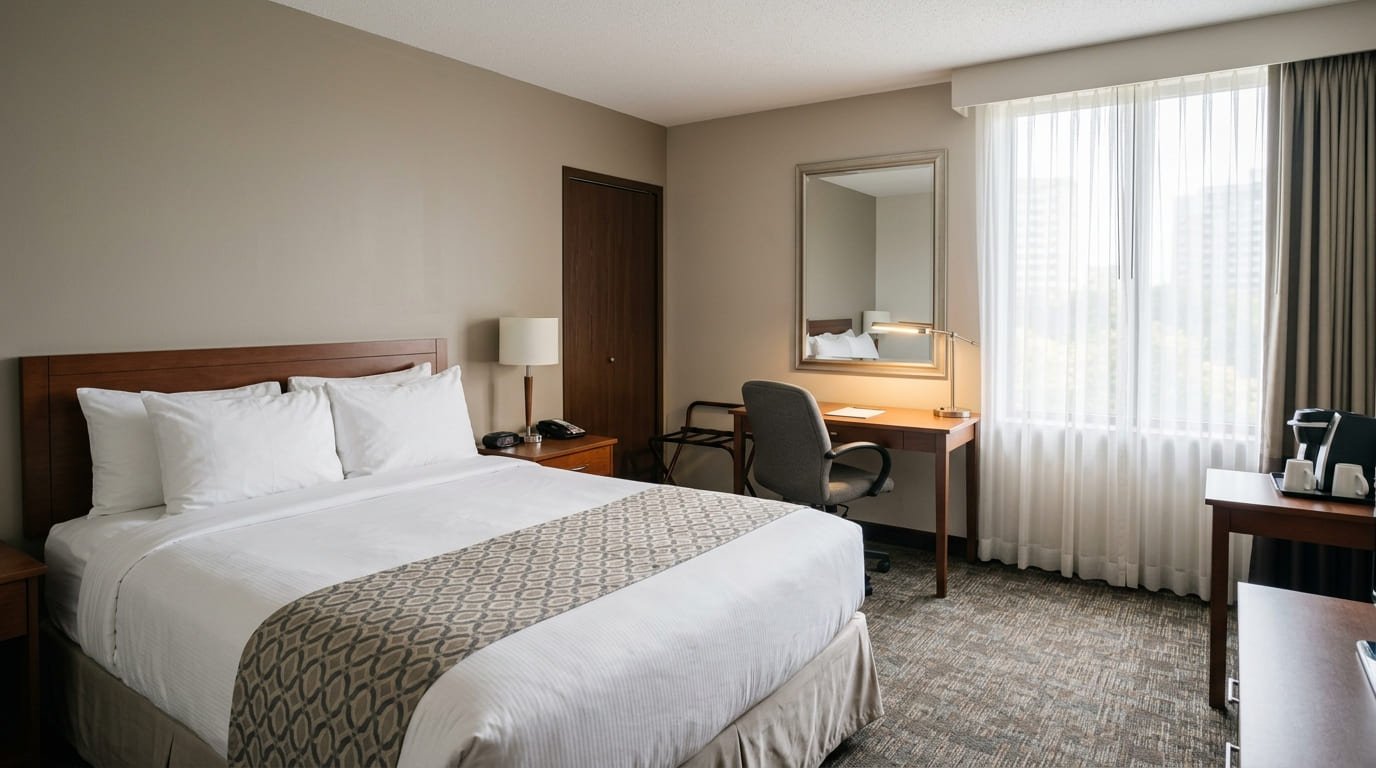
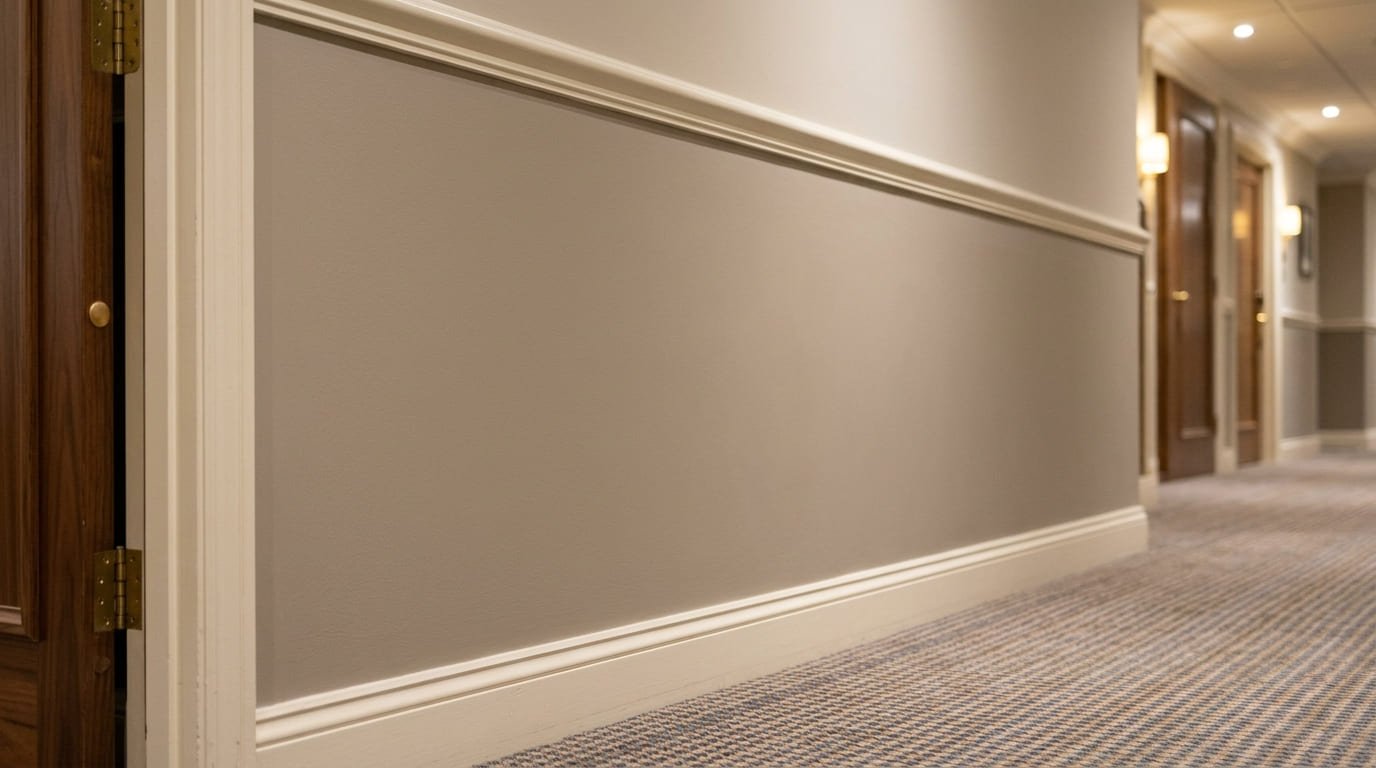
Our team walked the full property — every floor, corridor, public space, and a representative sample of guest rooms across each room type:
This is the core of the program. Instead of fitting repairs into gaps that never appeared, we work in scheduled Friday-through-Sunday blocks:
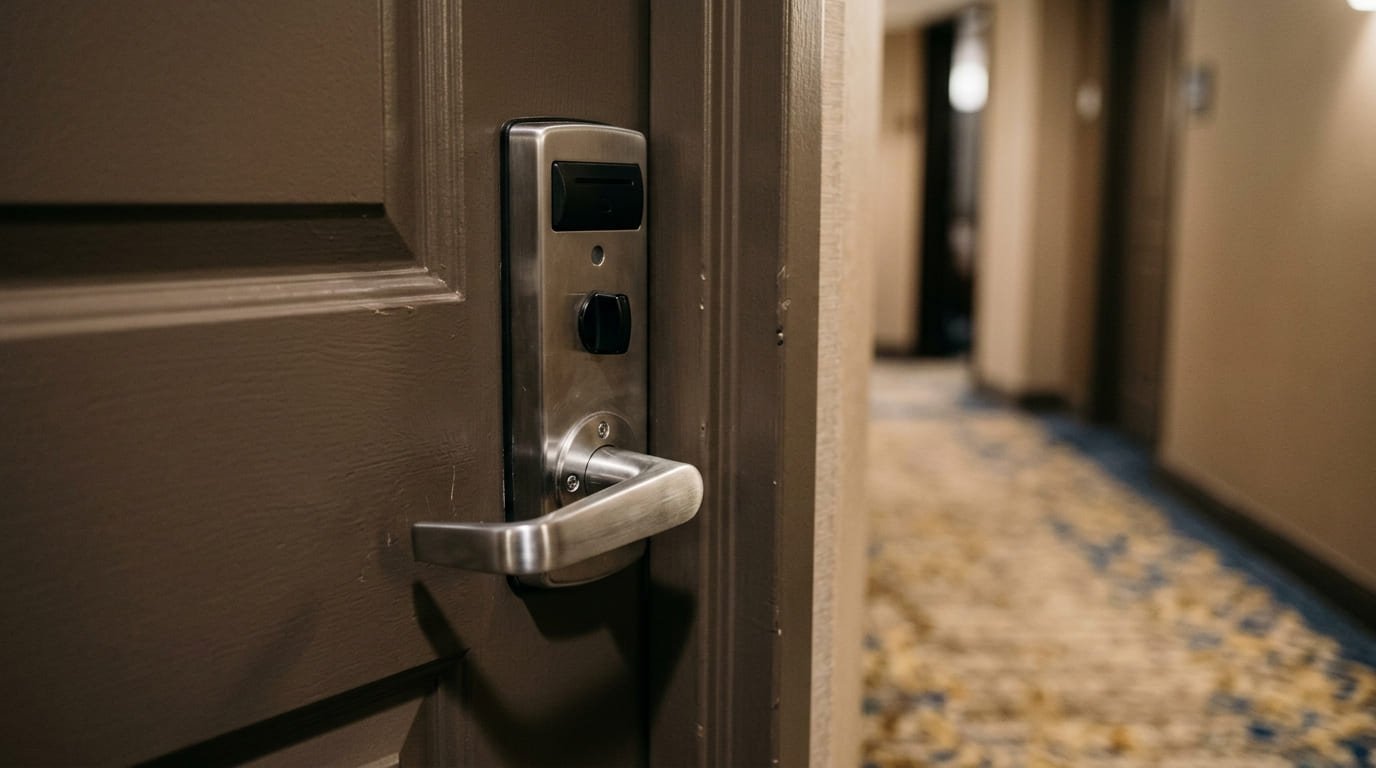
Between blocks, a weekly pass handles what housekeeping and the front desk flagged during the busy days — the small things that turn into complaints if they wait:
Every visit produces a record: rooms touched, what was found, what was completed, with photos and dates. When a brand inspection lands — and they arrive on rolling schedules without much warning — the GM has a current, dated history for the property instead of a reconstruction exercise.
When the engineering team is short-staffed or a group booking compresses the schedule, our crew absorbs the overflow. The two-person team stops being a single point of failure.
Note on scope: this program covers building and guest-room facility maintenance — surfaces, doors, hardware, lighting, minor plumbing, and furniture. PTAC and HVAC servicing, elevators, life-safety systems, pool chemistry, and laundry equipment remain with the property’s specialty vendors and licensed contractors.
After 12 months, the program has changed where the work happens — and that has moved the numbers that matter to a hotel:
"Our problem was never knowing what needed fixing. It was that our building is full exactly when we have people to fix it, and empty exactly when we don't. Facility360° flipped that. They come in on the weekend, we hand them the rooms the forecast says we won't sell, and they work through them. We've basically stopped taking rooms offline midweek — which for us is real money, because those are the nights we sell at rate. And when the brand inspector showed up, I had the whole history with photos ready to hand over instead of scrambling."
— Christine Novak, General Manager, Keystone Hotel & Conference Center, Fort Washington, PA
A hotel’s maintenance constraint isn’t the work — it’s the calendar. Every room you take offline is inventory you can’t sell, and every deferred repair eventually shows up in a review or a brand audit. Our approach to hotel and hospitality facility maintenance starts with the property’s occupancy pattern, then builds the schedule to fit it — whether that’s a corporate hotel with a weekend window, or a leisure property where the quiet season is the opportunity.
This project is part of our facility support services in Fort Washington and our broader work across Greater Philadelphia. We serve hotels, office buildings, and corporate facilities throughout the Fort Washington Office Park, the Route 309 and Turnpike Exit 339 corridors, and nearby Upper Dublin, Dresher, Maple Glen, Flourtown, Oreland, and Ambler — across Montgomery County and the surrounding region.
For after-hours incidents at a hospitality property, we also provide emergency commercial repairs in Fort Washington.
If your rooms come offline on your best nights, and your quiet nights go unused, that’s a scheduling problem before it’s a maintenance budget problem. We build the program around your occupancy curve.
Request commercial service
Tell us what needs attention and we’ll get back to you with next steps.
Request commercial service
Tell us what needs attention and we’ll get back to you with next steps.