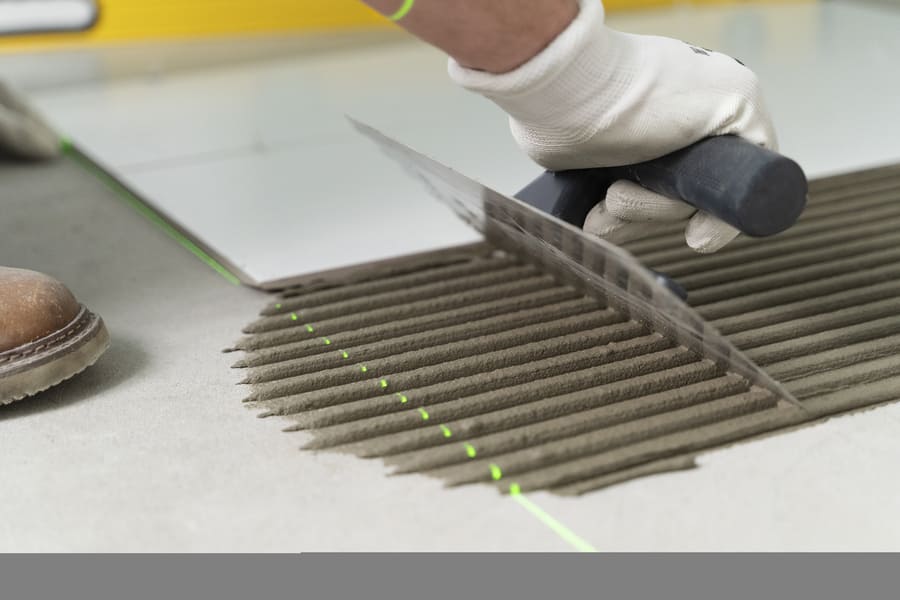
In a commercial facility, floor condition is simultaneously a safety issue, a compliance requirement, and a direct reflection of your facility’s professional standards. A cracked tile edge creates a trip hazard. A raised transition strip between floor surfaces violates ADA accessibility requirements. A missing grout line allows water infiltration that damages subfloor materials and creates slip conditions. Facility360° Solutions provides same-day commercial floor tile patching and transition molding installation for offices, restaurants, retail stores, medical facilities, and warehouses across Greater Philadelphia — eliminating floor hazards, restoring seamless surfaces, and protecting your facility from slip-and-fall liability in a single visit.
Our crew carries commercial tile inventory, rapid-set adhesive systems, grout color matching materials, and ADA-compliant transition molding profiles on every service call — arriving prepared to complete your repair without parts delays or return visits for standard commercial floor systems.
We handle the complete scope of commercial floor tile and transition repair, including:
Under premises liability law, a business owner or property manager who is aware of a floor hazard — a cracked tile, a raised transition, a loose tile edge — and fails to correct it promptly is legally exposed to negligence claims if an injury occurs. The standard of care is not just that the hazard existed, but that it was known and not addressed. Same-day floor repair documentation — including timestamped photos and a written service report — establishes that your facility responded to the hazard immediately upon identification, providing the strongest possible defense against slip-and-fall litigation.
The cost of same-day tile repair is a fraction of a single premises liability claim. We respond same day precisely because the liability clock starts the moment a floor hazard is identified.
Our flooring repair crew serves commercial facilities throughout Greater Philadelphia — including Philadelphia, King of Prussia, Conshohocken, West Chester, Bensalem, Willow Grove, Horsham, Pottstown, and surrounding communities. We carry commercial tile inventory covering the most common sizes, formats, and colors used in Greater Philadelphia commercial construction — along with ADA-compliant transition molding in standard commercial profiles — arriving prepared to complete most repairs in a single visit without sourcing delays.
A safe, seamless floor is the foundation of a professional commercial facility. When tiles crack, transitions raise, and grout fails — we restore them completely, the same day, with documentation that protects your business from every angle.
Don’t leave a cracked tile, raised transition, or missing grout line creating trip hazard liability in your facility. Our commercial flooring repair crew is available same day across Greater Philadelphia — eliminating floor hazards and restoring professional surface appearance with full documentation on every job.
Call now for same-day commercial floor tile repair: (267) 694-4508 — or request service online.
Cracked tile edges, raised transition strips, and missing grout lines are among the most common causes of slip-and-fall incidents in commercial facilities — and among the most preventable. A single customer or staff injury on an unaddressed floor hazard creates liability exposure that far exceeds the cost of same-day repair. Our commercial flooring crew responds across Greater Philadelphia — patching, replacing, and finishing floor surfaces and transitions the same day to eliminate hazards and restore professional appearance completely.
Commercial tile failures typically result from one or more of the following causes:
Inadequate substrate preparation — tile installed over an uneven, contaminated, or insufficiently cured subfloor develops hollow spots and cracks as the substrate flexes under traffic load
Insufficient mortar coverage — tiles installed without full back-butter coverage develop unsupported edges that crack under point loading from furniture legs and foot traffic
Subfloor movement — building settlement, HVAC vibration, or moisture-driven subfloor expansion creates stress that fractures tile and grout joints
Thermal cycling — temperature changes cause floor materials to expand and contract at different rates, stressing grout joints and adhesive bonds over time
Impact damage — heavy equipment drops, furniture dragging, and concentrated point loads from commercial carts and pallet jacks crack tile in high-traffic areas
Water infiltration — grout joint failure allows water to reach the adhesive layer, dissolving the bond and creating loose, hollow-sounding tiles
We assess the root cause before every repair to ensure the replacement tile bonds correctly and holds long-term.
Tile matching in commercial repair is one of the most technically challenging aspects of the work — and the most important for an invisible result. Our matching process involves:
Visual assessment — evaluating the existing tile for color, size, surface texture, finish, and edge profile
Manufacturer identification — where tile markings are visible on the back of removed pieces, we source exact manufacturer matches from our commercial tile network
Commercial tile inventory — we maintain a commercial tile inventory covering the most common sizes, colors, and formats used in Greater Philadelphia commercial construction
Custom sourcing — for discontinued or specialty tiles, we source close matches from commercial tile suppliers and present options for approval before installation
Grout color calibration — grout color is mixed and tested against the existing joint color under working light conditions before grouting the repair area
Where an exact match is unavailable, we provide honest guidance on replacement options — including full row or zone replacement strategies that create a cleaner visual result than a mismatched single tile.
The Americans with Disabilities Act Accessibility Guidelines (ADAAG) specify precise requirements for floor surface transitions in commercial facilities:
Maximum vertical change of ¼ inch — transitions up to ¼ inch in height are permitted with a vertical edge
Beveled transitions up to ½ inch — changes between ¼ inch and ½ inch must be beveled with a maximum slope of 1:2
No abrupt changes over ½ inch — transitions exceeding ½ inch require a ramp with handrails meeting full ADA ramp specifications
Surface must be stable, firm, and slip-resistant — transition molding materials must meet slip resistance standards in both wet and dry conditions
Non-compliant transitions are one of the most cited ADA violations in commercial facility inspections — and among the most straightforward to correct. Every transition molding we install meets current ADAAG requirements and is documented in our service report.
Yes — with proper management of the repair zone. Our process for occupied facility tile repair includes:
Contained work zone — barriers and safety signage installed around the repair area before work begins
Rapid-set adhesives and grout — commercial rapid-set mortars and grouts that achieve trafficable strength within 2–4 hours, allowing same-day return to service in most cases
Dust and debris control — wet cutting of replacement tile performed outside the facility or in a contained area to prevent dust spread to occupied spaces
Phased repair scheduling — for larger repair areas, we work in sections to keep the majority of the floor accessible during the repair process
For high-traffic areas like restaurant dining rooms, retail sales floors, and medical facility corridors, we recommend scheduling repairs before opening hours or overnight to eliminate any operational impact.
The right approach depends on the condition of the tile itself and the underlying cause of the grout failure:
Grout repair only — appropriate when the tile is intact, firmly bonded, and the grout failure is cosmetic or due to normal joint movement; grout is raked out and replaced with matching color
Tile and grout replacement — required when the tile is cracked, hollow-sounding, or has lifted at edges; the full tile must be removed and reset before grouting
Full zone replacement — recommended when grout failure is widespread across a section, indicating a substrate or installation issue that will continue causing localized failures if not addressed systematically
Patching grout over a hollow or cracked tile is a temporary cosmetic fix that fails within months under commercial traffic. We assess tile bond integrity before recommending the correct scope of repair.
From everyday maintenance and upgrades to emergency repairs, Facility360° Solutions helps you plan, budget, and execute the work your commercial property needs to stay safe, efficient, and looking its best — with minimal disruption to your operations.
Philadelphia, King of Prussia, Bensalem, Perkasie, Conshohocken, West Chester, Reading, Willow Grove, Plymouth Meeting, Horsham, Pottstown, Morgantown, Allentown, Pittsburgh.
Serving Greater Philadelphia, PA
Your single point of contact for 24/7 facility management and all handyman services
Signup our newsletter to get update information, news and insight