
For property managers and commercial building operators in Greater Philadelphia, this issue is especially consequential because small maintenance problems rarely stay small for long. A neglected leak turns into water damage. A noisy rooftop unit becomes a midsummer HVAC failure. A loose electrical connection becomes an urgent service call after hours. Preventive maintenance reduces those risks by addressing wear, inefficiency, and emerging issues before they escalate into costly disruptions.
At Facility360 Solutions, we work with property managers and commercial facility operators across Philadelphia, King of Prussia, and the surrounding region. Preventive maintenance is not an add-on service for us — it is part of a broader facility support model built for commercial properties that need one reliable partner for day-to-day repairs, scheduled inspections, vendor coordination, and ongoing upkeep. That approach matters for property managers who want fewer surprises, faster response, and more consistent building performance throughout the year.
Reactive maintenance often looks cheaper on the surface because its true cost is spread across multiple budget categories. A facility may never see a single line item labeled “deferred maintenance,” but the financial impact still shows up — in emergency labor, rushed parts orders, overtime approvals, operational disruption, tenant complaints, and premature asset replacement.
Consider what happens when a critical system fails without warning:
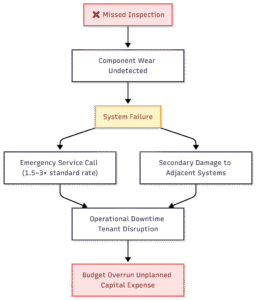
For commercial property managers, the operational cost can be just as painful as the repair bill. A plumbing issue may affect tenant spaces. An electrical problem may interrupt business operations. A roof leak may lead to interior ceiling, flooring, or wall repairs that dwarf the original cost of the inspection that could have caught it early.
If your property produces a steady stream of urgent calls, repeated patch repairs, and recurring issues in the same areas, that is usually a sign the building needs a more structured maintenance program — not faster dispatch alone. For context on how deferred repairs escalate, see: The True Cost of Deferred Maintenance.
You may also want to review: 10 Hidden Maintenance Issues That Cost Commercial Properties the Most — common problems that tend to go undetected until they become expensive.
Preventive maintenance delivers the best return when it is focused on the systems most likely to generate major repair costs, safety concerns, or business disruption. In most commercial properties, that means HVAC, plumbing, electrical systems, roofing, and high-use interior components.
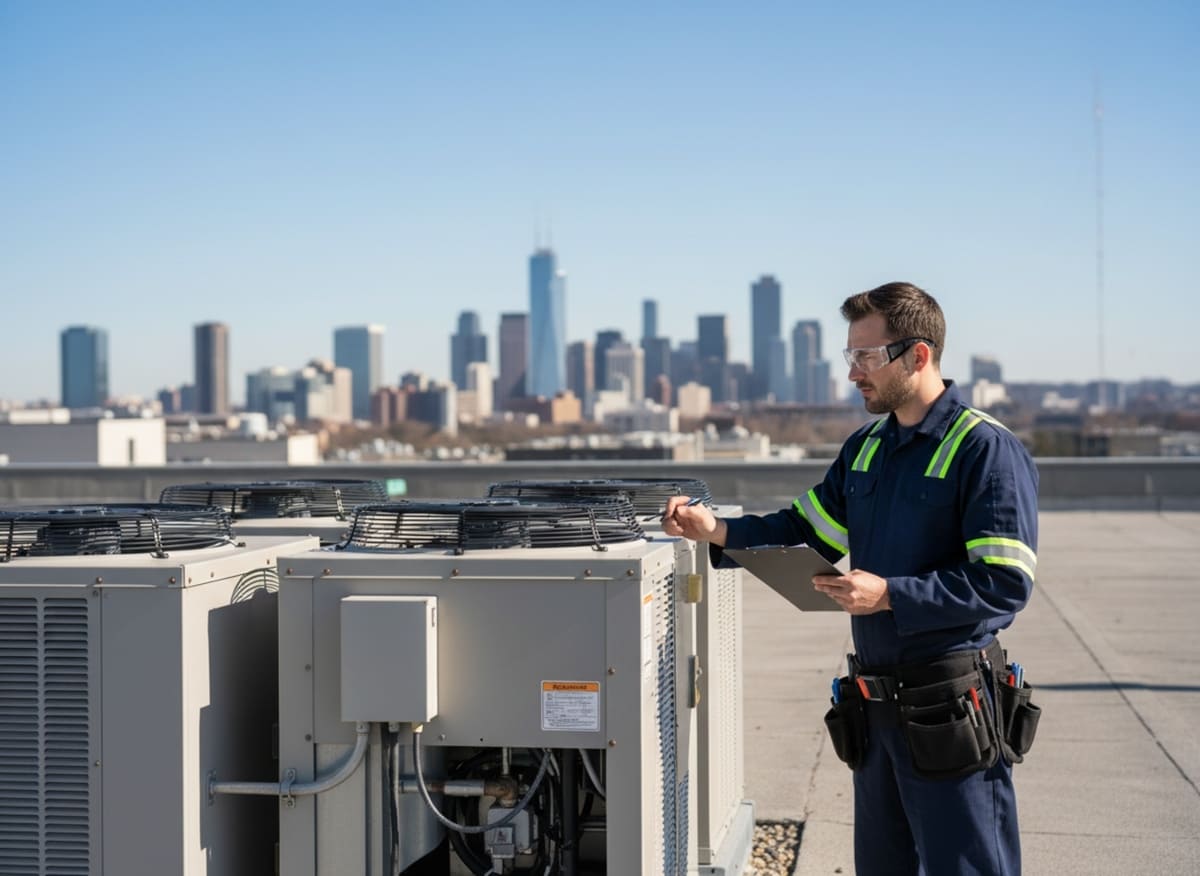
HVAC is one of the most expensive and operationally critical systems in any commercial facility. Neglected HVAC equipment does not just risk sudden breakdown — it often runs inefficiently every day, driving up energy consumption and placing extra strain on mechanical components.
A structured HVAC preventive maintenance routine typically includes:
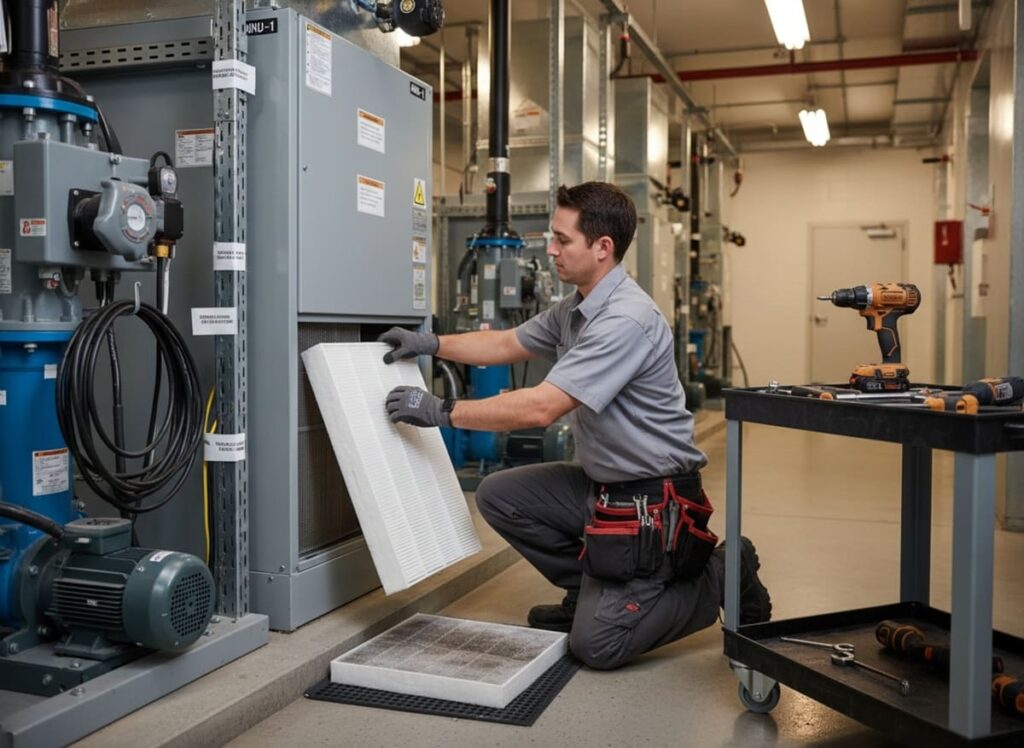
For facility operators, the benefit shows up in three ways: reduced energy waste from better system efficiency, fewer emergency outages from caught issues, and longer equipment life from lower mechanical stress. Even when a full replacement is not imminent, poor maintenance can significantly shorten the useful life of rooftop units and split systems and increase the frequency of peak-season service calls.
For commercial properties in the Philadelphia region, HVAC reliability is also a tenant experience issue. Office buildings, retail spaces, restaurants, and medical facilities all depend on stable indoor conditions. One unplanned failure can quickly become a tenant complaint, a lease conversation, or an after-hours emergency HVAC repair.
Plumbing problems are frequently underestimated because early signs can seem trivial: a slow drip, a toilet that runs intermittently, a supply line with visible corrosion, or a fitting that is slightly loose. In commercial properties with multiple restrooms, breakrooms, and utility connections, those small issues are exactly the ones that quietly compound into expensive repairs.
Preventive plumbing maintenance typically includes:
The value here is not limited to water savings. It is primarily about risk reduction. Water intrusion damages ceilings, drywall, flooring, cabinetry, and subfloors — and can disrupt tenant operations well beyond the original leak. For property managers, plumbing prevention is one of the most cost-effective ways to avoid expensive secondary damage and repeated service interruptions. Facility360’s minor plumbing and faucet repair service addresses exactly these issues before they become emergencies.
Electrical maintenance is one of the clearest examples of why preventive work matters beyond cost savings. It is also a safety and liability issue. Ignored electrical problems create real fire risk, equipment damage, and code exposure — and they usually provide early warning signs long before they become hazardous.
A preventive electrical review may include:
In commercial properties, electrical issues typically start as nuisances before becoming operational problems. Tenants and customers notice poor lighting, unreliable outlets, and recurring power-related disruptions. Addressing those issues through scheduled maintenance protects both building safety and the property’s professional presentation. Facility360 supports this through lighting and outlet replacement and emergency electrical and lighting repair.
Roofing is where deferred maintenance most reliably becomes a capital event. Once moisture enters the building envelope, costs move quickly from manageable maintenance to restoration-scale work.
A preventive roof and building envelope program should include:
For property managers, this is not only about extending roof life. It is about protecting everything below it. When exterior issues are caught early, the cost is usually contained. When they are not, a building may need not only roof work, but also ceiling and wall damage repair and, in more serious cases, flood and water damage restoration.
Discussions of preventive maintenance ROI often default to broad industry ratios. A more useful starting point for most property managers is a direct review of where costs are already appearing in their current operating model.
Instability in a commercial property tends to create costs in overlapping areas:
Turning the savings into a schedule
Knowing preventive maintenance pays for itself is the easy part. The harder part is deciding what actually goes on the calendar and how often. Our annual maintenance checklist for Philadelphia office buildings breaks the year into monthly, quarterly, and seasonal rounds, with the spring and fall inspections timed to the damage our regional climate does to commercial properties.
Preventive maintenance creates value primarily by improving predictability. Better predictability means fewer unplanned calls, fewer surprise expenses, and better control over when and how work gets scheduled. It also makes annual budgeting more accurate because a larger share of the year’s maintenance activity is planned rather than reactive.
A practical internal review can start with a few key questions:
Those answers usually show clearly where a structured maintenance plan will create the fastest and most meaningful return.
Facility360 Solutions offers facility assessments for commercial property managers across Greater Philadelphia and surrounding areas. Contact us to discuss your property’s needs →
A useful preventive maintenance program is more than a calendar of recurring tasks. It is a structured operating system for how a property stays functional, safe, and manageable throughout the year.
The foundation is knowing what needs to be maintained and where the highest risks are. That means identifying key systems, documenting recurring trouble areas, and understanding which failures create the most operational disruption.
For most commercial properties, the highest-priority assets include:
This visibility helps property managers stop treating every repair equally. Some issues are cosmetic. Others are early indicators of more expensive failures.
Not every maintenance item carries the same urgency or risk. A structured PM plan separates critical assets from routine upkeep and applies service frequency accordingly.
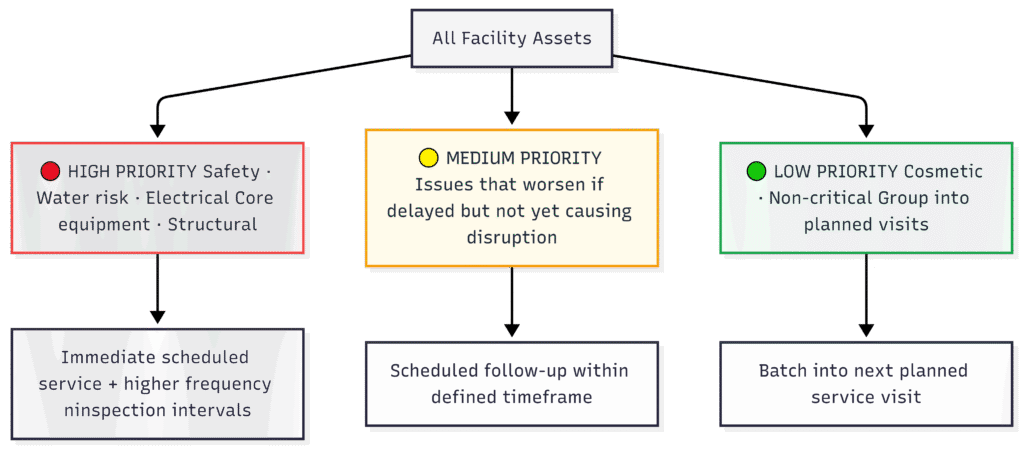
A practical three-tier ranking model:
This framework helps managers allocate budget based on actual risk rather than reactively, based on whichever issue surfaced most recently.
One of the most common reasons commercial facilities stay reactive is inspection inconsistency. Problems go unnoticed because walkthroughs are informal, undocumented, or dependent on whoever happened to be available that day.
A stronger approach standardizes recurring inspections around the building’s highest-risk areas:
Facility360’s Facility Support Services include property inspections and issue reporting as part of ongoing maintenance relationships — giving property managers structured visibility without having to manage inspection logistics themselves.
A property becomes easier to manage when the maintenance team looks for patterns rather than treating each issue as isolated. Recurring failures in the same area, repeat calls for the same type of problem, or persistent issues after a previous repair often indicate a root cause that has not been addressed.
Useful tracking questions:
That pattern-based view is what separates a reactive repair operation from a managed facility.
Many commercial buildings do not struggle with maintenance because of underspending. They struggle because of poor structure. A few recurring patterns tend to keep properties stuck in a reactive cycle:
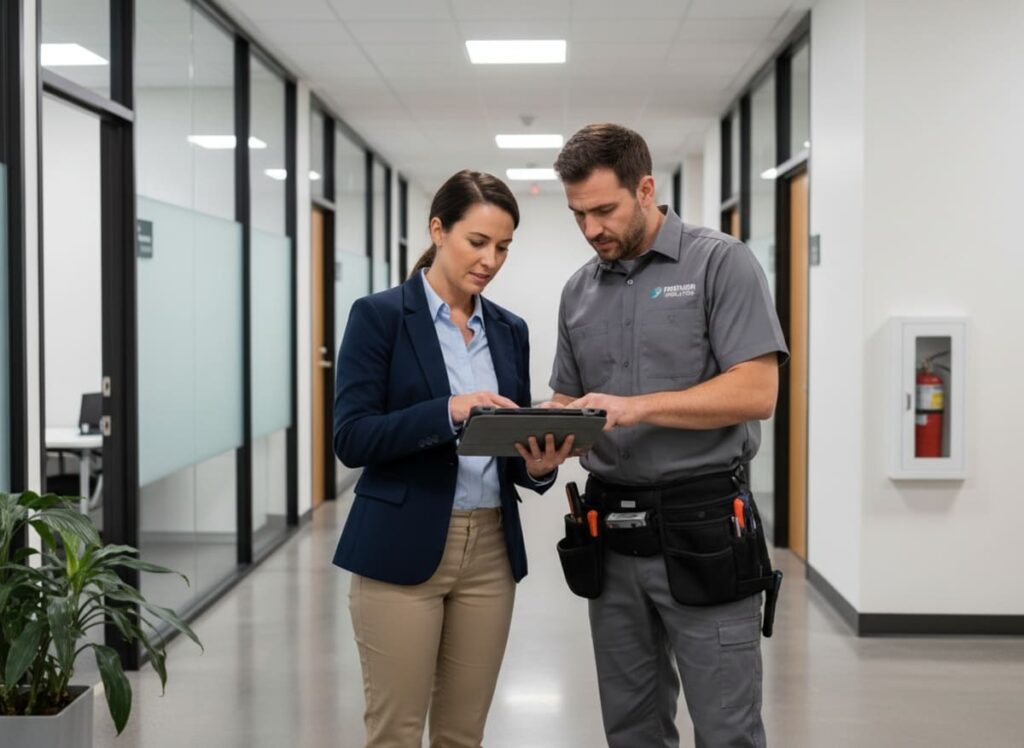
This is one reason many property managers consolidate facility needs with a single full-service partner. Facility360 is built for that model — handling general repairs, minor plumbing and electrical, inspections, touch-ups, hardware, coordination, and preventive maintenance support under one service relationship. That means fewer calls, clearer accountability, and more consistent results across the year. Learn more about our commercial facility support services →
Preventive maintenance is valuable across most commercial property types, but it becomes especially important wherever downtime, appearance, safety, or customer experience have direct business consequences.
Facility360 Solutions works with:
In each of these property types, maintenance affects not only physical condition but also day-to-day operations, occupant experience, and the perception of the property among tenants and customers.
For most building operators, the right next step is not a complete maintenance overhaul. It is a focused review of where preventable costs are already appearing.
Start by answering these questions for your property:
Once those answers are in hand, it becomes practical to build a maintenance plan that addresses actual risk — rather than one that looks complete on paper but misses the areas that matter most.
Facility360 Solutions supports commercial properties across Greater Philadelphia — including Philadelphia, King of Prussia, Conshohocken, Plymouth Meeting, Willow Grove, Bensalem, Horsham, and surrounding areas — with recurring maintenance, inspections, repairs, emergency response, and coordinated facility support.
Request a Facility Assessment | View All Services | See Service Areas