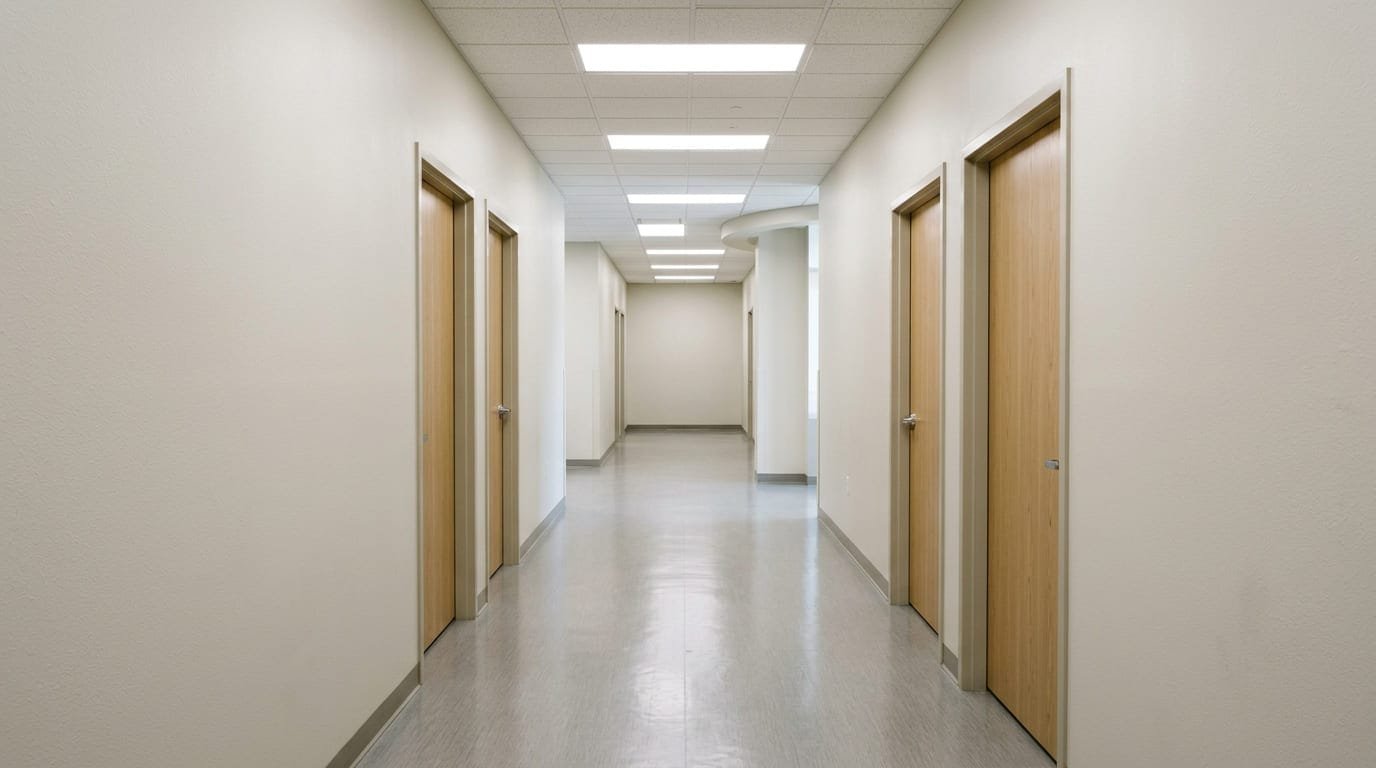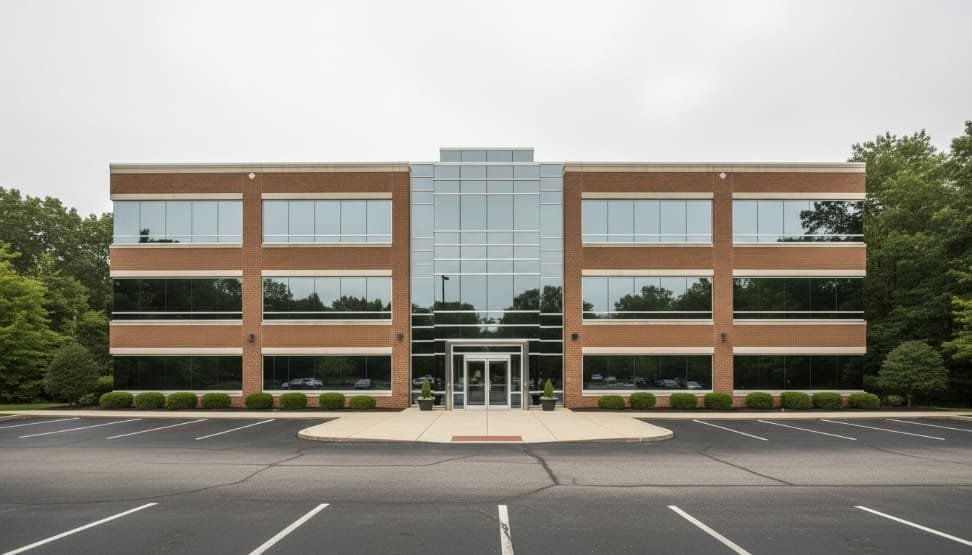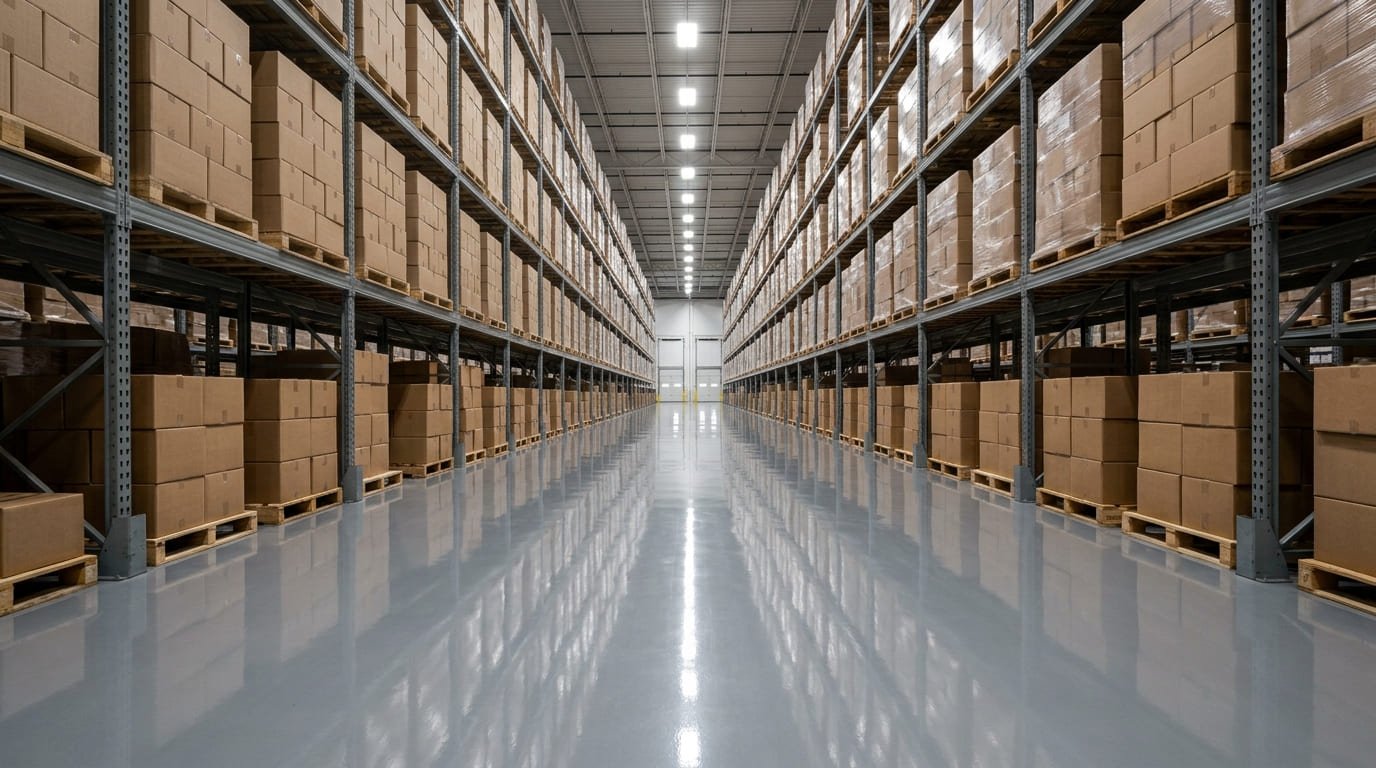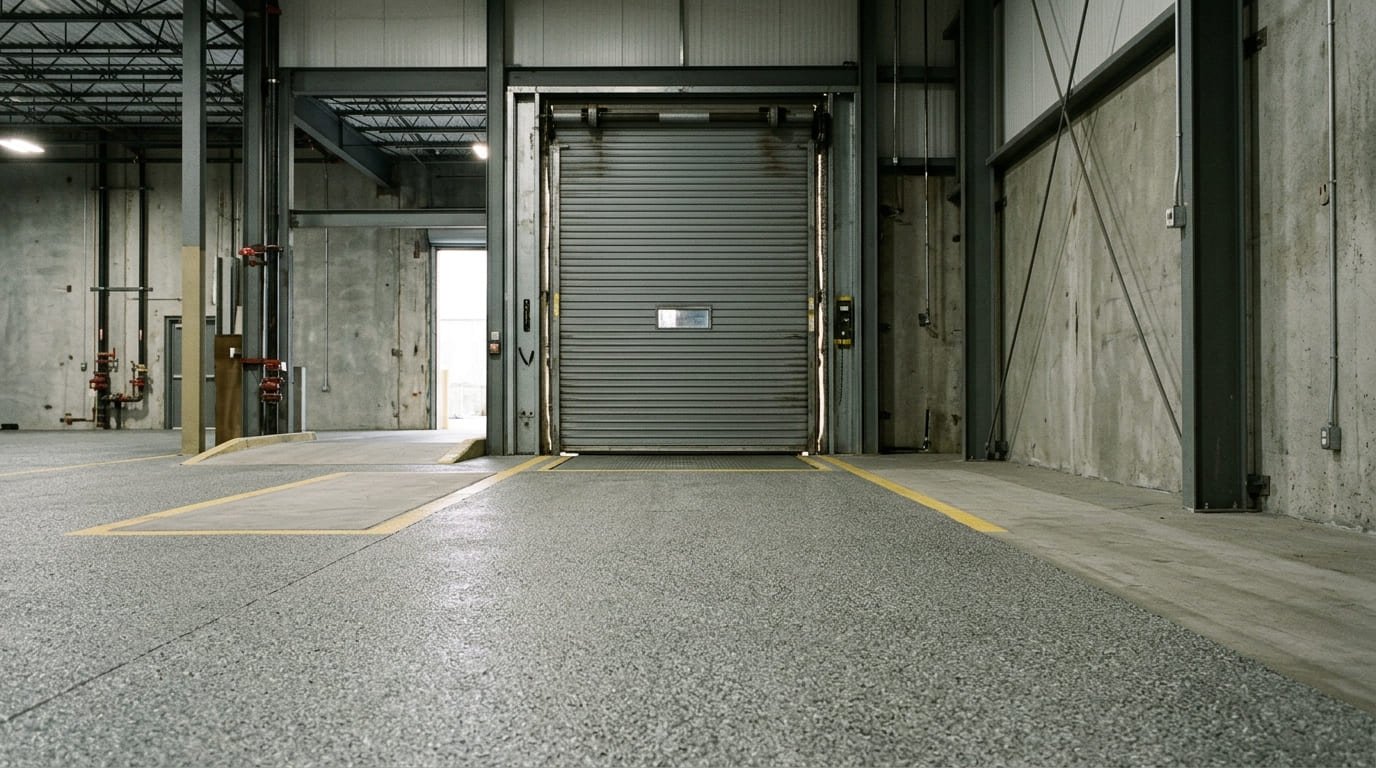

How Facility360° replaced a failing, dusting concrete slab with a forklift-rated epoxy system — installed in phases around production, with zero lost shipping days.
| Client Type | Industrial Property Owner / Operator |
| Property Type | Light manufacturing and warehouse facility |
| Industry | Warehouses & Industrial Facilities |
| Location | Warminster, PA 18974 (Bucks County) |
| Project Size | 18,000 sq ft (warehouse floor, staging area, loading zone) |
| Slab Age | ~35-year-old concrete, previously uncoated |
| Services Provided | Commercial Flooring Installation, Epoxy & Urethane Coatings, Subfloor Repair & Leveling, Floor Repair & Patching, Safety Line Striping |
| System Installed | Diamond-ground slab + moisture mitigation primer + high-build epoxy body coat + polyaspartic topcoat |
| Project Duration | 3 phases over 2 weekends + 1 scheduled shutdown day |
| Completed | Spring 2026 |
| Production Days Lost | 0 |
Warminster is Bucks County’s manufacturing core — a township of 10.2 square miles with more than 900 commercial businesses, an industrial corridor running through Ivyland, and a client base that runs from precision machining and tool-and-die shops to pharma and aerospace suppliers. Facilities here move product: forklifts, pallet jacks, and rolling loads across the same slab, every shift, for decades.
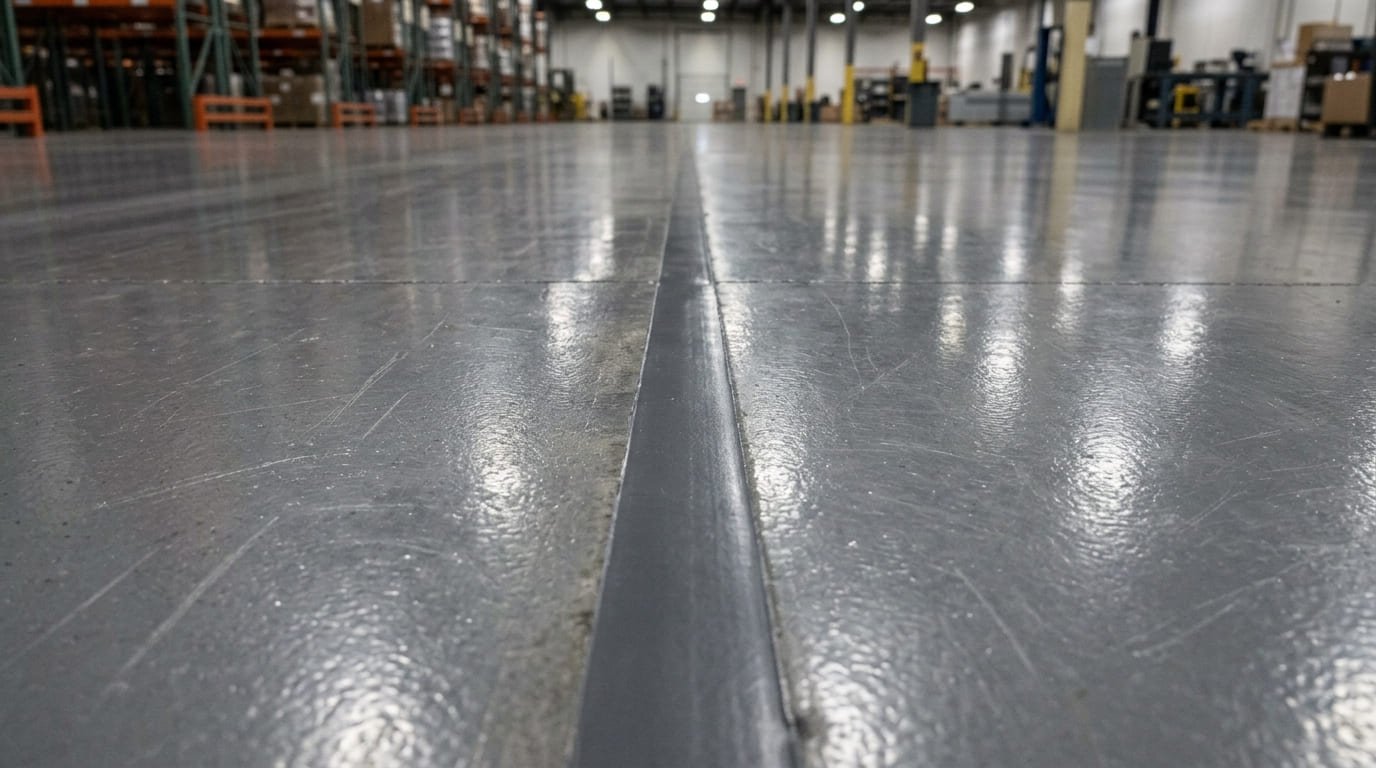
This facility was a light manufacturing and warehouse operation running out of a building with an original concrete slab roughly 35 years old — never coated, and showing it. The owner reached out after a near-miss: a pallet jack caught a spalled edge at a joint and dumped part of a load.
The floor’s condition had become an operational problem, not a cosmetic one:
That last point is what most flooring quotes got wrong. Epoxy needs cure time, and access to the floor has to be restricted while it cures. Most warehouse projects run two to five days of restricted access. The owner had been told, repeatedly, that this meant closing.
Facility360° approached this as a commercial flooring installation built backward from the client’s production schedule — matching the system spec to how the floor actually gets used, and sequencing the work so the facility never stopped shipping.
Before quoting a system, our team tested and mapped the slab:
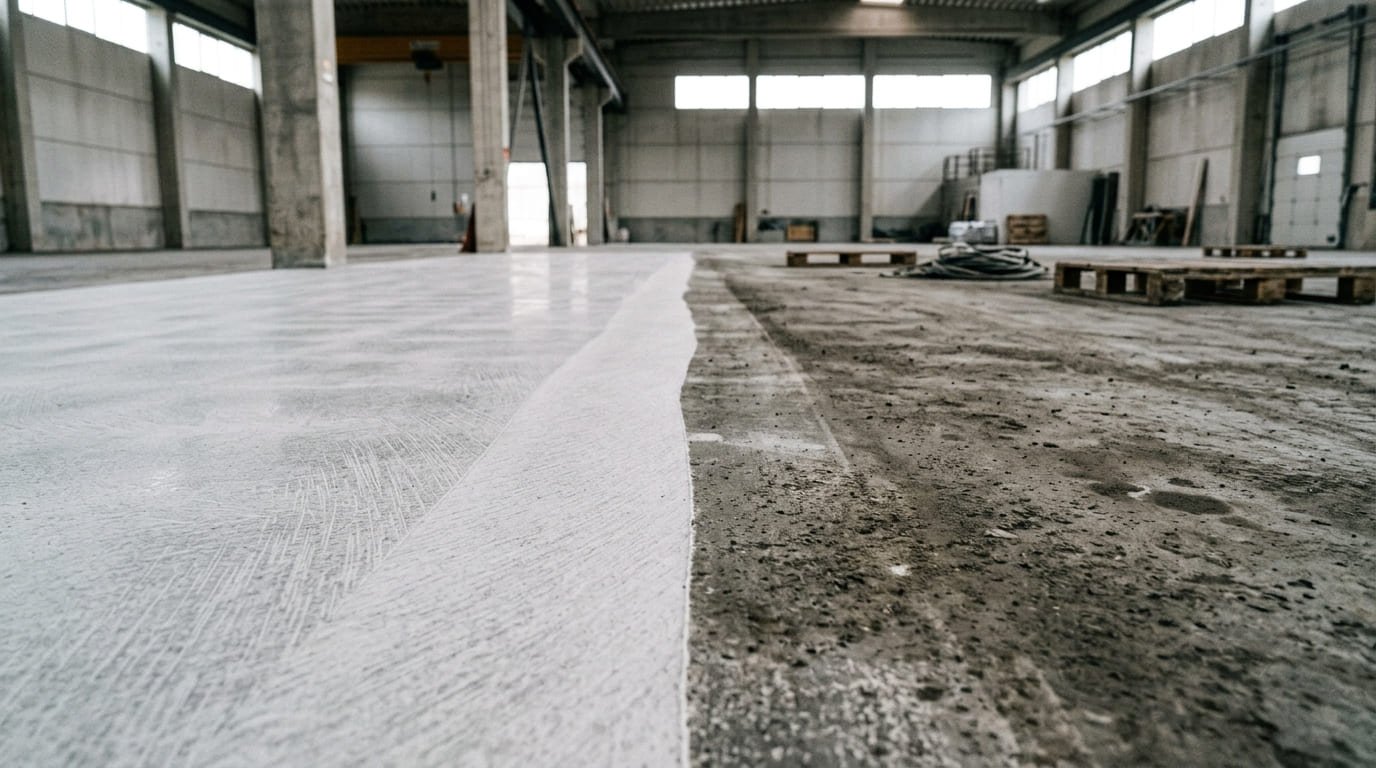
Preparation is where floors are won or lost. A coating is only as good as the bond underneath it:
Rather than a one-size-fits-all product, we specified a layered system matched to the facility’s highest operational risk — heavy point loads and abrasion:
Full details of the material systems we work with are on our epoxy and urethane coatings page.
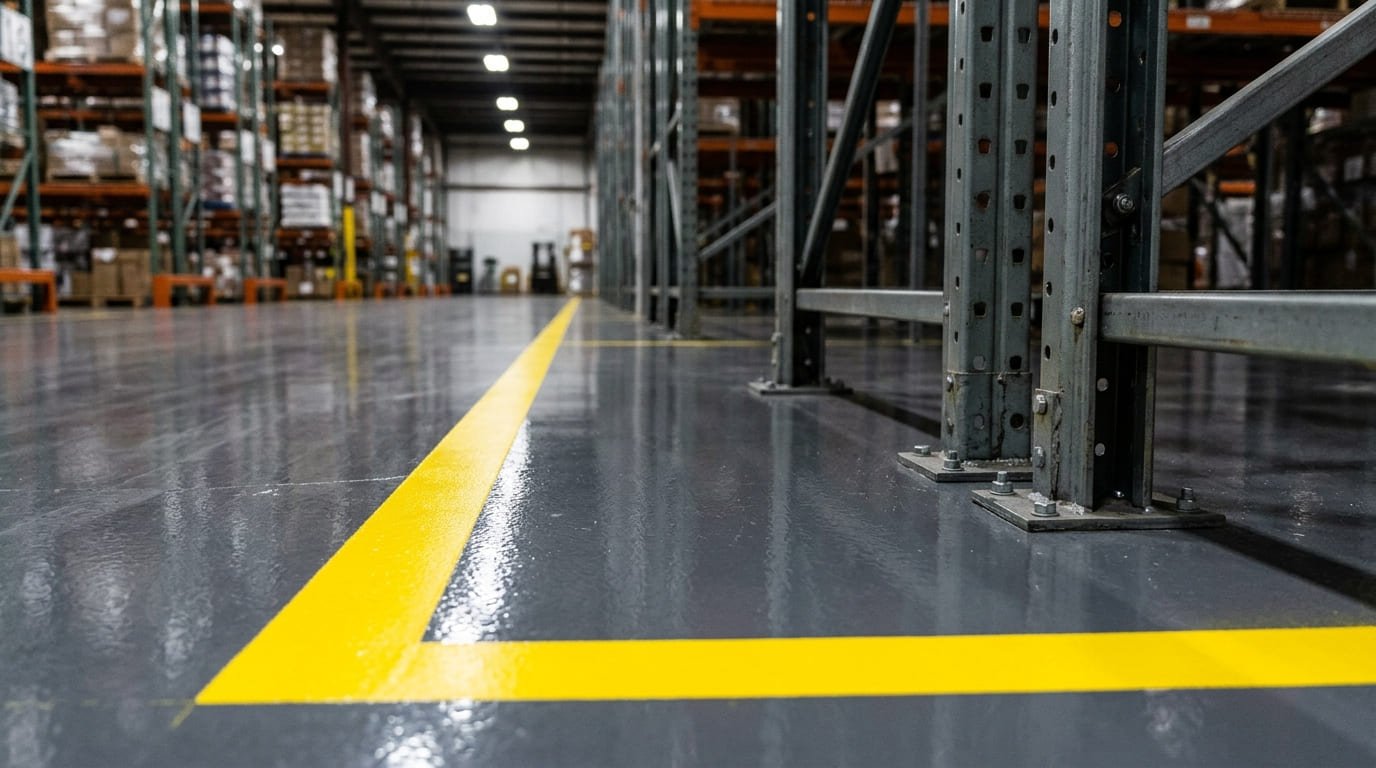
Aisles, pedestrian walkways, egress paths, staging boundaries, and equipment zones were re-struck in high-visibility epoxy striping — bonded into the system rather than painted on top, so it will not peel off under the same traffic that erased the last set. This work sits alongside our broader industrial and warehouse painting services.
The whole project was sequenced around production. The floor was divided into three zones. Each zone was ground, prepped, and coated across a Friday-night-through-Sunday window, with the polyaspartic topcoat chosen specifically because it returns to foot traffic and then forklift traffic faster than conventional systems. Racking and inventory were staged into the completed zones as the work rotated. One scheduled shutdown day — already on the client’s calendar — absorbed the loading-zone transitions.
The facility shipped every scheduled business day of the project.
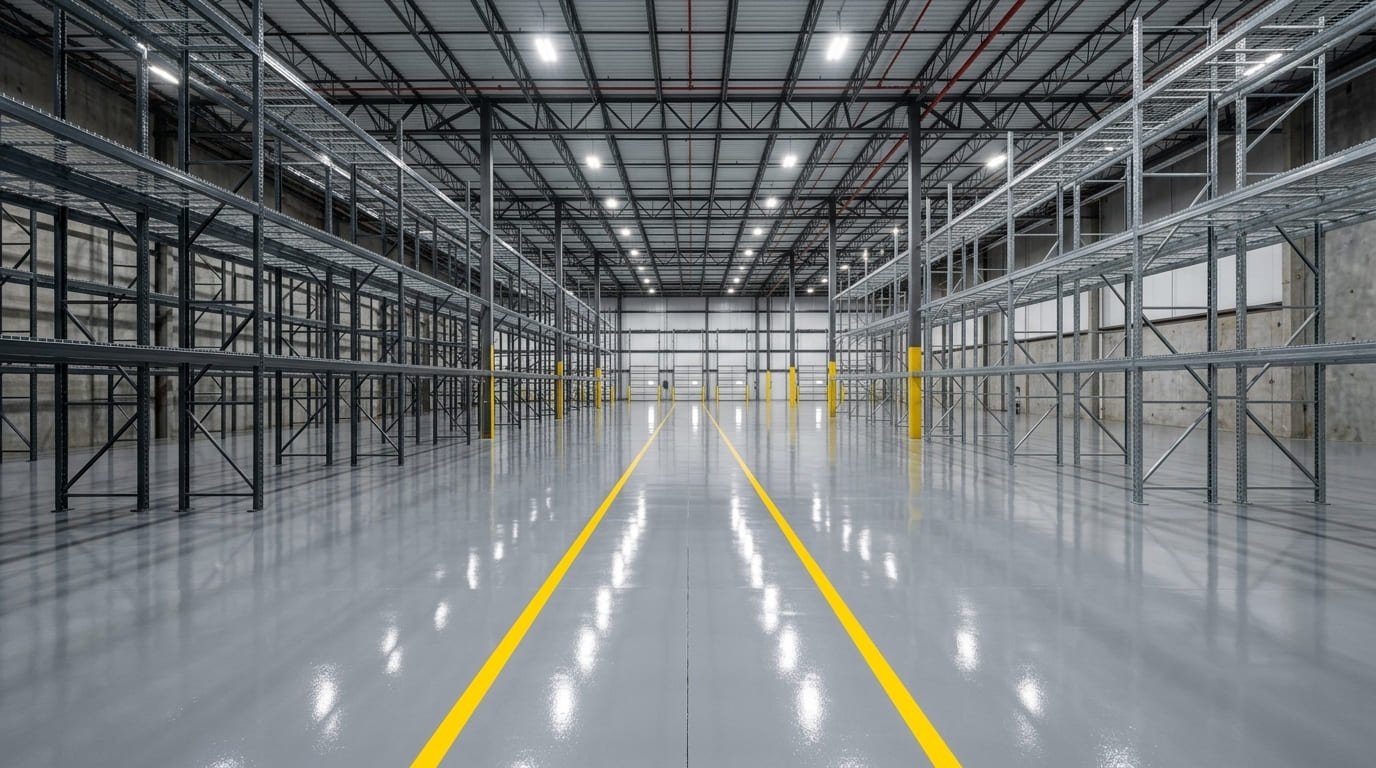
"Every other quote we got started with 'you'll need to shut down for a week.' We can't do that — we ship every day. Facility360° came in, looked at our schedule first, and built the job around it. Three zones, two weekends, one shutdown day we already had planned. We didn't miss a single shipment. And the floor itself is night and day — no more dust on everything, no more chasing spalled joints, and you can actually see the aisle lines again."
— Emily Rhodes, Senior Asset Manager, Keystone Property Partners, Warminster, PA
Industrial floors are not a finish decision — they are an operations decision. The right system depends on your actual forklift weights, your chemical exposure, your slab’s moisture behavior, and how much downtime you can afford. Our work with warehouses and industrial facilities starts with testing and traffic mapping, not a product catalog.
For precision manufacturing, electronics, and pharma environments, static-dissipative (ESD) epoxy systems are a separate specification with their own resistance testing and compliance requirements — relevant for many of the precision and pharma operations around Warminster and Ivyland. If that is your environment, tell us during the assessment and we will scope it accordingly.
This project is part of our commercial flooring installation in Warminster and our broader facility services in Warminster. We serve industrial and manufacturing facilities across Warminster, the Ivyland industrial pocket, and the PA-132 and York Road corridors — including nearby Warrington, Hartsville, Hatboro, Horsham, and Jamison — throughout Bucks County and Greater Philadelphia.
For unplanned downtime events, we also provide emergency commercial repairs in Warminster.
Whether you run a distribution facility off Street Road, a machine shop in Ivyland, or a multi-tenant industrial building anywhere in Bucks County, we scope the floor around your production schedule — not the other way around.
Request commercial service
Tell us what needs attention and we’ll get back to you with next steps.
Request commercial service
Tell us what needs attention and we’ll get back to you with next steps.