From the Merck supply-chain footprint on Church Road and the Jefferson Lansdale Hospital corridor to multi-tenant industrial flex space along the Lansdale Yard rail line and the Main Street commercial core — Facility360° delivers a single-vendor facility support program built for pharma, healthcare, and manufacturing facility teams across the North Penn Valley.
Lansdale is the center of the North Penn Valley — a Borough of roughly 18,773 residents in Montgomery County (ZIP 19446), and one of the largest boroughs in the region. The commercial profile here is built around three operational anchors: pharmaceutical operations led by the Merck Sharp & Dohme facility on Church Road, healthcare driven by Jefferson Lansdale Hospital with its 140 beds and 700-plus staff, and a manufacturing base inherited from the Borough’s industrial heritage. Around those anchors sits an active Main Street commercial corridor, pharmaceutical wholesale and distribution operations, multi-tenant industrial flex space along the Pennsylvania Northeastern Railroad freight line, and the dense apartment stock that comes with being a SEPTA Regional Rail commuter hub. For the facility managers, property teams, and building owners running these properties, the maintenance reality doesn’t fit a single contractor relationship. Pharma supply-chain facilities have compliance requirements that generalist contractors don’t meet. Healthcare buildings around the Jefferson corridor operate on patient schedules that don’t pause for repair work. Manufacturing and industrial flex space involves heavy-equipment areas, three-phase electrical, and asset profiles a typical commercial maintenance program isn’t sized for. The default solution — running separate vendor relationships for each property type — burns the facility team’s week on coordination and produces documentation gaps where the regulatory exposure is highest.
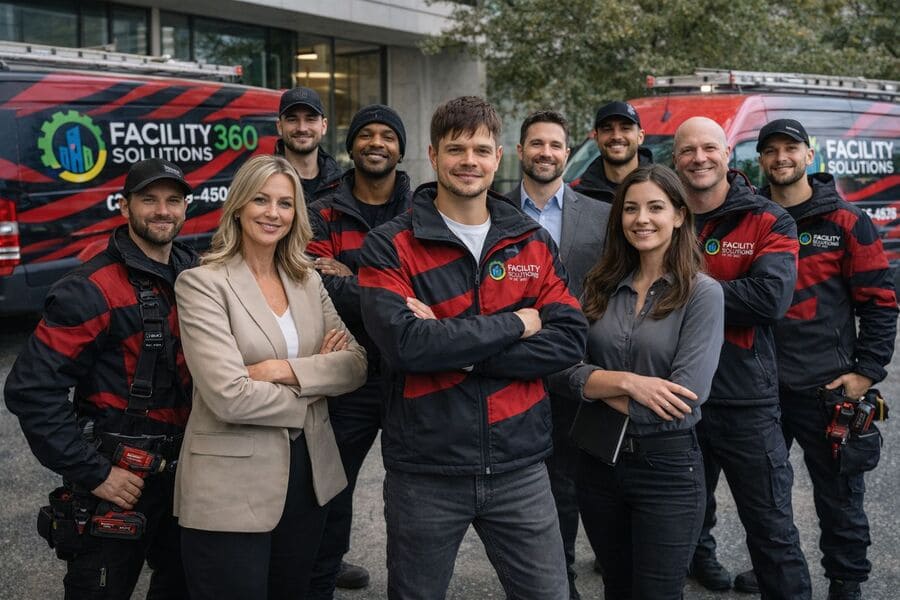
Facility360° Solutions is a licensed Pennsylvania commercial contractor that replaces that coordination overhead with a single facility support program. One account manager. One billing cycle. Scheduled service windows with written reporting after every visit. Same-day response for urgent issues, 24-hour response for standard requests, and proactive identification of problems before they escalate into emergency calls or compliance gaps.
The facility support program is designed for facility managers, plant managers, and property teams who need a single, reliable partner across all routine and recurring maintenance:
Clients moving to an active facility support program typically see a 40–60% reduction in unplanned maintenance calls within the first year, a meaningful drop in tenant complaints about repair quality, and a maintenance budget that becomes predictable enough to plan against rather than absorb as a variable cost.
The commercial environment around Church Road, Broad Street, and Sumneytown Pike is different from a typical suburban borough in one important way: a meaningful share of the buildings here support operations where downtime and compliance gaps carry direct production cost, patient impact, or regulatory exposure. Pharma supply-chain facilities operate inside process-temperature, humidity, and contamination tolerances that routine maintenance has to respect — not just during the work itself, but in how the work is scheduled, documented, and integrated into the facility’s deviation and quality-investigation workflows. Healthcare buildings around the Jefferson Lansdale Hospital corridor — including medical offices, outpatient clinics, and specialty practices — operate on patient schedules and infection-control protocols that determine when and how routine work can happen. Multi-tenant industrial flex space along the Lansdale Yard freight footprint involves three-phase electrical, heavy-equipment areas, loading docks, and asset profiles that generalist commercial contractors don’t routinely encounter. And the apartment stock surrounding the SEPTA stations — with the unit turnover cycles that come with a commuter rental market — adds a multi-family operational layer where turnaround speed is the critical path for revenue recovery.
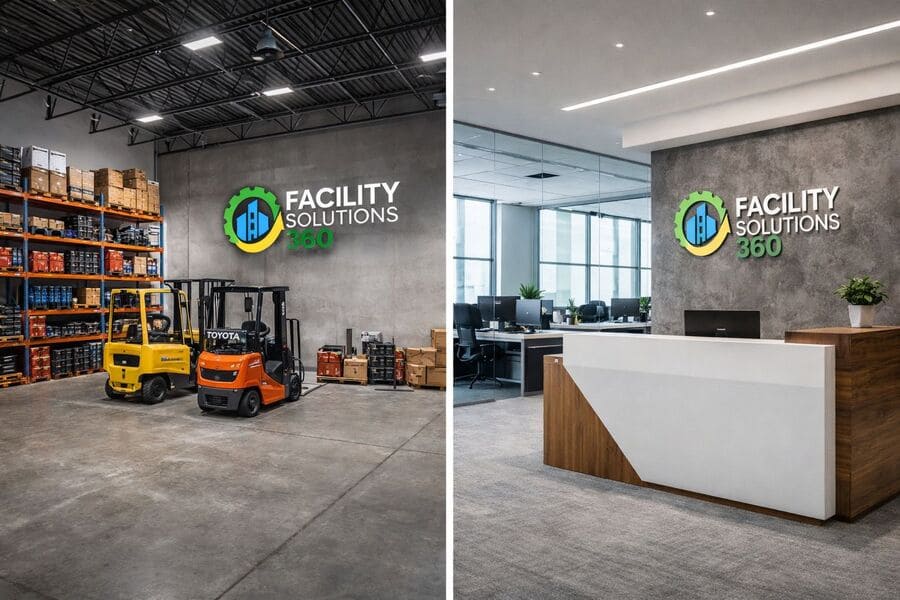
Our crews work routinely across this kind of building mix — pharma support zones, healthcare facility common areas, manufacturing non-production zones, multi-tenant industrial flex space, downtown retail and storefronts on Main Street, and apartment communities along the SEPTA corridor. The assessment-first approach is the starting point for every new client: a complete property walkthrough documents existing condition, identifies deferred-maintenance items at the asset level, builds an asset inventory across operational zones and common areas, and produces a photographic baseline for future reference. For pharma and healthcare clients, the assessment also confirms the documentation format the facility’s internal quality and compliance systems require so the program output integrates cleanly from day one. The goal isn’t to run more service calls — it’s to run fewer, with each one planned, documented, and resolved on the first visit to the standards each property type actually requires.
Nearby areas: North Wales · Hatfield · Montgomeryville · Towamencin · Upper Gwynedd · Kulpsville · Colmar · Souderton
Also serving: Horsham · Willow Grove · Plymouth Meeting · Blue Bell · Ambler · Fort Washington
✓ Single Point of Contact
✓ Pharma, Healthcare & Industrial Experience
✓ Compliance-Ready Documentation
✓ Proactive, Not Just Reactive
One Partner. Every Repair. Total Facility Control.
Keep your pharma, healthcare, or industrial property maintained, compliant, and fully operational — with one reliable team handling every repair, inspection, and maintenance task. From Church Road to Main Street and the surrounding industrial corridor, we cover it all.
Yes, and this is one of the operational pieces that determines whether a facility partner is actually viable for pharma. Routine work in or near GMP-adjacent and controlled environments runs under access discipline, contamination-control protocols, and chain-of-custody documentation that generalist contractors aren't built for. The program output is structured to integrate with the facility's deviation, CAPA, and quality-investigation workflows — meaning each work order produces documentation in a format the quality team can drop directly into internal records rather than having to translate. For ongoing programs, the facility's specific procedures are pre-loaded into the work-order workflow so each visit starts from the correct protocol. The same approach applies to pharmaceutical wholesale and distribution operations.
Healthcare environments require access discipline that most generalist facility programs aren't built for. Routine and preventive work is scheduled into windows that don't disrupt patient or treatment hours, our crews follow the facility's infection-control protocols and patient-zone boundaries, and work zones are isolated from active-care areas with appropriate barriers. For inpatient and high-acuity environments, work that can't fit into off-hours windows is staged with the facility's environmental services and clinical operations teams in advance. Documentation supports the facility's internal compliance reporting in parallel with the standard work-order record. The Jefferson Lansdale corridor and the surrounding medical-office footprint are environments we work in routinely.
Yes. Multi-tenant industrial flex is one of the building types where a single facility support program produces the clearest return, because each tenant unit can carry different operational profiles inside the same building envelope — and that's exactly the scenario where fragmented contractor relationships create the most coordination friction. The program runs to building-level scope (envelope, common areas, parking, exterior lighting, base-building systems) and to tenant-level scope where the landlord is responsible, with documentation separated cleanly between the two for accurate billing and tenant chargeback. For heavy-equipment areas, three-phase electrical zones, and loading-dock infrastructure, the crews are sized for industrial scope rather than general commercial.
Yes, and this is one of the operational returns for multi-family property near commuter-rail corridors where turnover frequency is high. The program standardizes the post-move-out workflow: same-day walkthrough after the unit becomes vacant, scope captured in a work order immediately, turnover repaint and repair work scheduled against predictable timing rather than waiting for contractor availability. For owners running steady-state turnover across multiple buildings, the time saved across cycles aggregates significantly across a year — both in days-to-rerent and in operational hours the property team gets back. Common-area maintenance for the building runs in parallel under the same program.
Yes, and this is one of the operational arguments for a single program over fragmented contractor relationships in a diverse facility portfolio. Each site runs on its own service plan with the appropriate inspection cadence, scope, documentation format, and compliance integration — but the workflow, account manager, billing, and consolidated reporting are common across the portfolio. The facility team sees one monthly view across all sites instead of reconciling reports from a pharma-approved contractor, a hospital-credentialed contractor, an industrial vendor, and a generalist commercial firm. Each site type still gets handled to its own standards; the coordination burden is what gets consolidated. For multi-site clients with operations across the broader North Penn Valley and into adjacent corridors, this is typically the operational simplification that drives the move from fragmented vendors to a single program.
Let’s keep your business facility one step ahead
One call schedules your free on-site assessment — a complete property walkthrough with a written program proposal. Covering pharma, healthcare, manufacturing, and multi-tenant industrial properties across the North Penn Valley.
Request Your Free Estimate
Serving Greater Philadelphia, PA
Your single point of contact for 24/7 facility management and all handyman services
Signup our newsletter to get update information, news and insight
Request commercial service
Tell us what needs attention and we’ll get back to you with next steps.
Request commercial service
Tell us what needs attention and we’ll get back to you with next steps.