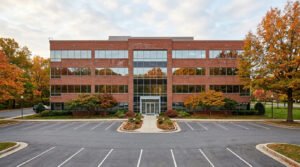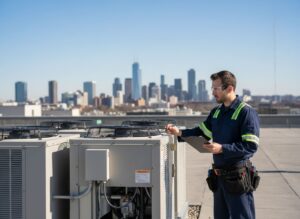

Postponing essential maintenance on commercial properties triggers a cascade of financial consequences that extend far beyond initial savings. Deferred maintenance represents one of the costliest mistakes property owners make across Greater Philadelphia—transforming minor repairs into catastrophic failures while eroding property values, tenant satisfaction, and long-term profitability. Understanding these impacts is essential for protecting your investment and ensuring sustainable performance.
📞 Concerned about your property’s condition? Facility360° Solutions offers free facility assessments throughout Philadelphia, King of Prussia, Conshohocken, and surrounding areas. Schedule yours today.
Deferred maintenance encompasses any necessary repair, replacement, or preventive service postponed beyond recommended timelines. This includes delaying roof repairs, ignoring HVAC system servicing, neglecting parking lot resurfacing, and overlooking plumbing upgrades.
Property owners in the Greater Philadelphia area typically defer maintenance due to budget constraints, cash flow strategies, or simple oversight. Regardless of motivation, consequences accumulate relentlessly—minor issues evolve into major capital expenditures requiring emergency intervention.
Research consistently demonstrates that deferred maintenance costs multiply at alarming rates. A $1,000 repair today becomes $5,000 if postponed one year, and potentially $25,000 or more after three to five years. This exponential growth occurs because initial failures trigger secondary damage throughout building systems.
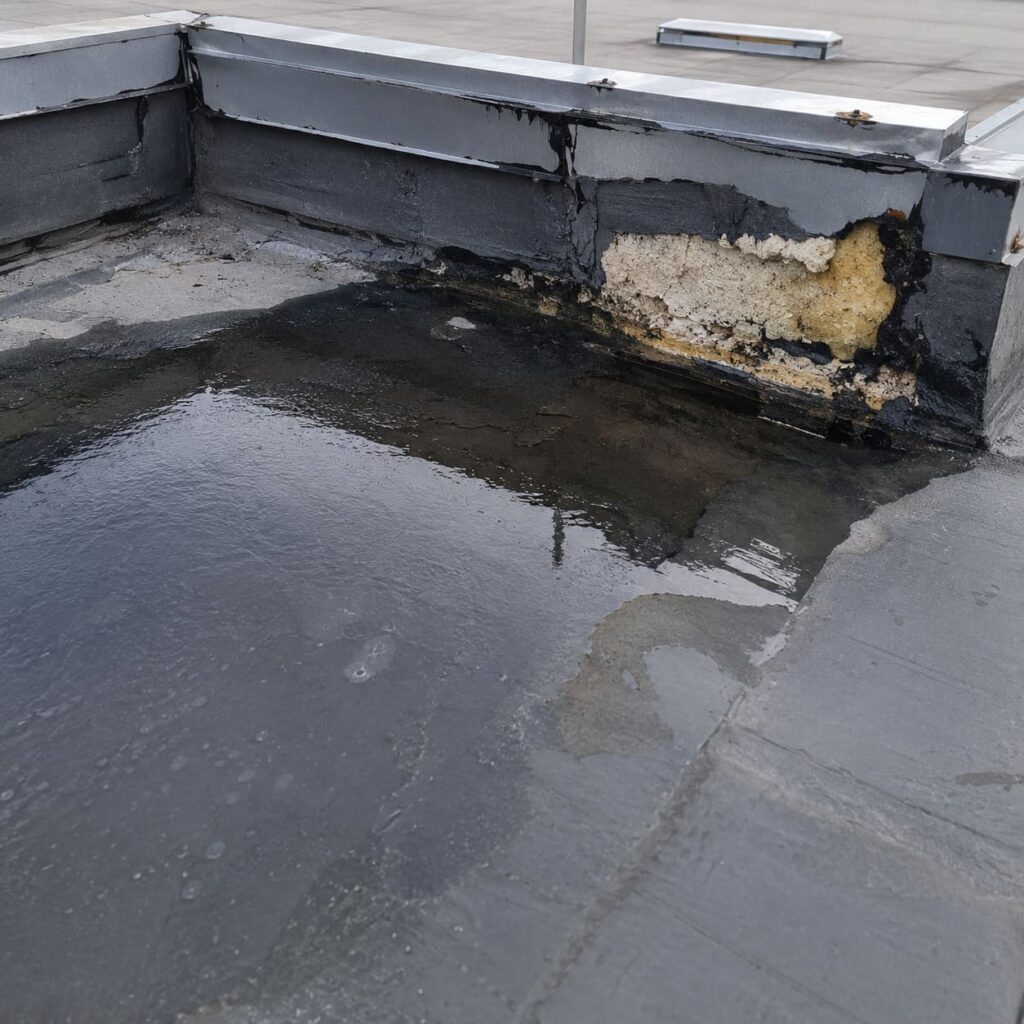
Consider a leaking roof on a King of Prussia office building. Initially, replacing damaged shingles or repairing flashing costs $2,000-$5,000. Delaying allows water infiltration into insulation, decking, and structural framing. Within months, you’re facing mold remediation, deck replacement, insulation upgrades, and interior ceiling repairs—escalating total costs to $50,000+. Eventually, structural damage necessitates comprehensive roof replacement costing $200,000 or higher.
⚡ Emergency roof leak? Facility360° provides 24/7 emergency repair services with 1-hour response time across Greater Philadelphia.
Commercial real estate valuations in Philadelphia’s competitive market depend heavily on net operating income (NOI) and overall property condition. Deferred maintenance devastates both metrics simultaneously, creating compounding negative effects on property values.
When maintenance is neglected, operating expenses surge. Aging HVAC systems consume 30-50% more energy than properly maintained equipment, directly increasing utility costs. Emergency repairs cost 3-5 times more than scheduled preventive maintenance, draining capital reserves unpredictably. Insurance premiums rise as carriers identify poorly maintained properties as higher-risk investments. These escalating expenses directly reduce NOI—the primary driver of commercial property valuations.
Properties exhibiting obvious deferred maintenance command higher capitalization rates when appraised or sold, reflecting increased risk perceptions. A well-maintained Conshohocken office building might trade at a 6% cap rate, while a comparable property showing significant deferred maintenance requires a 7.5-8% cap rate to attract buyers.
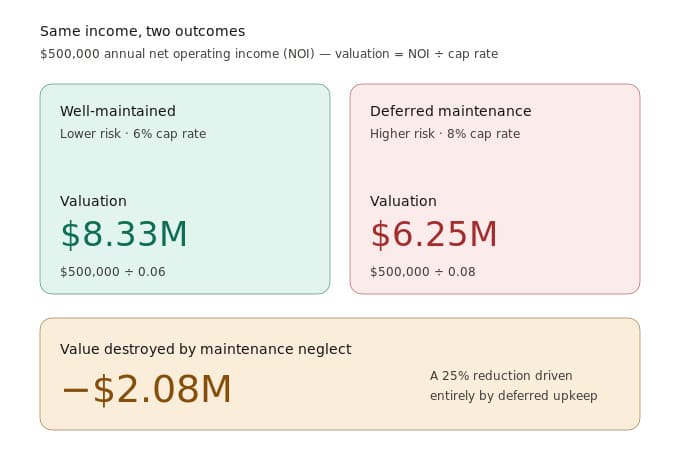
This percentage difference translates to massive valuation reductions. A property generating $500,000 annual NOI values at approximately $8.33 million at a 6% cap rate. At an 8% cap rate reflecting deferred maintenance concerns, that same income stream values at only $6.25 million—a staggering $2.08 million reduction driven entirely by maintenance neglect.
Tenant satisfaction correlates directly with property maintenance standards. When maintenance is deferred, tenants experience declining comfort, reduced functionality, and growing frustration. These factors drive tenant turnover, creating vacancy cycles that devastate property economics.
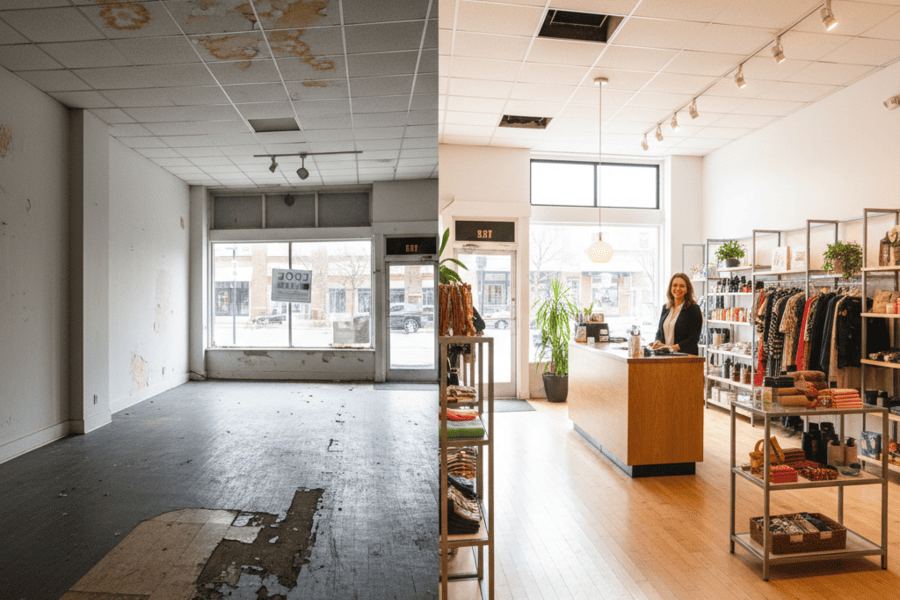
Losing tenants due to maintenance issues triggers multiple financial consequences:
A single 5,000-square-foot tenant departing from your West Chester retail property due to maintenance frustrations costs $150,000-$300,000 in commissions, improvements, and lost rent. Preventing that departure through $10,000-$20,000 in proactive maintenance represents an exceptional ROI.
Word travels quickly in Greater Philadelphia’s commercial real estate market. Properties known for poor maintenance struggle to attract quality tenants, forcing owners to offer below-market rents or excessive concessions. This reputation penalty persists for years even after maintenance issues are resolved.
Deferred maintenance frequently creates code violations and safety hazards exposing property owners to regulatory fines, lawsuit liability, and potential criminal charges in extreme cases.
Municipal building departments, fire marshals, and health inspectors throughout Philadelphia County regularly cite properties for maintenance-related violations. Deteriorating fire suppression systems, non-functioning emergency lighting, damaged egress pathways, and failing elevator equipment all trigger citation notices carrying substantial penalties.
These fines accumulate daily until violations are remedied, sometimes reaching tens of thousands of dollars. Beyond monetary penalties, unresolved code violations can result in occupancy restrictions or complete building closures, eliminating all rental income until compliance is restored.
Neglected maintenance creates dangerous conditions that injure tenants, customers, and visitors. Common scenarios include:
These lawsuits consume enormous time, create adverse publicity, increase insurance premiums, and potentially exceed coverage limits. Reputational damage from high-profile accidents can persist indefinitely, affecting tenant relations, property marketability, and future financing availability.
Lenders scrutinize property conditions carefully when underwriting commercial mortgages. Deferred maintenance raises immediate red flags, complicating financing transactions and increasing capital costs.
Virtually all commercial property loans require comprehensive Property Condition Assessments (PCAs) conducted by qualified engineering firms. These reports identify existing deficiencies, estimate remaining useful life for major building systems, and project capital expenditure requirements.
When PCAs reveal substantial deferred maintenance, lenders respond by reducing loan-to-value ratios (requiring larger down payments), establishing reserve accounts funded at closing, increasing interest rate spreads, or in severe cases, declining financing altogether until owners remediate critical deficiencies.
Lenders typically require debt service coverage ratios (DSCR) of 1.25x to 1.35x or higher. When deferred maintenance depresses NOI through elevated operating expenses and increased vacancy, achieving required DSCR thresholds becomes challenging or impossible. This forces owners to accept smaller loan amounts, reducing leverage and diminishing equity returns.
Modern commercial tenants increasingly prioritize energy efficiency and environmental sustainability. Properties exhibiting deferred maintenance typically consume excessive energy, produce higher carbon emissions, and fail to meet contemporary tenant expectations.
Neglected HVAC systems, aging building envelopes with compromised insulation, and outdated lighting systems dramatically increase utility consumption. Research indicates that deferred maintenance on mechanical systems alone increases energy costs by 30-60% compared to properly maintained alternatives.
For a 100,000-square-foot office building in Philadelphia spending $200,000 annually on utilities, this inefficiency penalty amounts to $60,000-$120,000 per year in unnecessary expenses. Over ten years, owners forfeit $600,000 to $1.2 million purely through maintenance neglect.
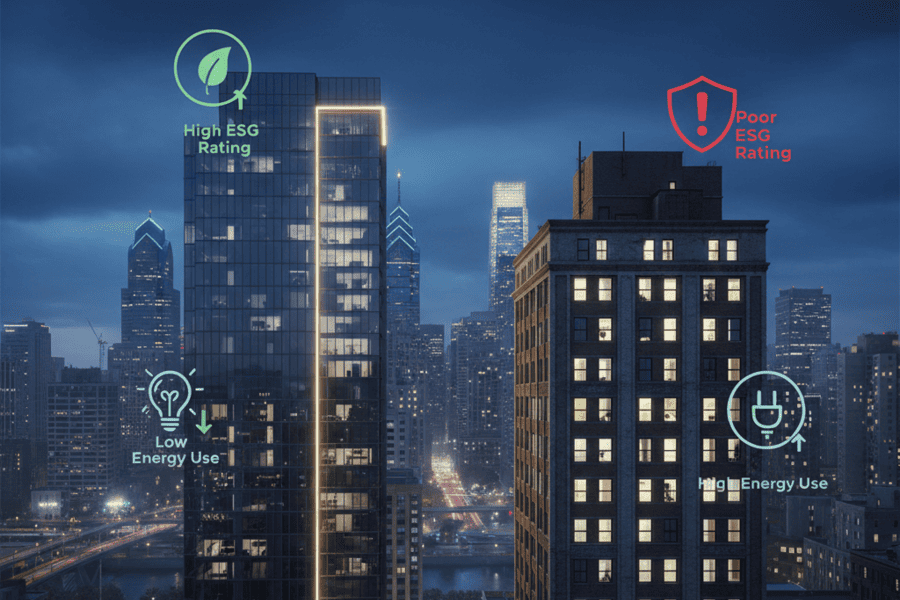
Institutional investors increasingly evaluate properties through ESG frameworks, considering environmental impact alongside financial performance. Properties with substantial deferred maintenance score poorly on ESG metrics, making them less attractive to major investment funds and potentially excluding them from institutional portfolios entirely. This affects property liquidity, limiting the buyer pool and potentially suppressing valuations.
Property insurers recognize that deferred maintenance correlates strongly with claim frequency and severity. Consequently, they adjust premium rates upward and sometimes impose coverage restrictions on poorly maintained properties.
Insurance underwriters consider roof age, HVAC system condition, electrical system integrity, plumbing infrastructure status, and overall property maintenance when pricing policies. Properties showing obvious neglect face premium increases of 20-50% or more compared to well-maintained alternatives.
For properties carrying $50,000 in annual insurance premiums, deferred maintenance might add $10,000-$25,000 yearly—money that could fund the very maintenance programs that would eliminate the premium penalty.
Insurers sometimes exclude specific perils or impose coverage sublimits on properties with known maintenance deficiencies. A property with a deteriorating roof might carry a reduced wind/hail coverage sublimit, exposing owners to substantial out-of-pocket costs if storm damage occurs. These exclusions transfer risk from insurers back to property owners precisely when maintenance neglect makes claims most likely.
Transitioning from reactive, deferred maintenance approaches to proactive preventive programs requires systematic planning but delivers exceptional returns on investment.
Facility360 recommends developing comprehensive maintenance schedules covering all major building systems:
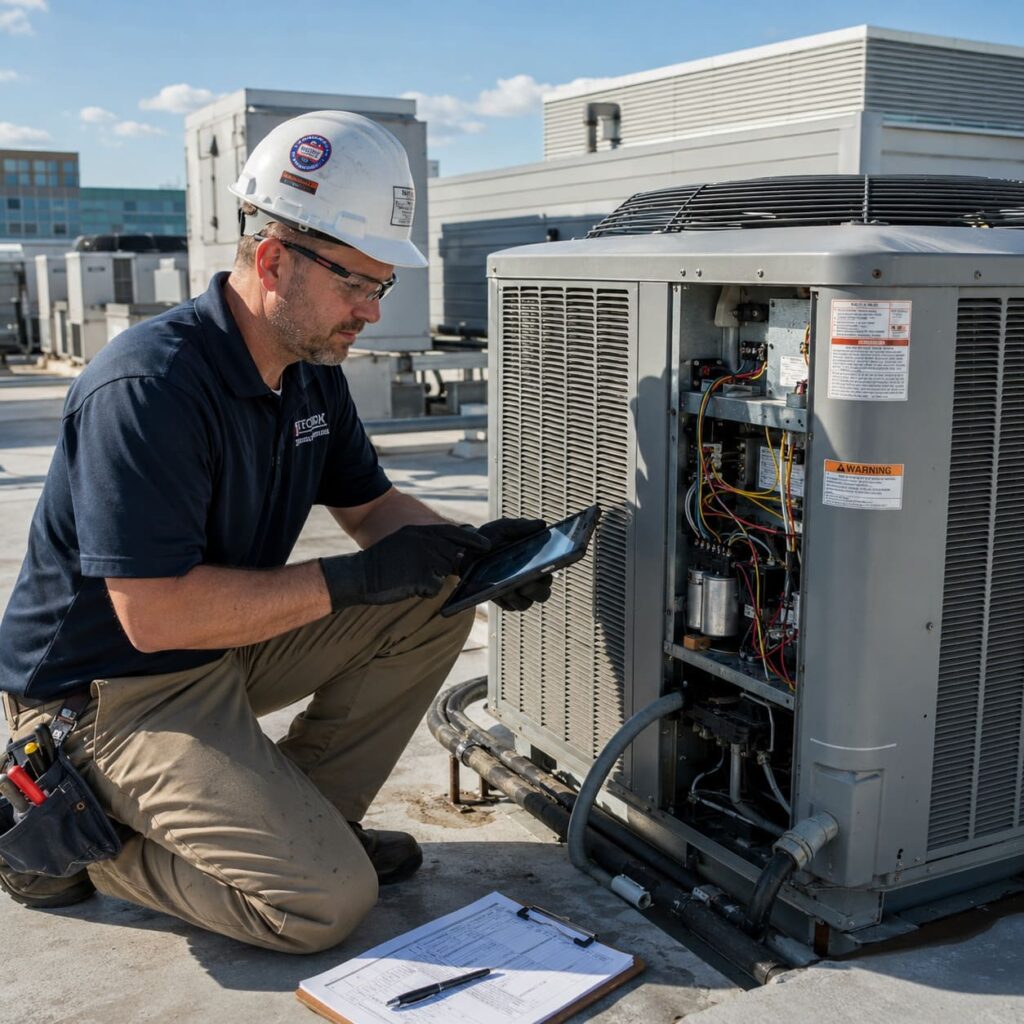
Budget allocation should reflect industry standards suggesting 2-4% of property replacement value annually for routine maintenance, with additional capital reserves of 1-2% for long-term component replacements. While these percentages initially seem substantial, they pale compared to crisis-driven expenditures resulting from neglect.
🔧 Ready to implement preventive maintenance? Facility360° offers customized maintenance contracts for offices, retail, medical facilities, and warehouses throughout Greater Philadelphia.
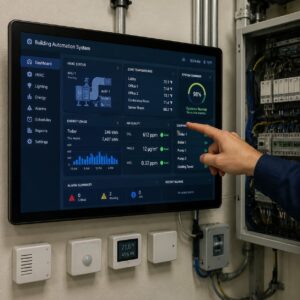
Modern building automation systems (BAS) and IoT sensors enable predictive maintenance strategies that identify developing problems before they cause failures. Temperature sensors detect HVAC inefficiencies, vibration monitors identify bearing wear in mechanical equipment, and moisture sensors reveal hidden leaks before they cause extensive damage.
These technologies reduce maintenance costs while improving reliability, creating ideal conditions for tenant satisfaction and property value preservation.
Every dollar invested in preventive maintenance typically saves $4-$6 in avoided future repairs, according to facilities management studies. Beyond direct cost avoidance, proactive maintenance delivers:
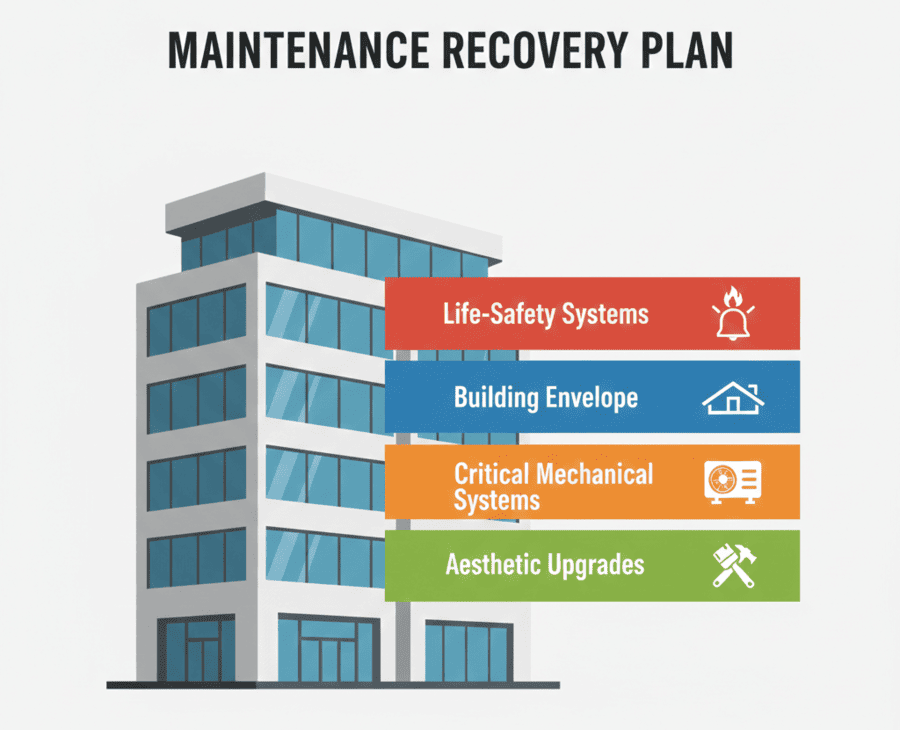
For properties already suffering from deferred maintenance backlogs, Facility360 recommends systematic recovery planning that prioritizes issues by urgency, safety implications, and financial impact.
Fire suppression, emergency egress, and structural integrity demand immediate attention regardless of cost. These systems cannot be compromised.
Roofs, facades, and windows require rapid intervention to prevent cascading water damage. Given Philadelphia’s seasonal weather patterns, addressing envelope issues before winter or spring is critical.
HVAC, plumbing, and electrical systems supporting tenant operations need prompt attention to avoid business interruption claims and tenant departures.
Painting, flooring, and cosmetic improvements can be scheduled systematically across 12-36 month timeframes, spreading capital requirements while steadily improving property conditions.
Understanding the true cost of deferred maintenance transforms property management philosophy from short-term expense minimization to long-term value maximization. The evidence overwhelmingly demonstrates that neglecting maintenance represents false economy—multiplying costs while destroying property values, tenant relationships, and investment returns.
Facility360° Solutions serves commercial property owners throughout Greater Philadelphia with comprehensive maintenance solutions designed to prevent deferred maintenance before it becomes a crisis. Our services include:
Commercial property owners who embrace proactive maintenance strategies protect their investments, enhance profitability, and position their assets for long-term success in Philadelphia’s competitive commercial real estate market.
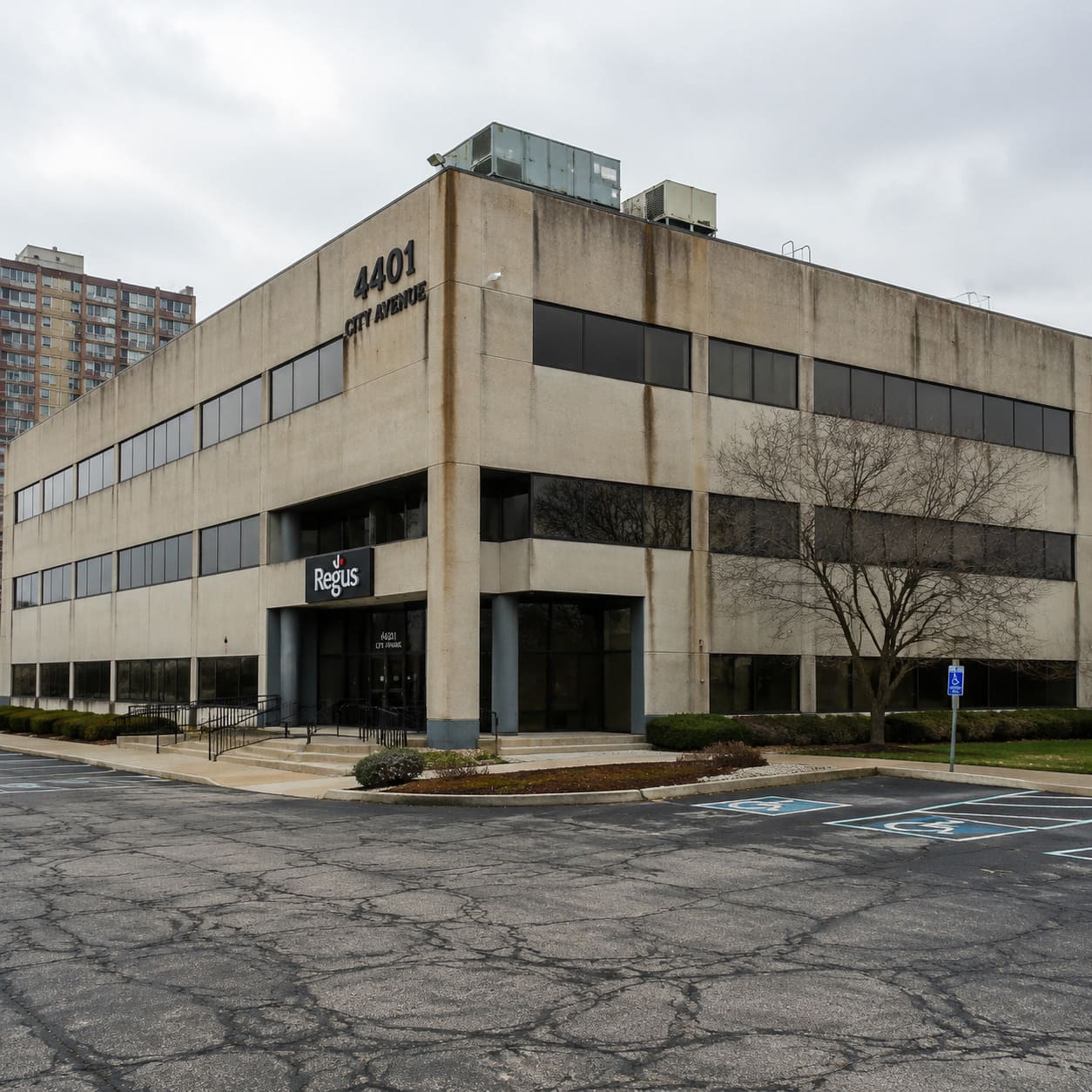
What deferral looks like in practice
Deferred maintenance rarely starts as a decision. It starts as a task nobody scheduled, on a building nobody was inspecting on a fixed rhythm. If you want to see the specific items that most commonly slip — door hardware, restroom fixtures, water staining, entry flooring after salt season — they’re laid out by frequency in our office building maintenance checklist for Greater Philadelphia properties.
Don’t let deferred maintenance destroy your property value.
Contact Facility360° for a free facility assessment and customized maintenance plan.
Serving: Philadelphia | King of Prussia | Conshohocken | Bensalem | Greater Philadelphia Area
Schedule Your Free Assessment | Call (267) 992-1777
⚡ Emergency repairs available 24/7 with 1-hour response time
About Facility360°: We provide professional commercial facility maintenance, repair, and emergency services throughout Greater Philadelphia. From preventive maintenance contracts to 24/7 emergency response, we help property owners protect their investments and maintain property values. Learn more about our services.