
From Lancaster Avenue boutique retail fit-outs and law-firm office installations to restaurant tile and dining-room flooring along the Downtown Wayne Historic District — Facility360° delivers commercial flooring installation built around premium finish standards, original-substrate realities, and the three-county jurisdictional complexity that defines Main Line commercial work.
Wayne is widely considered the heart of the Main Line — a walkable downtown anchored at the intersection of Lancaster Avenue (US-30) and North Wayne Avenue, with a ZIP code (19087) that uniquely spans three counties: Delaware (Radnor Township at its center), Chester (Tredyffrin), and Montgomery (Upper Merion). The commercial core sits inside the Downtown Wayne Historic District, recognized on the National Register, with a tenant mix dominated by premium boutique retail, restaurant rows, law firms, financial-services offices, and private-wealth practices operating out of late-19th-century Victorians and stone Colonials. Commercial flooring projects in this environment carry operational stakes that go beyond installation specifications: a law-firm reception area refresh is part of a brand and client-experience refresh, a boutique retail fit-out is on Instagram before it opens, a restaurant dining-room install is photographed by reviewers within the first week of service, and a tenant-turnover project in a historic mixed-use building has to navigate original substrate conditions that don’t appear in any drawing. The wrong flooring contractor — sized for standard suburban work, unfamiliar with original-substrate realities, unable to deliver finish quality that survives a client-facing room — produces a result that looks merely acceptable in a market where acceptable doesn’t fit the tenant brand.
Facility360° Solutions is a licensed Pennsylvania commercial contractor delivering commercial flooring installation across the Main Line corridor. Project-based scoping with a written timeline before the work begins, installation crews who handle subfloor prep and moisture mitigation as part of the scope, finish standards calibrated to premium retail, professional office, and historic-district environments, and jurisdictional discipline for any scope that crosses into permit territory across the Delaware, Chester, or Montgomery county boundaries. Schedule around restaurant service hours, boutique opening dates, and law-firm client-meeting calendars — not against them.
Our commercial flooring scope covers the full installation envelope and the prep work that determines whether a finished floor actually holds up over time and looks the way it was specified:
Every project starts with an on-site assessment — substrate condition (which in historic buildings often means understanding what’s actually under the existing flooring before committing to a scope), moisture testing where slab or basement-level construction is involved, jurisdictional confirmation for any permit-territory scope, and a written project quote with a realistic installation timeline. The estimate is the price; the timeline is the timeline.
The flooring scope that works in standard suburban commercial construction doesn’t translate cleanly into a premium Main Line environment. Buildings constructed between the 1880s and early 1900s along Lancaster Avenue and the surrounding downtown carry substrate realities that generalist contractors aren’t built for: original plank flooring of varying thickness and condition under decades of accumulated finishes, plywood overlays installed at different times that aren’t level with each other, hidden moisture in basement-level and ground-floor substrates, and the discovery during demolition that the substrate often needs more remediation than the original scope assumed. The clients along this corridor — premium boutiques, law firms, financial-services offices, restaurants in the $$$–$$$$ tier, and private-wealth practices — care about what the floor looks like under boutique lighting, in a client-facing reception, in a restaurant dining room photographed by reviewers. A visible transition seam, a finish that doesn’t match the building’s existing trim, a tile installation with grout-line variation, or a finished LVP install with edge gaps that telegraph at three feet of distance becomes a quiet brand problem inside a week. The three-county ZIP reality adds another layer: any flooring scope that crosses into permit territory — typically larger renovations involving structural subfloor work, occupancy changes, or fire-rating considerations — has to route through the correct jurisdiction (Radnor, Tredyffrin, or one of the surrounding municipalities) rather than being treated as interchangeable. For property inside the historic district, scope that affects exterior-visible elements or building character can cross into HARB or Township review territory and needs to be flagged during scoping rather than discovered during install. Our installation crews work in this environment routinely, which means substrate-discovery realism, finish standards calibrated to premium tenant expectations, jurisdictional discipline at scoping, and material handling sized for walkable downtown access all fit the operational reality from the first project. A finished floor in a premium Main Line environment is only as good as the substrate work underneath and the finish detail at every transition and edge.
Nearby areas: Radnor · Strafford · St. Davids · Chesterbrook · Devon · Berwyn · Bryn Mawr · Villanova
Also serving: King of Prussia · Conshohocken · Plymouth Meeting · Philadelphia
✓ Commercial-Grade Materials & Methods
✓ Premium & Historic Building Experience
✓ Subfloor Prep + Moisture Mitigation Included
✓ Finish Detail at Every Transition
Commercial-Grade Flooring. Scheduled Around Your Operations. Built to Last.
When a flooring project needs to deliver premium finish quality in a client-facing space, navigate original-substrate realities in a historic building, or coordinate across three counties — one call schedules an on-site assessment with a written quote and realistic timeline.
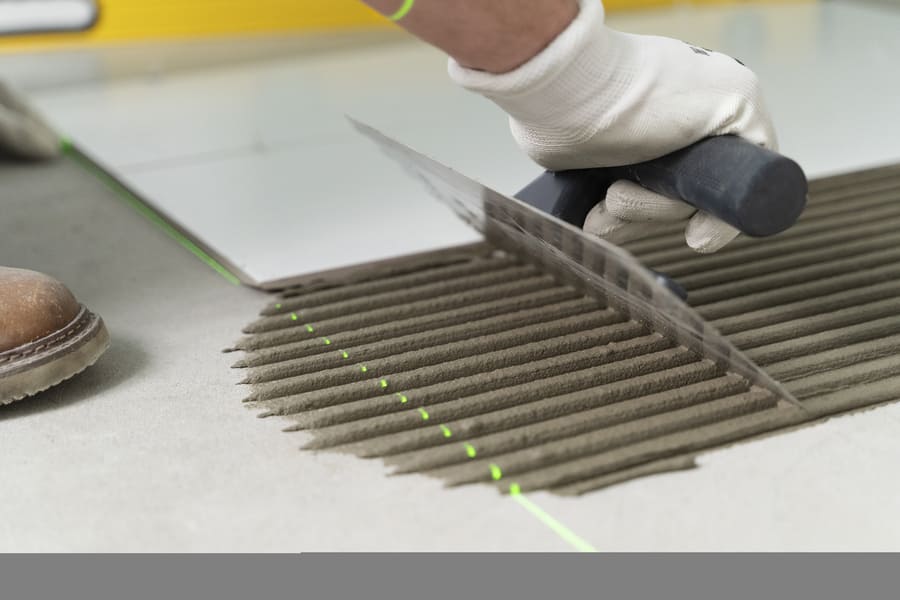
Premium finish quality is the layer of detail above what most commercial flooring contractors deliver as standard. In practical terms it means transition seams that don't telegraph at three feet of viewing distance, tile installations with grout-line variation under 1/16 inch across the entire room rather than just at the focal points, LVP edge gaps that hold consistent throughout the space rather than appearing at the corners where the cuts are tightest, finish levels that align with adjacent existing trim rather than meeting it slightly proud or recessed, and base molding mitres that close cleanly at internal and external corners. These details don't matter in a back-of-house install; they matter in a law-firm reception, a boutique storefront, a financial-advisor client-meeting room, where every visitor's first impression is partly the condition of the floor. Crews working in premium environments daily develop the eye and the habits that produce this consistently.
For interior flooring work that isn't visible from the street and doesn't affect the building's exterior character, no. The historic district ordinance governs facade-visible elements and exterior character rather than interior finishes. Where flooring projects can cross into review territory is when the scope expands — exterior entry threshold replacement that affects the storefront character, structural subfloor work that requires interior framing changes, occupancy changes that trigger broader code review. During initial scoping we'll identify whether any portion of the project crosses into HARB or Township review and flag it transparently rather than discovering it mid-install. For most interior flooring installs in historic-district buildings, the work runs without preservation-review involvement.
For most flooring installs that stay inside non-permit scope — standard LVP/LVT, tile, carpet, finished flooring replacements without structural subfloor changes — the three-county reality doesn't surface. Where it matters is any project scope requiring permits: structural subfloor remediation, occupancy-related changes, fire-rating modifications, or significant renovation that crosses local building code thresholds. At scoping we identify the correct jurisdiction for the property — Radnor Township, Tredyffrin Township, or one of the surrounding municipalities — and route any required permit workflow through the correct county and township rather than treating the three as interchangeable. Routing a Tredyffrin property's permits through Delaware County, for example, would delay the project by weeks.
Restaurant dining-room installs sit at the intersection of finish quality, schedule discipline, and substrate condition — and all three have to land cleanly for the opening to support the brand. During scoping we walk the space at the lighting condition the restaurant will actually operate under (typically lower than installation lighting), confirm tile or flooring sample appearance under that lighting, and select substrate prep approach based on what the existing condition realistically supports rather than what's easiest to install. During install, crew leads on site are the same crews who work in $$$-$$$$ restaurants regularly, which means transition seams, grout-line consistency, and edge work meet the standard the dining-room aesthetic requires. For finishes that need to match adjacent existing materials in renovation scope, we sample and verify before locking the order rather than discovering color or texture mismatch on install day.
Substrate discovery is a normal part of working in older buildings, and we scope around that reality rather than against it. The initial project quote includes a substrate-discovery allowance based on the most likely remediation scope given the building's age, construction era, and visible existing conditions. If the actual conditions revealed during demolition require more remediation than the allowance, we document the discovery, photograph the actual condition, and present an updated scope with itemized additional work and adjusted timeline transparently. If the conditions are better than the allowance assumed, the project comes in under the original quote. For property owners who can't absorb significant timeline or budget variance, we can do a pre-demolition probe in a small area to confirm conditions before committing to the full project scope — particularly useful for tenant-turnover work running against a fixed lease commencement date.
Let’s keep your business facility one step ahead
One call schedules an on-site assessment with substrate evaluation, moisture testing where applicable, and a written project quote with realistic timeline. Covering premium retail, professional offices, and historic-district properties across the Main Line.
Request Your Free Estimate
Request commercial service
Tell us what needs attention and we’ll get back to you with next steps.
Request commercial service
Tell us what needs attention and we’ll get back to you with next steps.