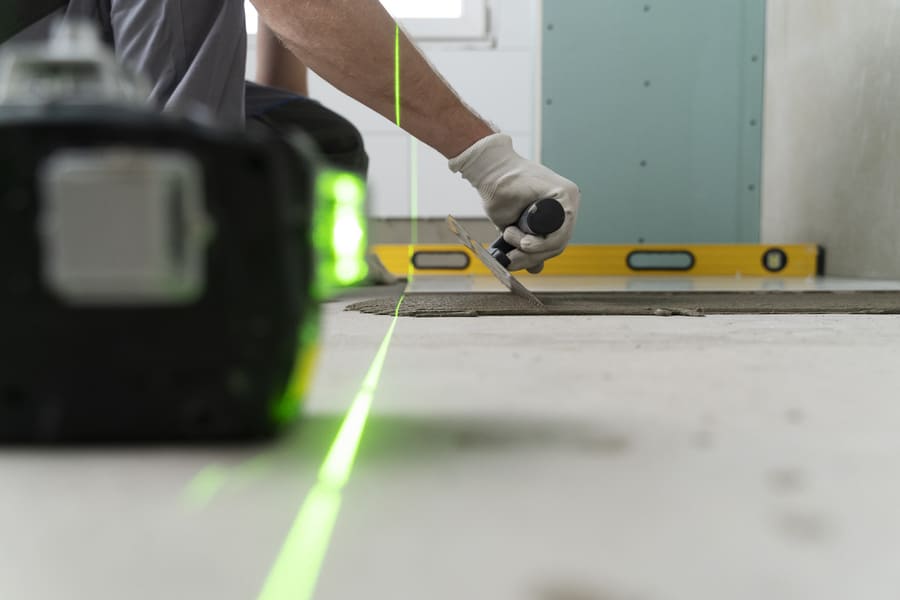
In commercial flooring, the substrate is everything. A 20 mil LVP floor installed over an unleveled concrete slab develops hollow spots, joint stress, and click-lock failures within months. Porcelain tile installed over a cracked concrete substrate transmits those cracks to the tile surface through grout joints within the first heating season. Epoxy coatings applied over contaminated or moisture-active concrete delaminate regardless of product quality. Facility360° Solutions provides full-scope commercial subfloor repair and leveling for offices, warehouses, restaurants, medical facilities, and retail spaces across Greater Philadelphia — assessing substrate condition with measured data, repairing structural defects, and achieving the exact flatness tolerance required by your specific flooring system before any installation begins.
We treat subfloor preparation as a standalone professional discipline — not a task to rush through before the flooring crew arrives. The quality of every flooring installation we perform is built on the substrate work that precedes it.
We handle the complete scope of commercial subfloor assessment, repair, and leveling, including:
Subfloor preparation is the phase of every flooring project most commonly abbreviated to save time and cost — and the source of the majority of commercial flooring failures that occur within the first two years of installation. When LVP is installed over a subfloor that varies 3/8 inch across 10 feet, the click-lock joints open under traffic within months. When tile is installed over a cracked concrete slab without crack isolation membrane, the cracks reflect through grout joints within the first thermal cycle. When epoxy is applied over concrete with 15 lbs of moisture vapor emission, the coating delaminates within six months. In every case, the flooring must be removed and reinstalled — at a total cost three to five times higher than the subfloor preparation that would have prevented the failure.
We include a complete subfloor assessment in every commercial flooring quote — because the scope of preparation required determines the long-term performance of the installation, and that scope cannot be accurately estimated without measured data from the actual substrate.
Our subfloor repair and leveling crew serves commercial facilities throughout Greater Philadelphia — including Philadelphia, King of Prussia, Conshohocken, West Chester, Bensalem, Willow Grove, Horsham, Pottstown, and surrounding communities. We operate diamond grinders, shot blasting equipment, and self-leveling pour systems — arriving equipped to assess and prepare any commercial substrate to the specification required by your flooring system without equipment limitations or subcontracted preparation phases.
The floor you see is only as good as the substrate you don’t. We build that substrate correctly — before the first piece of flooring is ever installed.
Don’t install new commercial flooring over an unassessed substrate. Our subfloor repair and leveling crew serves Greater Philadelphia with complete assessment, repair, and leveling services — ensuring every flooring installation we complete is built on a substrate that meets specification from day one.
Call now for a commercial subfloor assessment: (267) 694-4508 — or request a site visit online.
Bubbling LVP, cracking tile grout, and delaminating epoxy all trace to an inadequately prepared substrate. Addressing subfloor defects before installation costs a fraction of removing and reinstalling flooring that failed because the substrate wasn’t ready.
LVP/LVT requires maximum 3/16 inch per 10 feet. Ceramic and porcelain tile requires 1/8 inch per 10 feet per ANSI A108.02. Large-format tile additionally requires 1/16 inch per 24 inches. Sheet vinyl requires 1/8 inch per 6 feet. We measure existing flatness with a 10-foot straightedge before specifying the leveling scope for your specific flooring system.
Self-leveling compound is a flowable cementitious or gypsum material that fills low spots and creates a flat substrate for flooring. Cementitious SLC suits concrete and is compatible with all flooring types. Gypsum SLC suits wood subfloors but not wet areas or epoxy coatings. SLC levels surfaces — it does not repair cracks or structural failures, which must be addressed first.
Hairline cracks are filled with low-viscosity epoxy injection. Medium cracks are routed and filled with semi-rigid epoxy filler. Wide cracks and control joints are filled and covered with crack isolation membrane. Active cracks require structural assessment and flexible flooring systems. We map all cracks by type and width before specifying repair scope.
Yes — after structural deflection assessment, fastener tightening at 6-inch spacing, panel seam treatment, and cement board underlayment for tile installations. Wood subfloor leveling for commercial tile requires maximum L/360 deflection under live load — many older structures need reinforcement before tile can be specified. We assess deflection before recommending the leveling approach.
Signs include visible cracks, control joint lips over 1/8 inch, hollow-sounding sections, adhesive residue, moisture staining or efflorescence, and visible floor slope. We perform complete subfloor assessment — moisture testing, flatness measurement, and structural evaluation — as the first step of every commercial flooring project.
From everyday maintenance and upgrades to emergency repairs, Facility360° Solutions helps you plan, budget, and execute the work your commercial property needs to stay safe, efficient, and looking its best — with minimal disruption to your operations.
Philadelphia, King of Prussia, Bensalem, Perkasie, Conshohocken, West Chester, Reading, Willow Grove, Plymouth Meeting, Horsham, Pottstown, Morgantown, Allentown, Pittsburgh.
Serving Greater Philadelphia, PA
Your single point of contact for 24/7 facility management and all handyman services
Signup our newsletter to get update information, news and insight